Extinct in the Wild
Kunimasu
Kunimasu
The kunimasu, also called the black kokanee, is a lake-dwelling Japanese trout related to sockeye salmon. It died out in its only native lake, Tazawa, in the 1940s and was found alive in Lake Saiko in 2010. The IUCN's 2019 assessment lists it as Extinct in the Wild.
How to recognise it
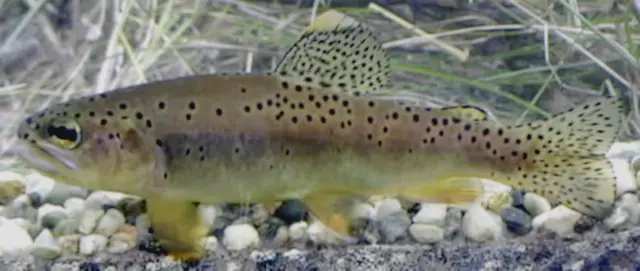
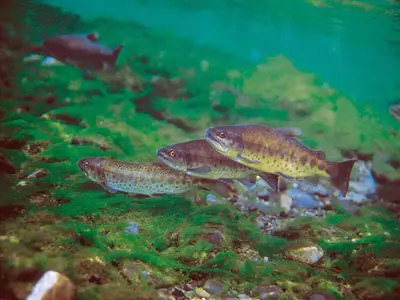
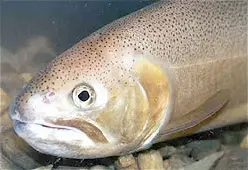
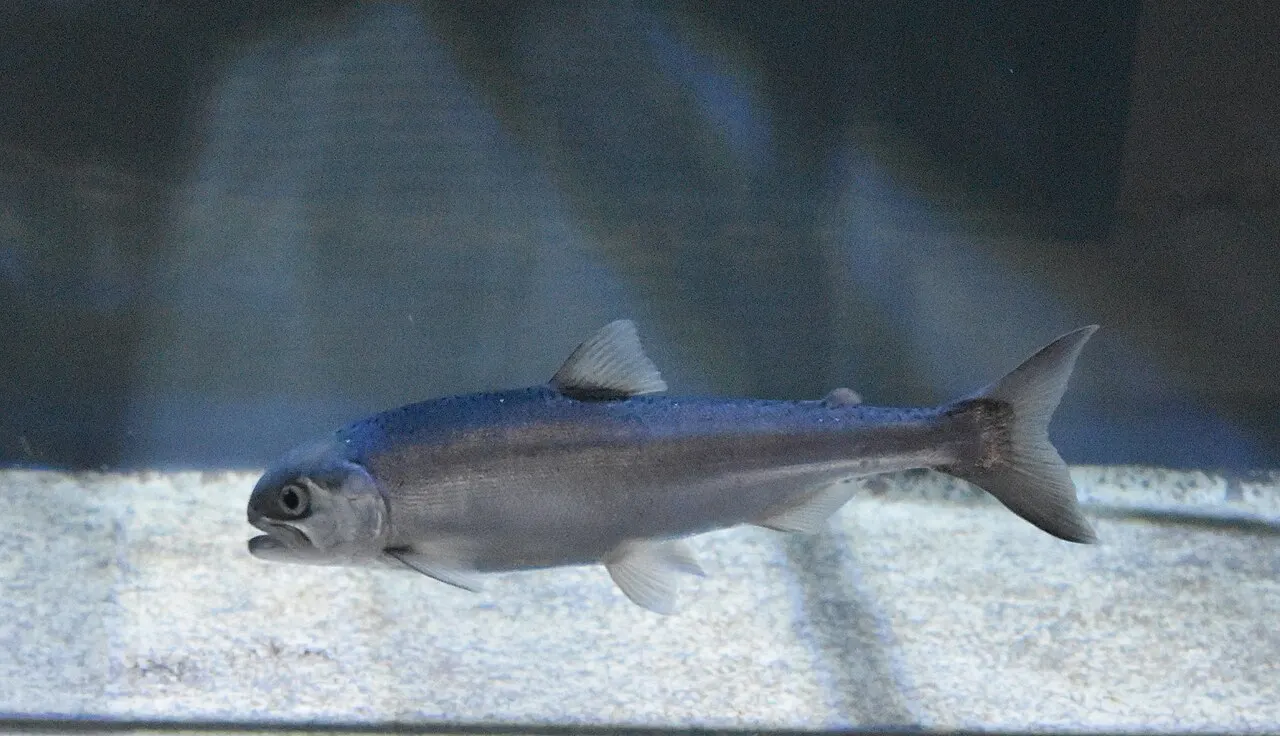
A slim, flattened fish about 30 cm (a foot) long, dark olive with black spots on the back and dark olive green when spawning. Males have a slightly longer, pointed snout than females, and spawning fish may develop a humped back. In 2010 the first specimen sent in looked green and black, not silver, which set it apart from the himemasu, a close relative living in the same lake.
Scientists tell it from the himemasu by its breeding season and its spawning colour, along with a lower count of pyloric caeca (small pouches off the gut) and more gill rakers. DNA work has confirmed it as a separate species, though it was once treated as a sockeye subspecies.
Where it lives
It was originally known only from Lake Tazawa in Akita Prefecture, northern Honshu. The IUCN gives its habitat as large permanent freshwater lakes.
The fish found in 2010 were in Lake Saiko in Yamanashi Prefecture, about 500 km south of Tazawa and near Mount Fuji. Eggs were moved there in 1935. That transfer was thought to have failed, and the fish are believed to descend from those eggs. Nine fish caught in March and April 2010 were identified as kunimasu.
Pins are Wikidata “endemic to” fields. Orange dots, when present, are GBIF occurrence tiles — survey bias included.
How it lives
Little is known about its ecology. It is suspected to eat zooplankton, as the himemasu does. It spawns in late winter and spring (March, in the National Geographic account), while the himemasu spawns in autumn. In Lake Saiko it spawns at about 30 to 40 m deep, a depth no other fish there uses.
Why it is in trouble
In 1940, acidic river water was diverted into Lake Tazawa to boost hydroelectric power, and the lake's kunimasu died out in the following years. The IUCN lists degradation of the lake ecosystem as the stress on the species. The species was then written off for about 70 years.
Its rediscovery in 2010 began with an odd specimen sent by the head of a local fishing association to the TV personality Sakana-kun, who passed it to Kyoto University ichthyologist Tetsuji Nakabo. Nakabo said identifying it took a month. Anglers at Saiko had long caught the fish, but often released them, because the himemasu tasted better. A 2011 National Geographic report put the Lake Saiko population at about 10,000 fish.
What is being done
The IUCN lists captive breeding and reintroduction among the actions in place, and the species is held in captivity. In 2011 National Geographic reported that Japanese officials were moving to take it off the list of extinct species and drafting plans to protect its last known habitat. A return of the fish to Lake Tazawa, its original home, has not been reported.
Sources
Written for this catalog in our own words from the sources below, checked against them on 12 November 2026. Population figures are estimates and carry the year they were made. Status and assessment year: IUCN. 2026. The IUCN Red List of Threatened Species. Version 2026-1. iucnredlist.org.