Endangered
Oldham's leaf turtle
Cyclemys oldhamii
Oldham's leaf turtle (Cyclemys oldhamii) is a medium-sized freshwater turtle of forest streams in mainland South-East Asia and southern China. The IUCN Red List assessed it as Endangered in 2021, mainly because collection for food and the pet trade is thought to have halved its numbers.
How to recognise it
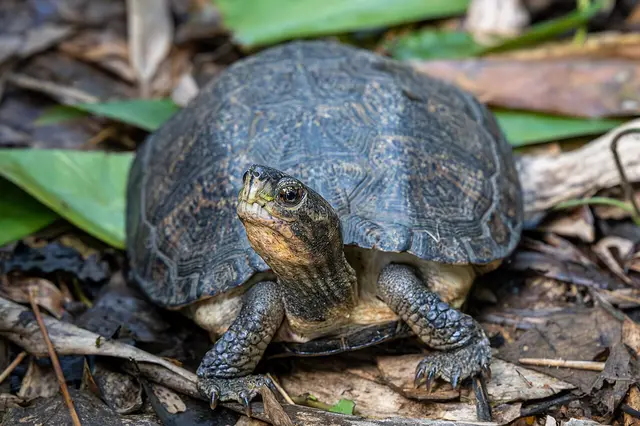
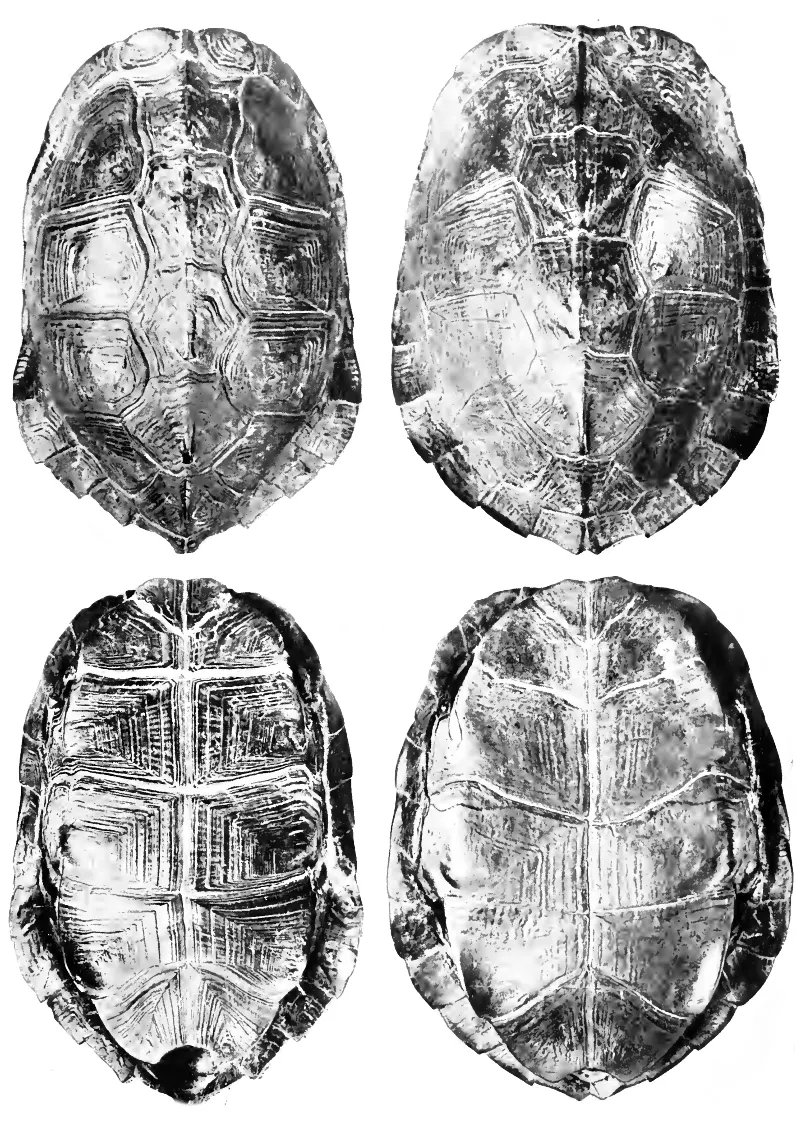
This is a leaf turtle, a group of Asian pond and stream turtles (family Geoemydidae) named for their rounded, leaf-like shells. In a Thai study, adults at a protected stream measured 180 to 210 mm in carapace length. The study found no difference in size between males and females.
Telling leaf turtles apart is hard, and the group's taxonomy has been reshuffled repeatedly. Several names now treated as synonyms appear in older literature, and up to three subspecies have been proposed. One of them, shanensis, from central Myanmar to Thailand and Cambodia, is sometimes ranked as a separate species.
Where it lives
The Red List records the species in China, Myanmar, Thailand, Viet Nam and Laos, at elevations from sea level to about 1,000 m. A Thai study and other sources also list Cambodia. Its habitat is permanent and seasonal rivers and streams, mostly in lowland moist forest. The Thai study describes it as tied to lower-elevation waters surrounded by forest, and it moves between water and land.
Pins are Wikidata “endemic to” fields. Orange dots, when present, are GBIF occurrence tiles — survey bias included.
Why it is in trouble
Oldham's leaf turtle is described in a 2019 PeerJ study as one of the most commonly traded turtles in Asian markets. The Red List lists use for food and as pets or display animals, and counts both deliberate collection and accidental catches as threats affecting nearly the whole population. Forest clearing for shifting agriculture, plantations and farms, along with mining and dams, adds pressure on its streams.
The Red List estimates the population fell about 50 percent in the past and is still falling by a similar amount. A generation is about 30 years. Turtles in general mature late and reproduce slowly, so heavily collected populations rebuild slowly.
The Thai study, in Nakhon Ratchasima Province, compared three sites. It caught 77 turtles at a protected stream, 67 in human-built ponds and just two in a degraded stream beside a highway. At the ponds, survival was 12 percent lower and density 35 percent lower than at the protected stream, and the turtles skewed smaller. The researchers judged collection, whether for local use or export, the most likely explanation, possibly for sale to be freed in Buddhist prayer release rituals or for illegal export. They had no direct evidence of harvesting.
What is being done
The species is listed on CITES Appendix II, which regulates international trade, and it occurs in at least one protected area. The Red List names awareness work, site protection and management, harvest and trade management, policy and regulation, and alternative livelihoods among the actions in place or needed. Before the species-level assessment, the genus Cyclemys was listed as Near Threatened, as the Thai study notes.
Sources
Written for this catalog in our own words from the sources below, checked against them on 12 November 2026. Population figures are estimates and carry the year they were made. Status and assessment year: IUCN. 2026. The IUCN Red List of Threatened Species. Version 2026-1. iucnredlist.org.