Endangered
Eastern black-bridged leaf turtle
Cyclemys pulchristriata
The eastern black-bridged leaf turtle (Cyclemys pulchristriata) is a freshwater turtle of southern Indochina, living in and beside rivers and lowland forest, mainly in Vietnam and Cambodia. The IUCN Red List rated it Endangered in 2021, chiefly because of collection for food and the loss of its habitat.
How to recognise it
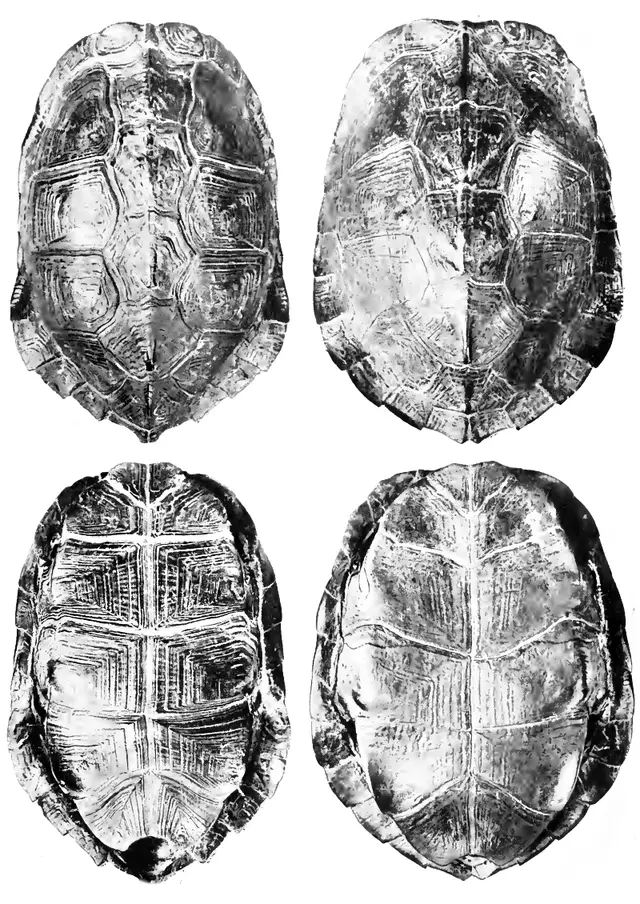
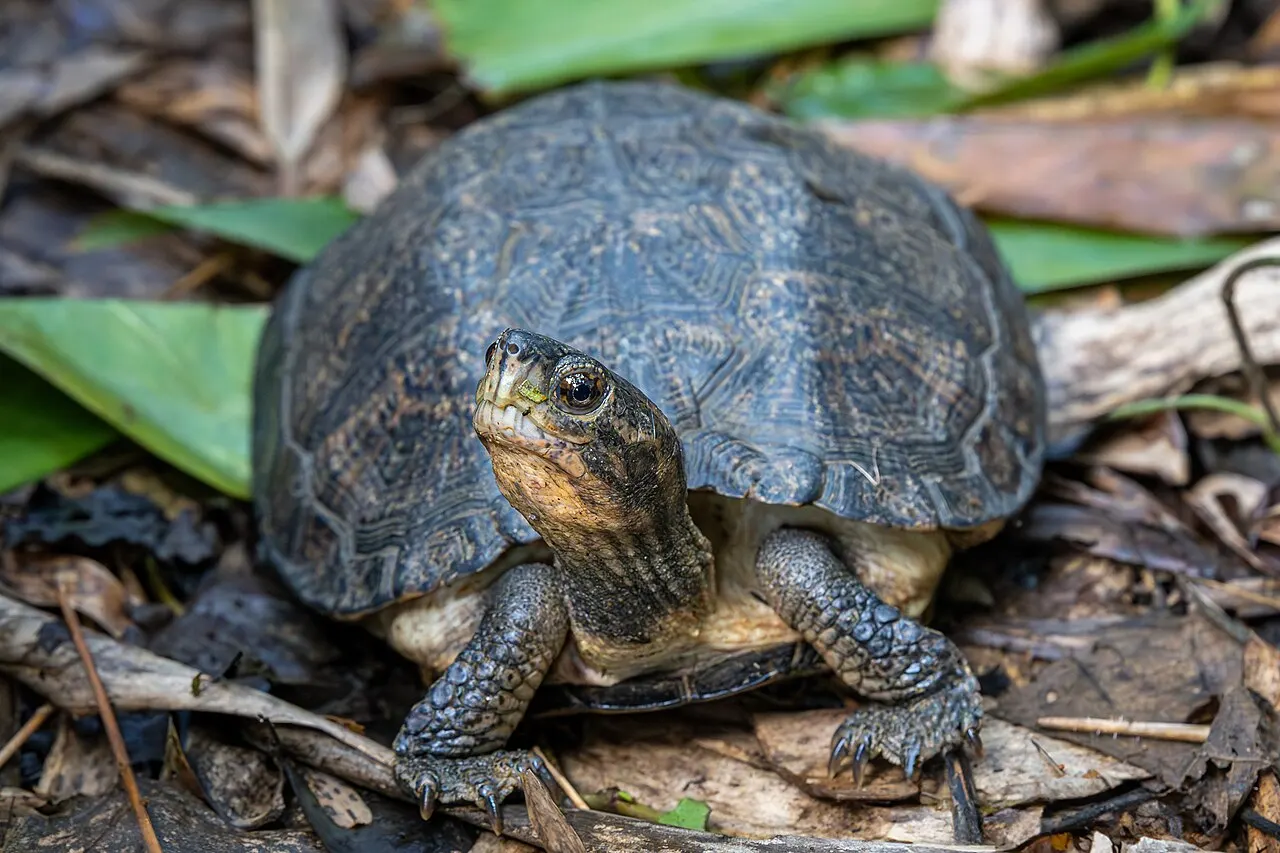
Adults have a reddish brown shell marked with black lines or specks, and the underside is mostly yellow. If a dark pattern is present on the underside, it usually consists of short, wide black lines or thick black specks. Adult length is reportedly up to about 20 cm.
Telling it apart from its relatives is hard. It is essentially indistinguishable by looks from the western black-bridged leaf turtle (Cyclemys atripons), and hatchlings cannot be separated reliably either. Genetic markers are needed for a confident identification. The species name comes from Latin words for beautiful and striped.
Where it lives
A 2020 paper in Check List describes it as recorded from southern Vietnam, from Da Nang south to Ba Ria-Vung Tau Province, and from the far east of Cambodia. The IUCN assessment also lists Laos. The type locality is Phuc-Son in central Vietnam, and Uwe Fritz, Martin Gaulke and Egon Lehr described the species in 1997.
The IUCN gives its elevation as sea level to 700 m, and its habitats as rivers and streams, lowland moist forest and heavily degraded former forest. The Check List paper measured a genetic distance of about 7 percent in the mitochondrial cyt b gene between this turtle and the western species. Some authorities have still treated the two as one species or as subspecies.
Pins are Wikidata “endemic to” fields. Orange dots, when present, are GBIF occurrence tiles — survey bias included.
Why it is in trouble
The IUCN estimates a decline of about 50 percent, judged to be continuing, and the area it occupies is still shrinking. The main cause is harvest. People take these turtles for food, whether deliberately or as incidental catch, and the assessment lists national, international and subsistence use. Mining, renewable energy projects and both small and large dams add pressure on its waterways.
Turtles used in a genetic study of this species came from the Cambodian turtle trade, a Saigon market and the pet trade, as well as from the wild in eastern Cambodia and southern Vietnam. That shows animals of this kind moving through trade channels.
What is being done
The species is listed on Appendix II of CITES, which requires permits for international trade. It occurs in at least one protected area. The IUCN assessment calls for harvest and trade management, site protection, supporting policies and regulations, and alternative livelihoods for people who now depend on collecting. Research priorities include taxonomy, population trends, and harvest and trade trends.
Sources
Written for this catalog in our own words from the sources below, checked against them on 12 November 2026. Population figures are estimates and carry the year they were made. Status and assessment year: IUCN. 2026. The IUCN Red List of Threatened Species. Version 2026-1. iucnredlist.org.