Critically Endangered
Nsess
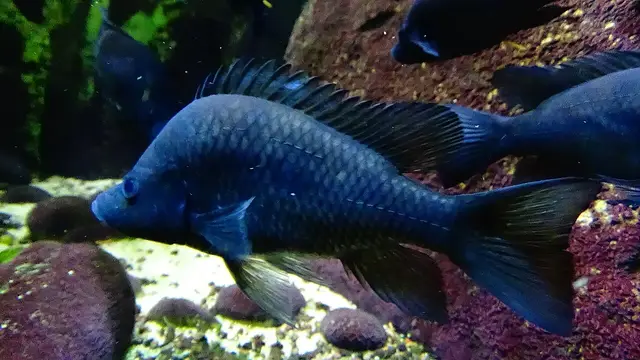
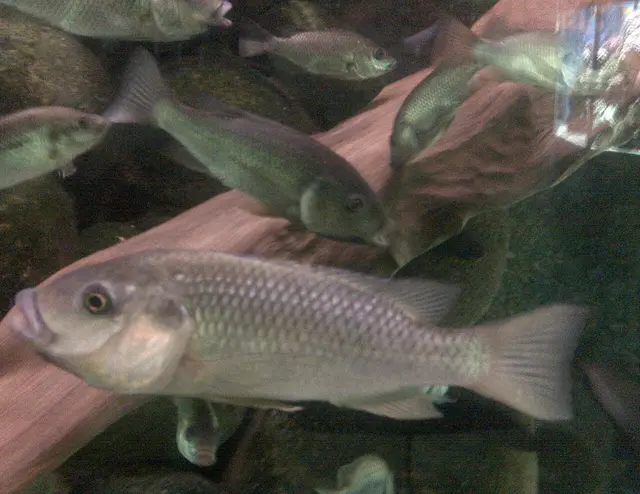
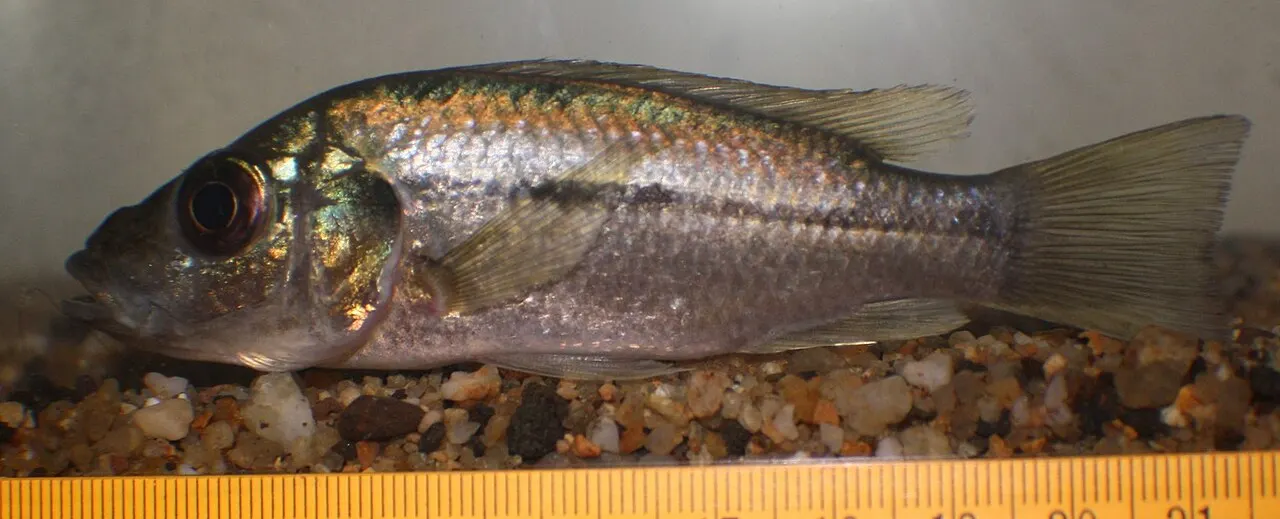
Stomatepia mariae
The nsess (Stomatepia mariae) is a predatory cichlid found in one place only, Lake Barombi Mbo, a small crater lake in western Cameroon. The IUCN Red List rated it Critically Endangered in 2010 because its whole range covers about 7 square kilometres and the lake faces pressure from people.
How to recognise it
The nsess is a modest-sized cichlid, reaching about 12 cm in standard length (nose to the base of the tail). It belongs to Stomatepia, a group of three Barombi Mbo cichlids that form a predator lineage. Maximilian Holly first described it in 1930, under the name Paratilapia mariae.
Where it lives
Lake Barombi Mbo sits in a volcanic crater in Cameroon, about 2 km across. Cataracts on its outflow cut it off from nearby rivers, and the crater formed at most about a million years ago. The IUCN puts the nsess's extent of occurrence and its area of occupancy at 7 square kilometres each, and lists it as a resident of permanent freshwater lakes.
It seems to prefer the more open water of the lake, where it swims fast and roams. The natural water temperature is about 25 to 27 degrees C.
Pins are Wikidata “endemic to” fields. Orange dots, when present, are GBIF occurrence tiles — survey bias included.
How it lives
The nsess prefers small fish, shrimp and insect larvae. It has also been reported stealing food from the freshwater crab Potamon africanus. Females are mouthbrooders, carrying their eggs and young in the mouth.
It is one of 11 cichlids found nowhere else but this lake, in five genera: Stomatepia, Sarotherodon, Myaka, Konia and Pungu. A 2004 study in Frontiers in Zoology by Schliewen and Klee found evidence that at least one of the 11, Pungu maclareni, arose from the hybridisation of two ancient lineages, so the group's history is more tangled than a simple split from one ancestor.
Why it is in trouble
A species this tightly confined has little margin. The IUCN assessment lists soil erosion and sedimentation as an ongoing threat, rated as low impact. Tourism and recreation areas and volcanic activity are listed as possible future threats, each rated negligible. Because the range is so small, damage to the lake could reach the whole population.
Carbon dioxide leaking from the lake floor, as happened at Lake Nyos, has been raised as a possible danger. Studies indicate Barombi Mbo does not hold excess amounts of the gas. The IUCN records the population trend as unknown, and no population count has been published.
In the aquarium trade
The nsess is traded as an aquarium fish. FishBase describes it as not easy to raise in tanks, and it needs rocky cover. No captive breeding programme for conservation is documented, and the IUCN lists no conservation actions in place.
Sources
Written for this catalog in our own words from the sources below, checked against them on 12 November 2026. Population figures are estimates and carry the year they were made. Status and assessment year: IUCN. 2026. The IUCN Red List of Threatened Species. Version 2026-1. iucnredlist.org.