Endangered
Natal Free-Tailed Bat
Mormopterus acetabulosus
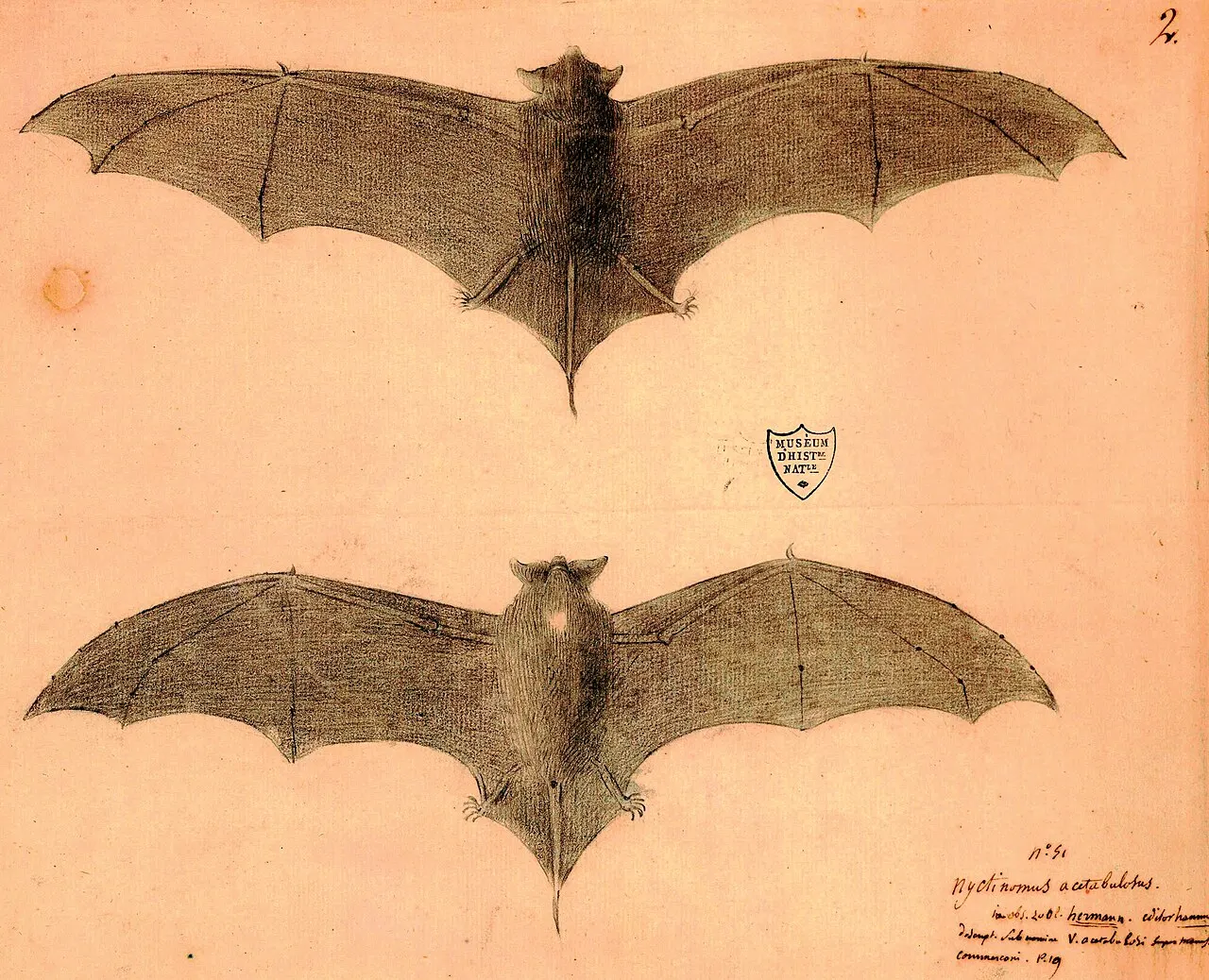
The Natal free-tailed bat (Mormopterus acetabulosus) is a tiny insect-eating bat found only on Mauritius in the Indian Ocean. It roosts in caves and lava tunnels. The IUCN Red List assessed it as Endangered in 2017, after numbers fell sharply and its roosts were repeatedly disturbed.
How to recognise it
This is a very small bat, weighing roughly 6 to 8 grams. Its upper lip is deeply wrinkled, and its small ears are joined across the forehead by a thin membrane, features typical of the free-tailed bats (family Molossidae).
Mauritian bats are noticeably bigger than the free-tailed bats of nearby Réunion. A 2008 study in the Journal of Mammalogy compared body size, skull and soft-part features, and mitochondrial DNA from 141 bats, and concluded that the Réunion animals are a separate species, now named Mormopterus francoismoutoui. The Mauritian bat kept the older name, given by Johann Hermann in 1804.
Where it lives
The species is native to Mauritius. The IUCN counts four locations, with an area of occupancy of only about 16 square kilometres inside a wider range of roughly 2,070 square kilometres. One doubtful record from Madagascar and two from South Africa are probably vagrants.
It roosts in caves and other underground spaces such as lava tunnels, and it forages over lowland forest and shrubland, both moist and dry.
Pins are Wikidata “endemic to” fields. Orange dots, when present, are GBIF occurrence tiles — survey bias included.
How it lives
It is an insect-eater that spends the day in cave roosts, and a local magazine report says a bat can eat about its own weight in insects each night. Little else about its diet, breeding or movements has been published. A 2017 conservation project listed research on movements, breeding and feeding as a goal for that reason.
Why it is in trouble
Bat numbers have dropped steeply, though the figures differ. The IUCN assessment gives a past reduction of 67 percent. A survey by a local conservation group reported a fall of almost 80 percent over about two decades, and a decline of more than 80 percent between 1999 and 2017 has also been suggested. The population is also split into isolated groups.
The IUCN lists recreation and work or other activities in and around the caves as ongoing threats. Local reports add that caves have been used as dumping sites and for illicit activities, and that Mauritius uses a lot of pesticide, which may reduce the insects the bats eat. Disturbance of the caves for tourism is also a concern.
What is being done
In November 2017 the Mohamed bin Zayed Species Conservation Fund gave $8,200 to the Ecosystem Restoration Alliance Indian Ocean. The plan was to clear household waste from the roosting caves, teach local people why the bats matter, study their movements, breeding and feeding, and survey other caves for new roosts. The project described three known roosts at the time.
A university PhD study reported in a 2023 magazine article counted about 8,000 bats across 11 caves. The IUCN lists site protection, habitat restoration and site management among the actions needed, and records it as unknown whether any roost lies inside a protected area.
Sources
Written for this catalog in our own words from the sources below, checked against them on 12 November 2026. Population figures are estimates and carry the year they were made. Status and assessment year: IUCN. 2026. The IUCN Red List of Threatened Species. Version 2026-1. iucnredlist.org.




