Endangered
Napaeus exilis
Napaeus exilis
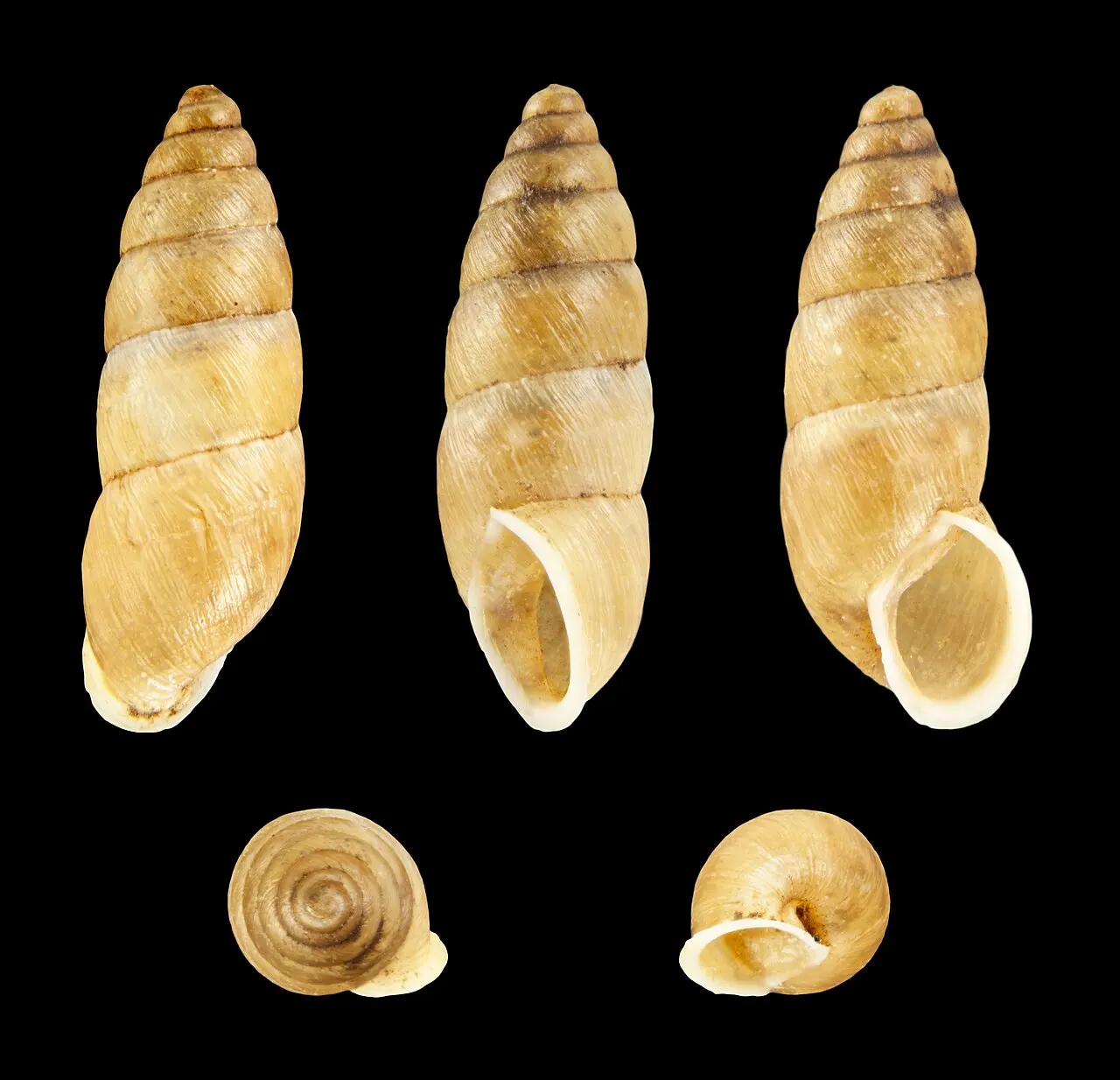
Napaeus exilis is a small land snail in the family Enidae, known only from Gran Canaria in Spain's Canary Islands. Described in 1995, it is recorded from just three locations in shrubby vegetation at roughly 200 to 250 m. The IUCN moved it from Critically Endangered in 2011 to Endangered in 2026.
What it is
Napaeus is a genus of air-breathing land snails with species on every island of the Canary archipelago. Napaeus exilis was named by Henríquez in 1995, in a revision of the Napaeus variatus species group by Alonso, Henríquez and Ibáñez that described five new species (Zoologica Scripta 24: 303 to 320). It has no common name.
A 2007 paper by Ibáñez and colleagues places it in the subgenus Napaeinus, alongside N. moquinianus (also from Gran Canaria), N. esbeltus (Tenerife), N. rufobrunneus (Lanzarote) and N. huttereri (the islet of Alegranza). The two Napaeus subgenera cannot be told apart by shell alone.
Where it lives
The type specimen came from Siete Puertas on Gran Canaria. The global biodiversity database GBIF holds only three records: preserved specimens from 1959 (Santa Brígida) and 1972 (collected between Tamaraceite and San Lorenzo), and a 2016 sighting in the Viera y Clavijo botanical garden at Tafira Alta, logged during a survey of the island's land and freshwater molluscs.
The IUCN assessment counts three locations at about 200 to 250 m above sea level, in Mediterranean-type shrubby vegetation, with an estimated extent of occurrence of about 12 sq km, and treats the range as restricted. The Canary Islands biodiversity database lists its habitat as tabaibal-cardonal, a type of succulent scrub.
Pins are Wikidata “endemic to” fields. Orange dots, when present, are GBIF occurrence tiles — survey bias included.
Why it is in trouble
The 2026 assessment records a continuing decline in the area the snail occupies. It names housing and urban development as a threat, lists a second threat without detail, and gives habitat conversion, habitat degradation and direct mortality as the stresses. The population trend is recorded as unknown.
The Endangered rating (criteria B1ab(iii) and 2ab(iii)) reflects a small range, few locations and shrinking habitat. An earlier assessment in 2011 had rated the species Critically Endangered, so the category has been lowered, but the reason is not recorded in the assessment's structured data.
What is being done
Site protection is the one conservation action the IUCN lists. Conservation sites have been identified over part of the snail's range, the species occurs in at least one protected area, and the assessment puts the share of the population inside protected areas at 41 to 50%. It records no recovery plan and no systematic monitoring scheme in place.
Sources
Written for this catalog in our own words from the sources below, checked against them on 12 November 2026. Population figures are estimates and carry the year they were made. Status and assessment year: IUCN. 2026. The IUCN Red List of Threatened Species. Version 2026-1. iucnredlist.org.
- IUCN Red List assessment, Napaeus exilis (2026)
- IUCN Red List taxon record (API), Napaeus exilis
- Biota, Canary Islands biodiversity database, Napaeus exilis
- Alonso, Henriquez and Ibanez 1995, Zoologica Scripta 24(4), via Biota
- Ibanez et al. 2007, Journal of Conchology 39(4): 381
- GBIF occurrence records, Napaeus exilis




