Endangered
Giant Gippsland earthworm
Megascolides australis
The giant Gippsland earthworm is one of the largest earthworms in the world, often longer than a metre, and lives only in a small part of Victoria, Australia. The IUCN Red List lists it as Endangered (assessed 2014). It spends its life underground in moist clay soil and is easily killed if dug up.
How to recognise it
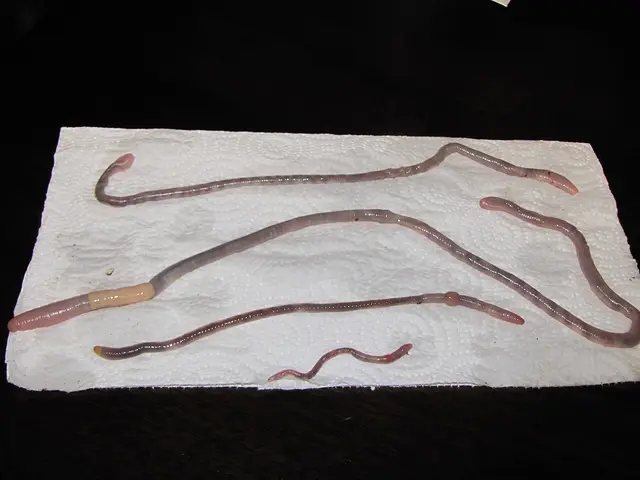
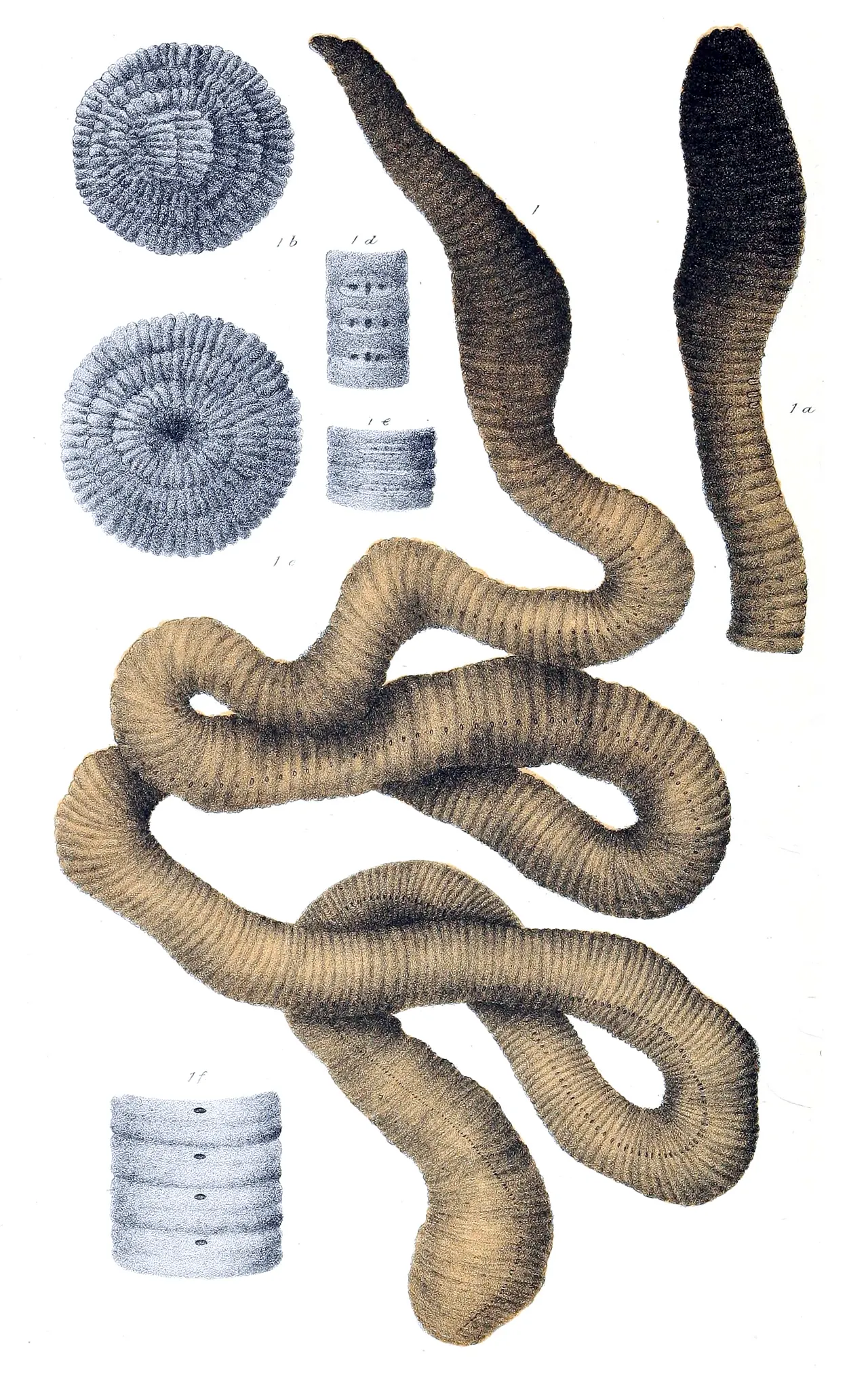
Adults are usually 80 to 150 cm long and up to about 2 cm thick. Specimens up to 2 m have been recorded, and some accounts claim more. The head is purple and the body pinkish grey or blue grey.
You are unlikely to see one, since it lives underground. When it moves fast through wet burrows, though, it can make a gurgling or sucking sound that gives it away.
Where it lives
The worm is confined to roughly 400 km2 of West Gippsland, in the Baw Baw, South Gippsland and Bass Coast shires. Frederick McCoy described it in 1878. Most records are on private farmland, with some on public land such as Mt Worth State Park. It has disappeared from many places where it was once recorded.
It needs moist, blue-grey clay on flats above flood level, near stream banks or soaks, and favours south- and west-facing slopes. It cannot survive waterlogged or seasonally flooded ground. The IUCN's 2014 assessment gives five locations, an extent of occurrence of about 1,000 km2 and an area of occupancy of about 100 km2 (different measures from the 400 km2 figure).
Pins are Wikidata “endemic to” fields. Orange dots, when present, are GBIF occurrence tiles — survey bias included.
How it lives
Most of its life is spent in the top 1.5 m of soil, feeding on roots and organic matter. It moves little and does not travel far to new ground, so its populations are fragmented into separate colonies. Its lifespan is not firmly known but is thought to exceed 10 years and may reach 20.
It breeds in spring and early summer. Each worm has both male and female organs, but two worms are needed to mate. Only one egg capsule is laid per season, inside the burrow. The capsule is about 5 to 9 cm long by one account and 4 to 7 cm by another, and takes more than 12 months to hatch. One source gives about five years to reach maturity.
Why it is in trouble
No overall population estimate exists, because the worm is so hard to survey. Drought has hit some populations in recent years.
Disturbing the soil is the big danger: road building, dams, deep ripping and trenching. Changes to surface or spring water, chemicals and effluent seeping into the ground, and a drying climate add to it. The IUCN lists herbicides and pesticides, farming, groundwater pumping for agriculture and housing among the ongoing threats, and records a continuing decline in the area it occupies. The worm cannot recover from even slight wounds, so digging one up or holding it upright can kill it.
What is being done
It is listed as Vulnerable nationally under Australia's EPBC Act and as Endangered in Victoria. A national recovery plan was published in 2010, setting a five-year programme. Environmental Significance Overlays now apply to planning in Baw Baw Shire (ESO4, from 2014) and South Gippsland Shire (ESO9). Parks Victoria manages a known population in a small section of Mt Worth State Park, and an 18-month landholder project supported by Landcare and partner agencies worked on habitat management on farms. The worm dies in captivity, so captive breeding is not an option.
Sources
Written for this catalog in our own words from the sources below, checked against them on 12 November 2026. Population figures are estimates and carry the year they were made. Status and assessment year: IUCN. 2026. The IUCN Red List of Threatened Species. Version 2026-1. iucnredlist.org.