Critically Endangered
Mesopotamian barbel
Luciobarbus subquincunciatus
The leopard barbel, also called the Mesopotamian barbel, is a large, black-spotted carp relative from the Tigris and Euphrates rivers. The IUCN's 2026 assessment lists it as Critically Endangered, with a decreasing population. It had no scientific record for about 12 years until it was found again in Türkiye in January 2024.
How to recognise it
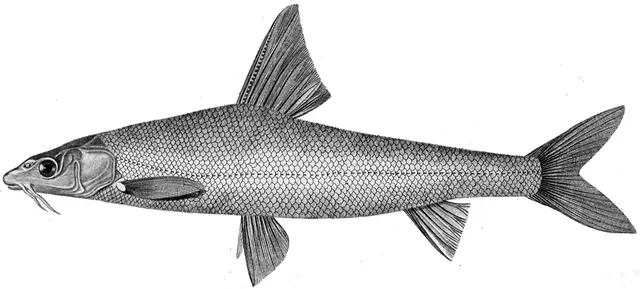
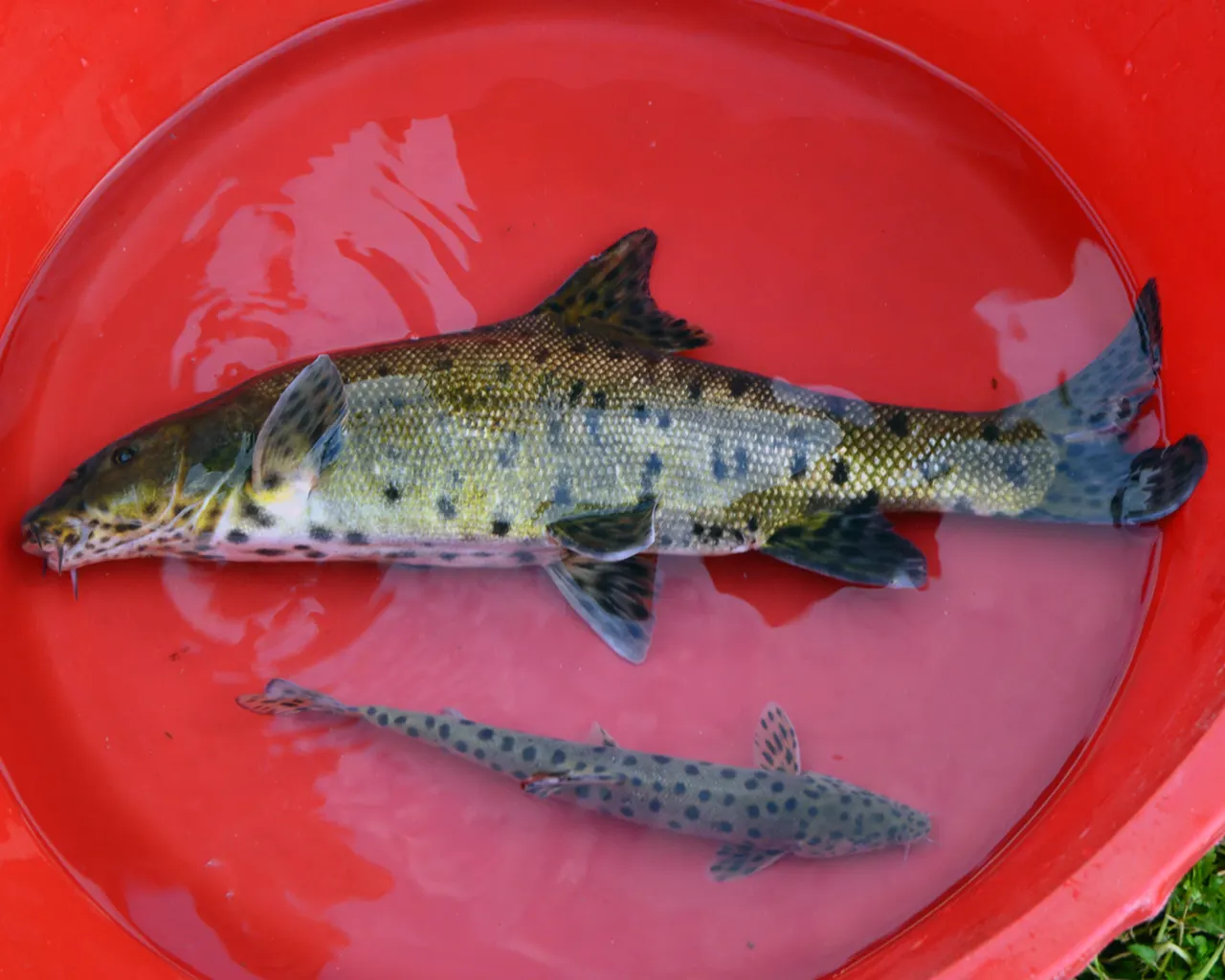
Luciobarbus subquincunciatus is a barbel, a carp-like freshwater fish with a fleshy filament hanging from the mouth. Its most obvious feature is a scatter of conspicuous black spots, which gives it the leopard comparison. Albert Günther described the species in 1868, originally under the genus Barbus.
It gets large. The fish caught in 2024 measured about 50 cm and weighed about 2 kg, and FishBase gives a maximum length of 60 cm. Judging by its teeth, it feeds mainly on molluscs, and it also eats algae and detritus. It is reported to spawn over shallow gravel.
Where it lives
The species belongs to the Tigris-Euphrates basin. The IUCN lists it as native and present in Türkiye, Iraq, Syria and Iran, and records it living in permanent rivers and streams. It is not a migrant, and the assessment puts its generation length at about 8 years.
FishBase describes it as preferring still, well-oxygenated water, although it can also live in reservoirs.
Pins are Wikidata “endemic to” fields. Orange dots, when present, are GBIF occurrence tiles — survey bias included.
Why it is in trouble
The Red List rates it Critically Endangered under criterion A2cde, which is based on a steep population decline. Re:wild and SHOAL, two conservation groups, say fishing, pollution, habitat destruction and dam building pushed it to the edge of extinction over the last three decades. It was once locally common and is now close to absent, but there are too few data to put a precise figure on the rate.
The assessment ranks harvest as the highest threat. Fishing is recorded as affecting the whole population, mostly as unintended catch in small-scale and subsistence fishing, with some large-scale fishing as well. Small dams, large dams and sewage are also listed.
The 2024 rediscovery
The last scientific record before 2024 was from 2011. Fishers reported that the species might still be around, so Cüneyt Kaya and Münevver Oral of Recep Tayyip Erdogan University searched the Turkish Tigris. Older records pre-dated nine dams on that stretch. Dams alter flow and can push cold reservoir water downstream, so the team worked further down the river.
After two expeditions, a local fisherman, Mehmet Ülkü, caught a leopard barbel at Cizre and kept it alive in an oxygenated tank overnight. A second fish was in his nets by the time the researchers arrived. They photographed and measured both and released them with the Cizre fisheries department. It was the second species from the Most Wanted Lost Fishes list to be found again.
What is being done
The assessment records no recovery plan and no monitoring scheme, and it is unknown whether the species occurs in any protected area. It lists awareness work and policy action at national and sub-national level among the actions needed.
Kaya and Oral plan seminars for fishers and teachers to build local pride in the river, and they want to estimate how many fish remain and where. A new dam is under construction close to the Cizre capture site.
Sources
Written for this catalog in our own words from the sources below, checked against them on 12 November 2026. Population figures are estimates and carry the year they were made. Status and assessment year: IUCN. 2026. The IUCN Red List of Threatened Species. Version 2026-1. iucnredlist.org.