Critically Endangered
Leptaxis wollastoni
Leptaxis wollastoni
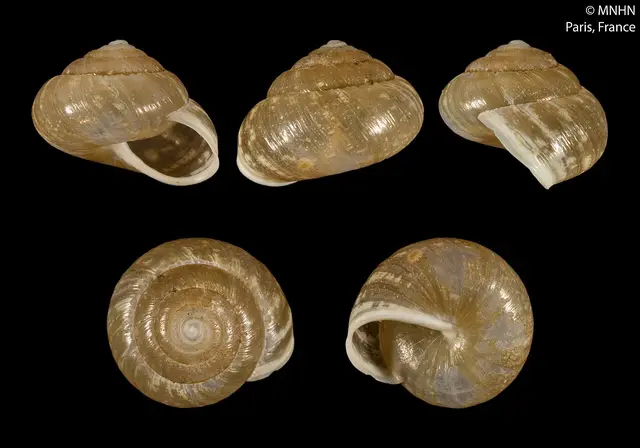
Leptaxis wollastoni is a land snail found only in the Madeira archipelago, reportedly on Porto Santo island and on the tiny islet of Ilhéu de Fora off its coast. The IUCN Red List rated it Critically Endangered in 2025, with a population estimated at about 150 and still declining.
What it is
It belongs to the family Hygromiidae and was described by Richard Thomas Lowe in 1852. Two subspecies are recognised: the nominate form and Leptaxis wollastoni forensis, described by Wollaston in 1878. The forensis form is found only on Ilhéu de Fora.
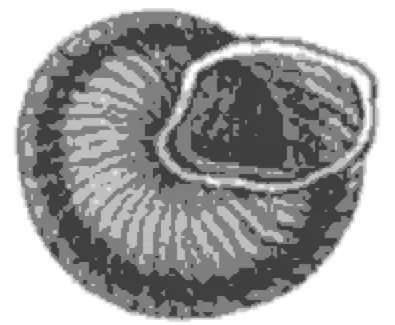
Like other land snails it is an air-breathing pulmonate. Published descriptions of its shell and diet are hard to find.
Where it lives
The Red List assessment counts two locations and a severely fragmented population, with an area of occupancy of just 8 square kilometres at elevations from 20 to 280 m. The habitats it lists are rocky ground, such as inland cliffs and peaks, and temperate grassland.
Ilhéu de Fora lies northeast of Porto Santo and is the islet furthest from it. It covers 5 hectares and rises to 67 m. A Madeira government guide names the Ilhéu de Fora snail as one of two land snails found only there, the other being Discula calcigena gomesiana.
The six Porto Santo islets hold 33 land mollusc species, and 90.8 percent of them occur only in the Madeira archipelago. Many snails here are restricted to areas under 1 square kilometre.
Pins are Wikidata “endemic to” fields. Orange dots, when present, are GBIF occurrence tiles — survey bias included.
Why it is in trouble
The 2025 assessment estimates about 150 individuals and a continuing decline. It lists rats (genus Rattus, species not specified) as an ongoing threat affecting most of the population. The Madeira government guide, though, says rats were not introduced on the Porto Santo islets it describes, so where the rat threat applies is unclear.
Several other pressures are listed. Droughts, temperature extremes and habitat change each affect the whole population, and landslides affect most of it. More frequent and intense fires and recreational activity affect parts of it.
A Madeira report on the islets' snails names habitat degradation, from natural and human causes, as one of the main dangers for such small animals.
What is being done
The 2025 assessment records a systematic monitoring scheme and says 41 to 50 percent of the population occurs in protected areas. It lists site protection, invasive species control and species recovery as conservation actions, and calls for research on habitat trends.
The LIFE Ilhéus do Porto Santo project began fieldwork in October and November 2010 with snail surveys on Ilhéu de Cima. It aimed to update the inventory of the islets' land snails and assess the conservation status of the species found only there.
Sources
Written for this catalog in our own words from the sources below, checked against them on 12 November 2026. Population figures are estimates and carry the year they were made. Status and assessment year: IUCN. 2026. The IUCN Red List of Threatened Species. Version 2026-1. iucnredlist.org.
- IUCN Red List assessment, Leptaxis wollastoni (Teixeira and Silva, 2025)
- MolluscaBase, Leptaxis wollastoni (R. T. Lowe, 1852)
- Porto Santo Islets guide (Instituto das Florestas e Conservacao da Natureza, Madeira)
- LIFE Ilhéus do Porto Santo, terrestrial malacofauna first report
- Leptaxis wollastoni, Wikipedia