Endangered
Laotian langur
Trachypithecus laotum
The Laotian langur (Trachypithecus laotum), also called the white-browed black langur, is a slender, tree-living monkey found only in Laos, mostly in forest on limestone hills. The IUCN Red List rates it Endangered (2020 assessment), up from Vulnerable in 2008, and it is one of the region's least studied primates.
How to recognise it
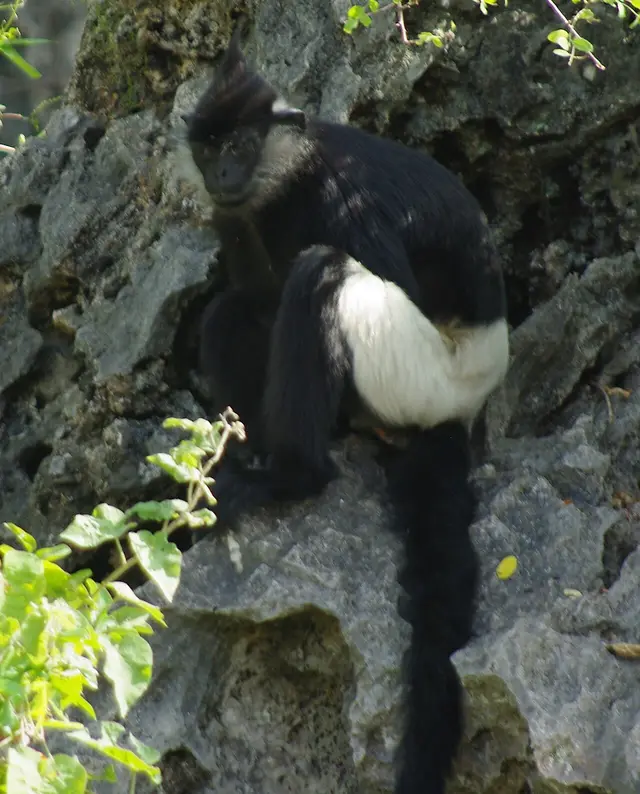
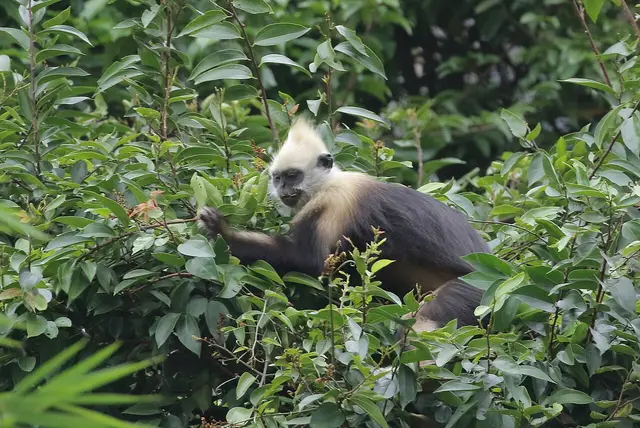
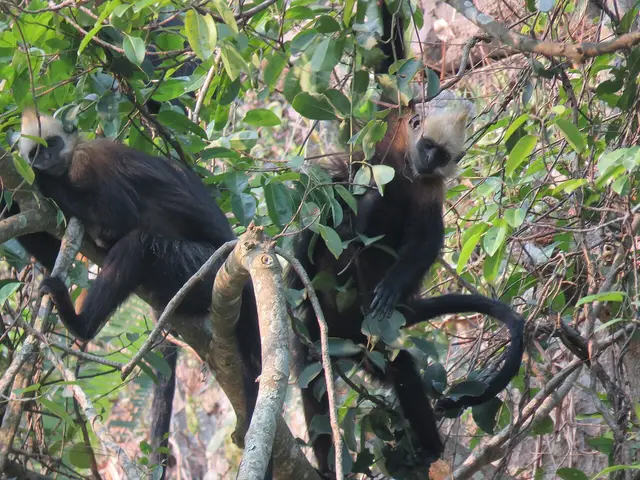
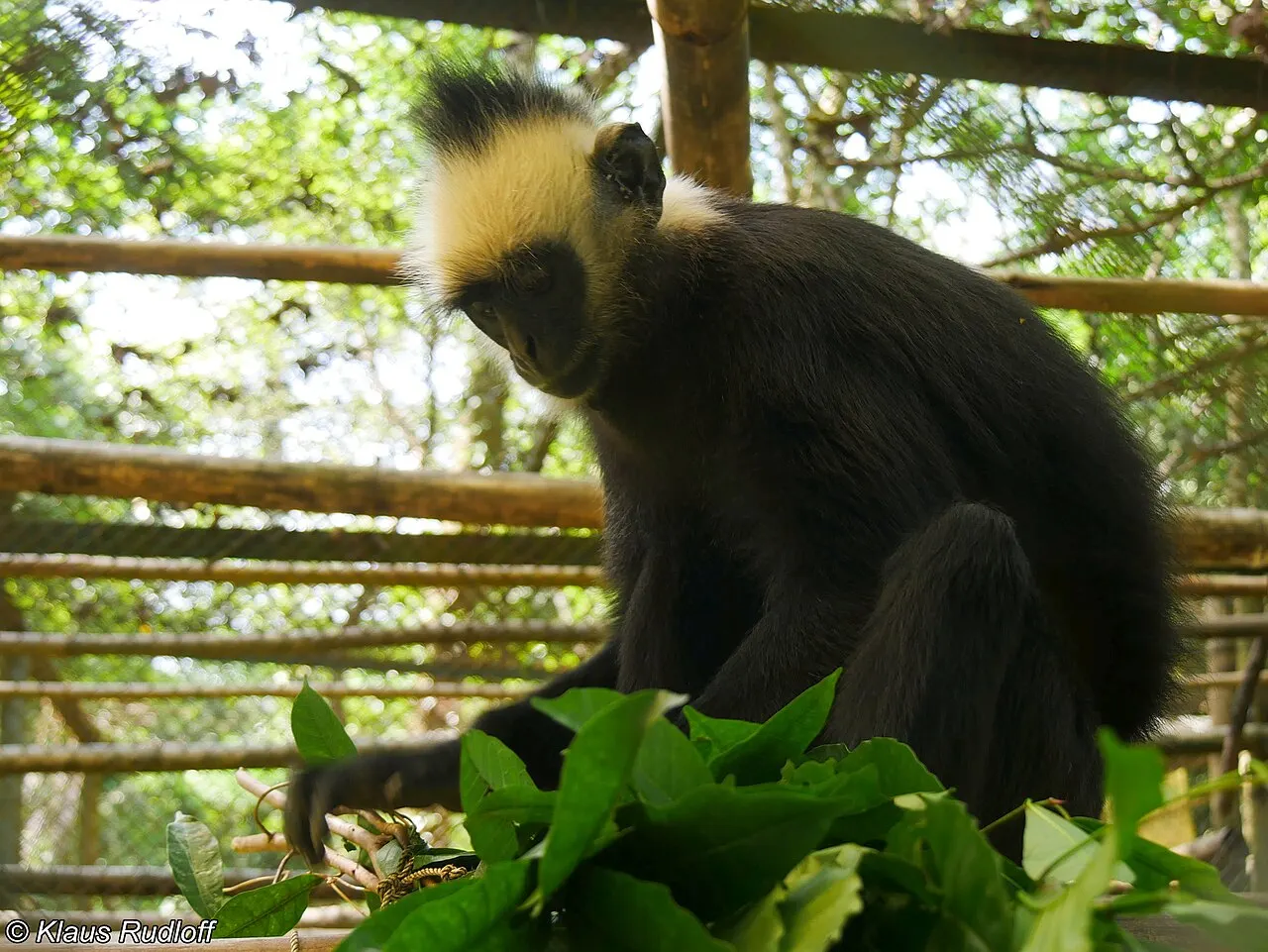
It's a black langur with a black face ringed by white hair, which gives the species its alternative name, and a small crest of black hair on the crown. Infants are orange or golden and darken as they grow. Juveniles vary in colour, from yellowish or orange to black and white, while adults are black with a black-and-white head.
Where it lives
Laos is the only country where it occurs. It is mainly tied to karst forest in north-western Khammouane province and south-western Bolikhamxai province in the centre of the country. The IUCN counts five locations and gives an elevation range of 160 to 1,200 m.
The IUCN lists moist montane forest, moist lowland forest and rocky areas such as cliffs and peaks as habitat. Phou Hin Poun National Protected Area in Khammouane holds what a 2021 study calls the largest habitat of the species in the country, a karst area of valleys and depressions with mixed deciduous and semi-evergreen forest. Nam Kading and Nam Ha are also reported as protected areas in its range.
Pins are Wikidata “endemic to” fields. Orange dots, when present, are GBIF occurrence tiles — survey bias included.
How it lives
Langurs eat mostly leaves, and in Phou Hin Poun they were seen feeding mainly on young leaves. Other accounts add fruit, seeds and flowers, and a multi-chambered stomach for digesting tough plant food. The langurs share forest with Assamese macaques and have been seen feeding in the same tree. In one case, most langurs sat in the middle of the canopy while the macaques kept to lower branches, and in another a macaque group drove a small langur group out of a feeding tree.
In a 2020 survey there, langur groups numbered 2 to 6 animals when counted directly, though groups of up to 20 to 25 were recorded in 1998. Sightings clustered in the early morning (40% between 6 and 8 am), and none came after 4 pm. The IUCN puts a generation at 10 to 12 years.
Why it is in trouble
The IUCN gives a decreasing population trend, a severely fragmented range and continuing decline in habitat and in numbers. It estimates a past reduction of 30 to 40% and a further 30% ahead, both linked to levels of exploitation. Hunting is the first threat it names, followed by small-scale farming and mining and quarrying. Langurs are also caught unintentionally in subsistence harvesting.
A 2021 survey in Phou Hin Poun, published in Diversity, walked 64.1 km of trails between August and December 2020 and counted 35 langurs in 9 groups. Encounter rates were 1 group per km in one sector and 0.18 to 0.34 elsewhere. Groups were smaller than those logged in the same area between 1994 and 2010, only one juvenile and no infants were seen, and the interviewees generally felt numbers were falling. The team found signs of poaching, including guns, and photographs from hunters showed two langurs killed at one village. Logging was seen in all four sectors, and a mine operates near the edge of the total protection zone. Langurs were seen in all four sectors, so the team thought the species may still be fairly common locally, and they described the evidence as preliminary.
What is being done
The species is listed on CITES Appendix II and is protected under Lao wildlife law, and parts of its range fall inside national protected areas. The IUCN notes little in the way of dedicated action. The 2020 to 2021 survey was a small project funded by a Rufford Foundation grant, in which five protected-area staff were trained in survey methods and 13 local villagers took part in the fieldwork. Its leader hoped to continue with more work on the langur's ecology.
Sources
Written for this catalog in our own words from the sources below, checked against them on 12 November 2026. Population figures are estimates and carry the year they were made. Status and assessment year: IUCN. 2026. The IUCN Red List of Threatened Species. Version 2026-1. iucnredlist.org.