Critically Endangered
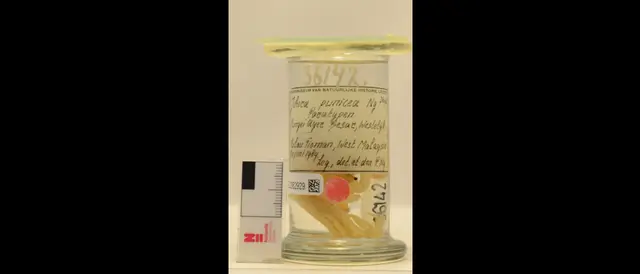
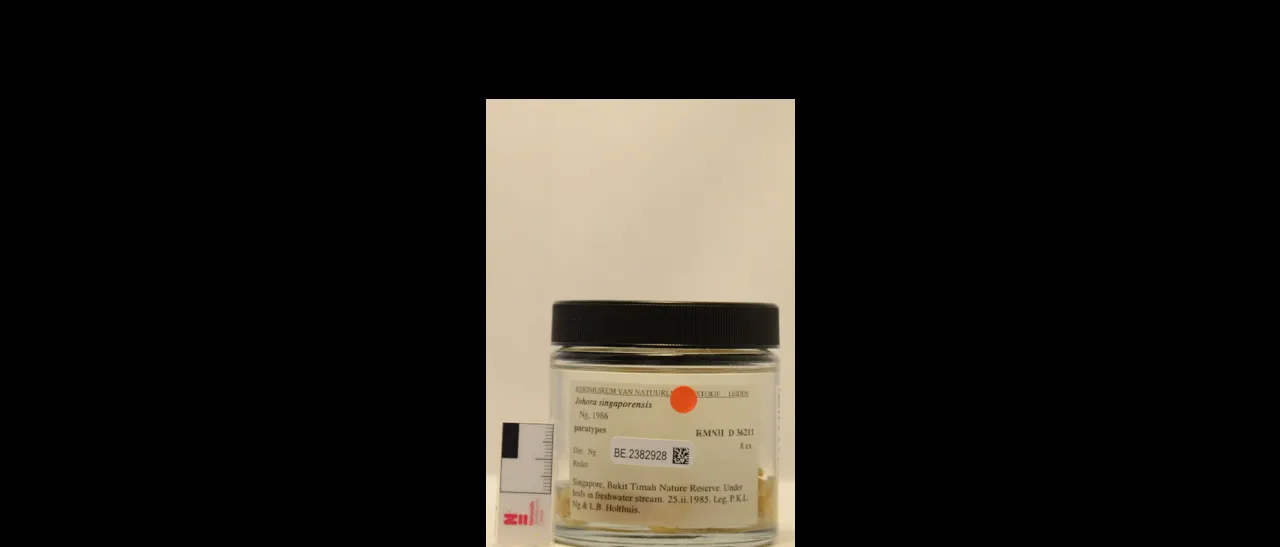
Johora singaporensis
Johora singaporensis
The Singapore freshwater crab (Johora singaporensis) is a small, hairy-shelled stream crab found nowhere on Earth except a few hill streams in Singapore. The IUCN Red List has rated it Critically Endangered since its 2008 assessment, and its two best-documented populations lie outside the country's protected nature reserve.
How to recognise it
This is a modest crab, reaching about 30 mm across the shell. The carapace is squarish and covered in short, stiff hairs. The back is a dirty brown and the underside is white to pale orange.
It was described by the zoologist Ng in 1986. For about 50 years before that it had been confused with a relative from the Malay Peninsula, Johora johorensis, a mix-up NParks cites as an example of why accurate taxonomy matters for conservation.
Where it lives
It is endemic to Singapore, one of three freshwater crabs found only there. Its closest relatives live on the Malay Peninsula and nearby islands, which makes it the southernmost member of its genus.
The crab lives in streams running through hill forest. It shelters under rocks and in leaf litter along the bank, and it is mostly active at night. It feeds on plant detritus and on small worms from the muddy stream bed. Its future depends on clean hill streams.
The IUCN assessment lists one location and calls the population trend unknown.
Pins are Wikidata “endemic to” fields. Orange dots, when present, are GBIF occurrence tiles — survey bias included.
Why it is in trouble
A survey from October 2007 to February 2008, published in the journal Oryx, checked three streams. At Bukit Timah Nature Reserve, the original collecting site, ten visits turned up no crabs at all. The stream there was significantly more acidic than the other two, and local rainwater has a pH of about 4.1 to 4.5. Acid rain was suspected as the cause, but the researchers could not confirm it because long-term data are lacking. A later follow-up found a small population elsewhere in the reserve, where the water was less acidic.
Bukit Gombak held 75 crabs, mostly juveniles. A drainage change after a landslide there had cut water flow and added silt. Bukit Batok, the largest known population, held 222 crabs, and no egg-carrying females were seen at either site. The land beside the Bukit Batok stream is designated for housing, and the IUCN assessment also lists groundwater abstraction among the threats. Singapore's Red Data Book lists the crab as Endangered in its 2008 edition and names loss of forest cover, habitat damage and water pollution as threats.
What is being done
Singapore's National Parks Board monitors the two sites outside the reserve with other agencies and has taken steps to prevent further development or disturbance there. Research is weighing in-stream and captive options, including finding suitable sites to build up numbers. In 2012 the crab was named in a list of the world's 100 most threatened species compiled by the IUCN Species Survival Commission and the Zoological Society of London.
Sources
Written for this catalog in our own words from the sources below, checked against them on 12 November 2026. Population figures are estimates and carry the year they were made. Status and assessment year: IUCN. 2026. The IUCN Red List of Threatened Species. Version 2026-1. iucnredlist.org.