Endangered
Catch bowl coral
Catch bowl coral
Catch bowl coral, the catch bowl coral, is a tough, reef-building stony coral found across the Indo-Pacific, from East Africa to Japan and Australia. It can dominate exposed reef slopes. The IUCN Red List moved it from Near Threatened to Endangered in 2024, as warming seas, storms and coastal development erode its reefs.
How to recognise it
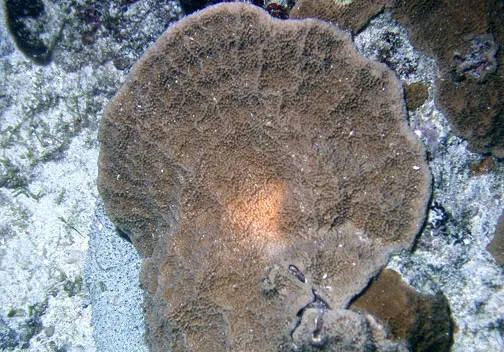
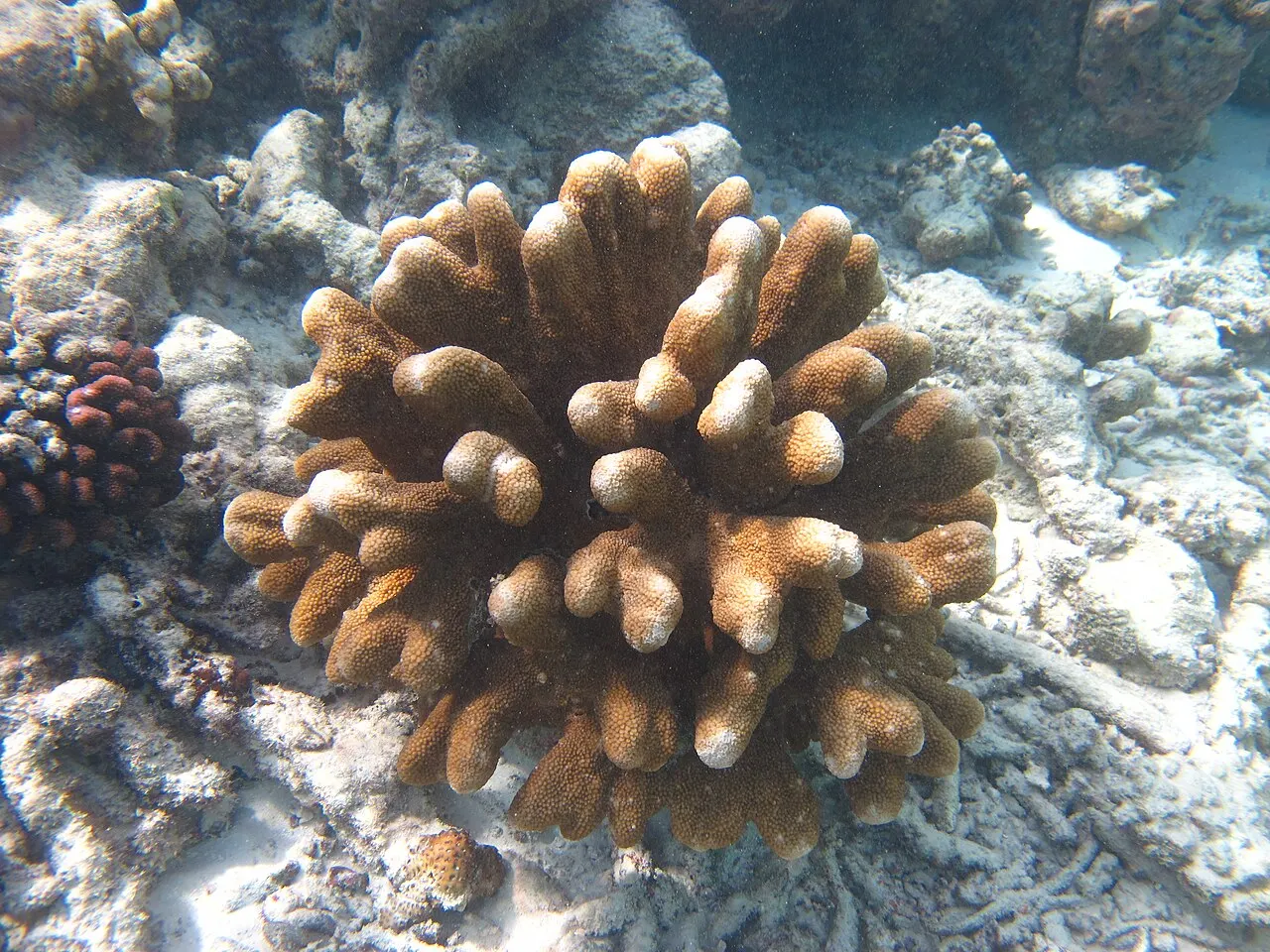
Catch bowl coral grows as thick plates, ridges, columns or clumps, and the shape depends on the water. Colonies in strong currents or on the seaward side of a reef tend to be encrusting, while calmer water produces more branching forms. Branches are around 5 to 15 cm thick and up to about 20 cm long, and whole colonies can form pillows or clumps up to 2 m across.
The colour is pale brown, cream or greenish, coming from the algae living inside the coral's tissue. It looks very like Isopora cuneata, and the two are hard to separate without a close look at the corallites. The species used to be filed under Acropora, and older books and photo captions still call it Acropora palifera.
Where it lives
It ranges widely through the Indo-Pacific, from South Africa, East Africa and Madagascar to India, Southeast Asia, Japan, Micronesia and Australia, and the IUCN lists about fifty countries and territories. It grows on reef flats, crests, edges and slopes, down to about 40 m. In a Taiwan study it was encrusting reef surfaces from the low intertidal zone to about 3 m.
On the northern Great Barrier Reef it is the most abundant coral, and it dominates many exposed outer slopes. Elsewhere it is usually less prominent.
Pins are Wikidata “endemic to” fields. Orange dots, when present, are GBIF occurrence tiles — survey bias included.
How it lives
Corals of the genus Isopora brood their young. Eggs are fertilised inside the parent polyp, and the colony releases ready-formed larvae that can settle straight away. In Taiwan the larvae tend to crawl near the parent colony. Colonies are hermaphrodites, and at Lizard Island larvae are released through much of the year. A Taiwan genetics paper gives a rough growth estimate of 2 cm a year.
It is an aggressive neighbour that overgrows other corals it touches and kills their tissue. Its porous skeleton breaks easily in storms, but broken fragments can reattach and start new colonies.
Why it is in trouble
The Red List says the population is decreasing, with a projected reduction of about 62 percent. Rising sea temperature is the main concern: bleaching hit southern Taiwan in 1998, 2007 and 2010, and the species is reportedly vulnerable to black band and white band disease. The Red List also names storms and floods, sedimentation, housing, commercial and shipping development, tourism and recreation, and small-scale harvest as ongoing threats.
Not every population is doing badly. A 2019 genetic study of Tantzi Bay in Taiwan compared samples from 2000 to 2015 and concluded the population kept its genetic makeup through bleaching events and repopulated after typhoon damage. The Endangered listing rests on projected habitat decline rather than a count of colonies.
What is being done
The 2024 assessment says it is not known whether the species occurs in a protected area, and it calls for site protection, habitat restoration and management, and species recovery. It also lists a genome resource bank and captive breeding or propagation among the actions needed. The Red List also records use of the species as a display animal.
Sources
Written for this catalog in our own words from the sources below, checked against them on 12 November 2026. Population figures are estimates and carry the year they were made. Status and assessment year: IUCN. 2026. The IUCN Red List of Threatened Species. Version 2026-1. iucnredlist.org.