Endangered
Lisbon arched-mouth nase
Lisbon arched-mouth nase
The Lisbon arched-mouth nase (Iberochondrostoma olisiponense) is a small freshwater fish found only in a few tributaries of the lower Tagus (Tejo) in Portugal. It was described in 2007. The IUCN Red List assessed it as Endangered in 2024, with a tiny range, drying streams and hybridisation with a relative.
How to recognise it
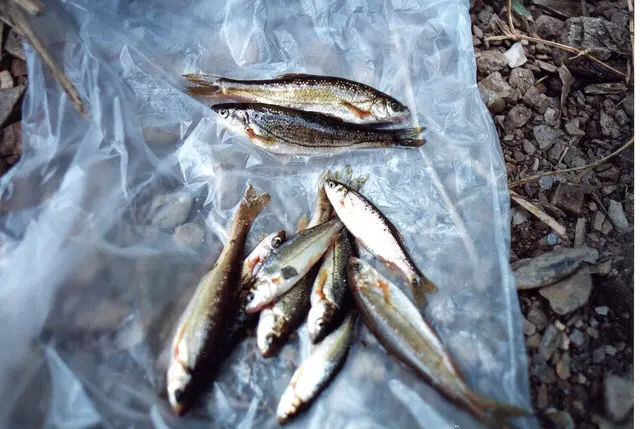
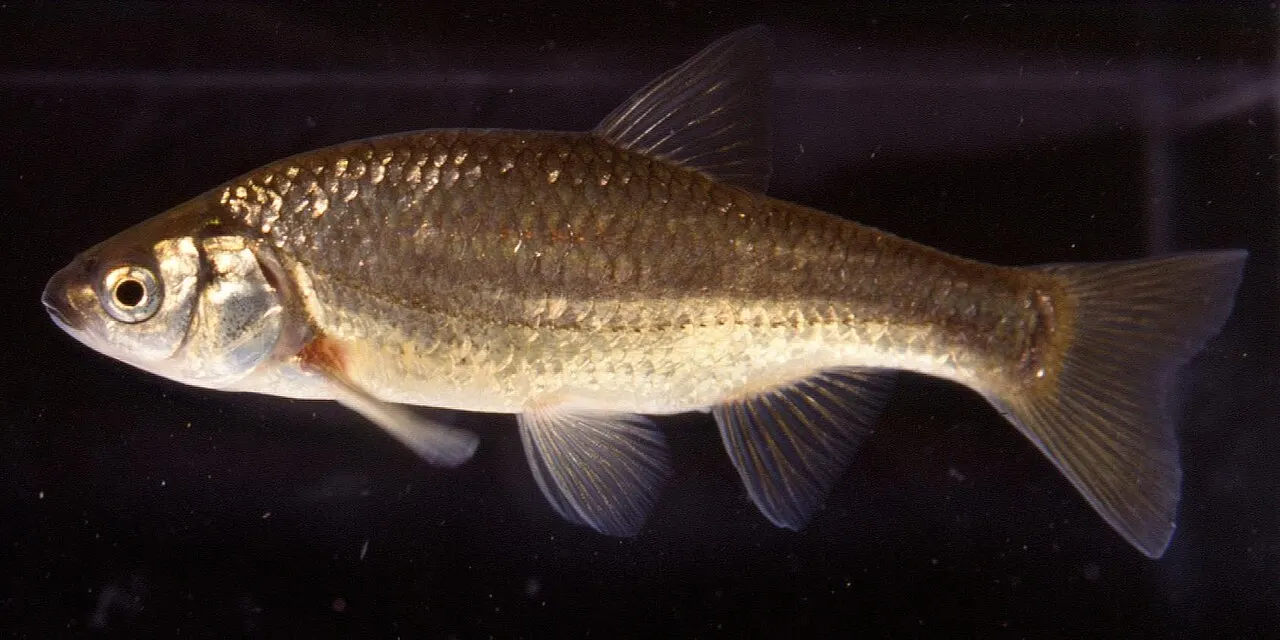
It's a small minnow-type fish in the carp family, usually 5 to 11 cm long, though a few specimens up to about 18 cm have been recorded. The mouth is strongly arched, there's no horny blade on the lower jaw, and the bases of the fins lack bright reddish colour. Males have longer pelvic fins than females, which is unusual among its close relatives.
Its closest lookalike is the Portuguese arched-mouth nase (Iberochondrostoma lusitanicum). The Lisbon species has a deeper body, a longer head and a bigger eye.
Where it lives
The species is endemic to the lower Tagus basin north of Lisbon, and has been recorded in three tributaries: the Trancão, the Maior and the Muge. The Red List counts four locations, an estimated extent of occurrence of about 3,741 square kilometres, and an area of occupancy of just 56 square kilometres.
Its habitats are permanent and seasonal streams and small seasonal pools. The Red List describes the species as gathering in groups year-round and not migrating.
Pins are Wikidata “endemic to” fields. Orange dots, when present, are GBIF occurrence tiles — survey bias included.
Why it is in trouble
Its range sits in an area of heavy human use. The Red List assessment lists water taken from streams and aquifers for farming, droughts, sewage, nutrient pollution and small dams as ongoing pressures, though it doesn't rate how severe most of them are. Droughts are recorded as affecting the whole range. Introduced fish are also named as threats: eastern mosquitofish, pumpkinseed, largemouth bass, wels catfish and zander.
Hybridisation adds a genetic problem. The assessment names the more widespread Iberochondrostoma lusitanicum as a threat, and a 2014 Conservation Genetics paper by Sousa-Santos and colleagues is titled as a study of this fish as endangered by introgression from a more abundant relative.
No one has a reliable population count, and the Red List records the trend as unknown. The species was assessed as Critically Endangered in 2012 before the 2024 reassessment to Endangered.
What is being done
Some animals are held in ex situ conservation, and awareness programmes exist, according to the 2024 assessment. It also records no recovery plan, no monitoring scheme and no protected area covering the species.
The Red List lists species recovery, habitat protection and management, restoration, and control of introduced fish among the conservation actions needed.
Sources
Written for this catalog in our own words from the sources below, checked against them on 12 November 2026. Population figures are estimates and carry the year they were made. Status and assessment year: IUCN. 2026. The IUCN Red List of Threatened Species. Version 2026-1. iucnredlist.org.