Critically Endangered
Hubbsina
Hubbsina turneri
The highland splitfin (Hubbsina turneri) is a small livebearing fish from the Lerma River basin of central Mexico. Once found in several lakes and ponds in Michoacan and Guanajuato, it is now counted at a single location. The IUCN rated it Critically Endangered in 2019, and its numbers keep falling.
How to recognise it
This is a little fish, rarely longer than 5 or 6 cm. Females run bigger than males, and the female holotype measured 65 mm in total length. Fish reach maturity at about 3.5 cm.
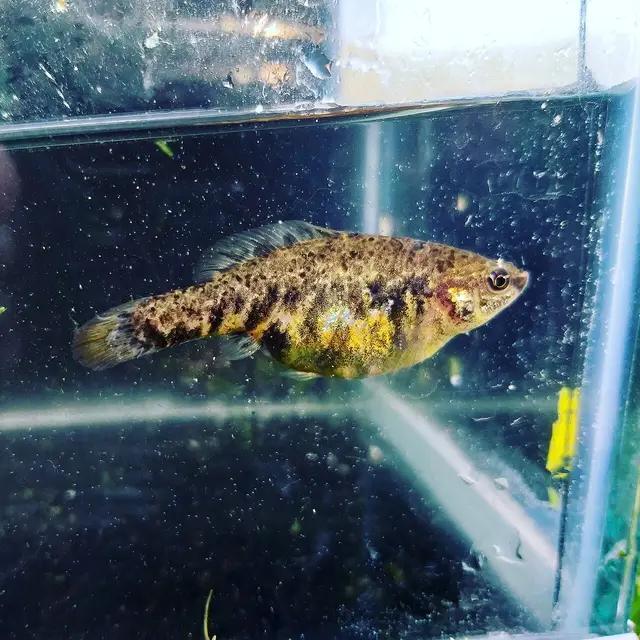
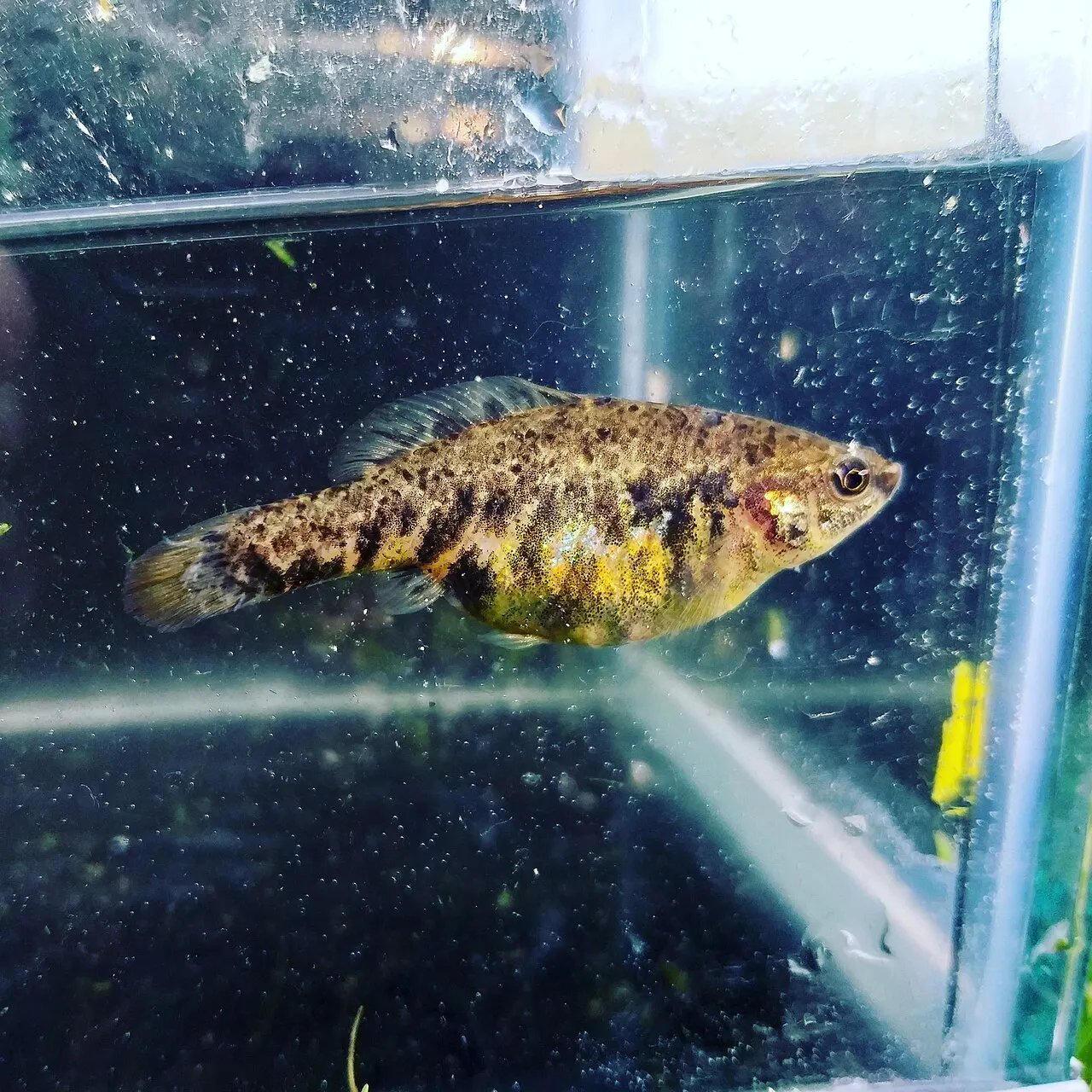
Females are dark on the back with a yellowish-white belly and dark blotches on the sides. Males are greyish on the back and sides with a yellowish belly, and one description makes their upper body and dorsal fin black. It has more dorsal fin rays than any other known member of its family, the splitfins (Goodeidae), a group of Mexican fishes that give birth to live young.
Where it lives
The species is endemic to Mexico. Fernando de Buen described it in 1940 from a female collected at Presa Cointzio, a reservoir on the Rio Grande de Morelia in Michoacan. Historical records cover the Rio Grande de Morelia basin, which drains toward Lake Cuitzeo, and Laguna de Yuriria in Guanajuato.
It favours quiet or slow water in lakes, ponds, canals and ditches, usually shallower than 1.3 m, over mud, silt or sand, among dense plants such as cattails and pondweed. The Red List describes today's range as a single location in Michoacan at about 1,980 m above sea level, with an occupied area of somewhere between 4 and 60 square kilometres.
Pins are Wikidata “endemic to” fields. Orange dots, when present, are GBIF occurrence tiles — survey bias included.
How it lives
Little has been recorded. Newborns were collected in May 1956, so births run at least from May to August, and large females carry about 20 to 40 young. Its diet has not been studied directly. Hobbyists keeping a close relative report that it eats mostly tiny crustaceans such as water fleas, and the same is presumed here. A close relative hides by day and is easiest to catch in dim light, and this fish may do the same.
Why it is in trouble
The Red List estimates a reduction of about 65 percent in the past, based on direct observation and the loss of habitat quality and area. Occupied area, range and number of locations are still shrinking, and numbers swing widely.
Threats it lists include housing and urban growth, soil erosion and silt, small-scale farming and grazing, drawing off water for household use, recreation and tourism facilities, and problem native species. Both historical basins are heavily polluted and altered.
For decades it was thought gone. Targeted sampling found none after the late 1980s, and a 2012 review estimated extinction around 1990. A 2022 study by Moncayo-Estrada and colleagues reported that it still survives, though the recent records may refer to a fish named Girardinichthys ireneae, which some experts treat as a separate species and others as the same one.
What is being done
The Red List says the fish occurs in at least one protected area and records it as subject to ex-situ conservation. Actions it recommends include controlling problem species, site management and protection, species recovery planning, captive breeding and public awareness. Mexico also lists it as in danger of extinction. The Goodeid Working Group, a specialist hobbyist and scientific network, says no captive populations are known, so the picture of ex-situ work is unclear.
Sources
Written for this catalog in our own words from the sources below, checked against them on 12 November 2026. Population figures are estimates and carry the year they were made. Status and assessment year: IUCN. 2026. The IUCN Red List of Threatened Species. Version 2026-1. iucnredlist.org.