Endangered
Lesser great leaf-nosed bat
Hipposideros turpis
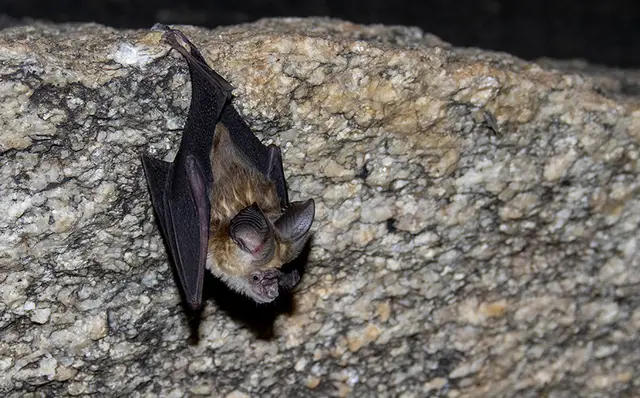
The lesser roundleaf bat (Hipposideros turpis) is a large leaf-nosed bat found only on a few small islands at the southwestern tip of Japan. It roosts by day in caves, old mines and bomb shelters. The IUCN Red List assessed it as Endangered in 2019, with a decreasing population.
How to recognise it
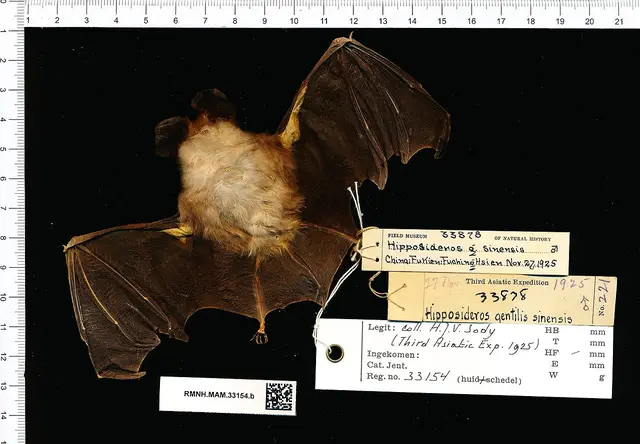
This is a relatively large insect-eating bat of the family Hipposideridae, the roundleaf or leaf-nosed bats. American zoologist Outram Bangs described the species in 1901.
Its taxonomy has changed. The IUCN notes that what was once treated as one widespread species is now recognised as three, after a 2012 revision by Thong and colleagues. The other two, Hipposideros pendleburyi and H. alongensis, are reportedly the former Thai and Vietnamese populations. What remains as H. turpis is the Japanese bat.
Where it lives
The species is endemic to Japan, which means it occurs nowhere else. It is known only from the Yaeyama (Sakishima) Islands: Iriomote, Ishigaki, Yonaguni and Hateruma. The IUCN puts its extent of occurrence at about 4,750 square kilometres, but the area it actually occupies is only 400 to 500 square kilometres, and the population is severely fragmented.
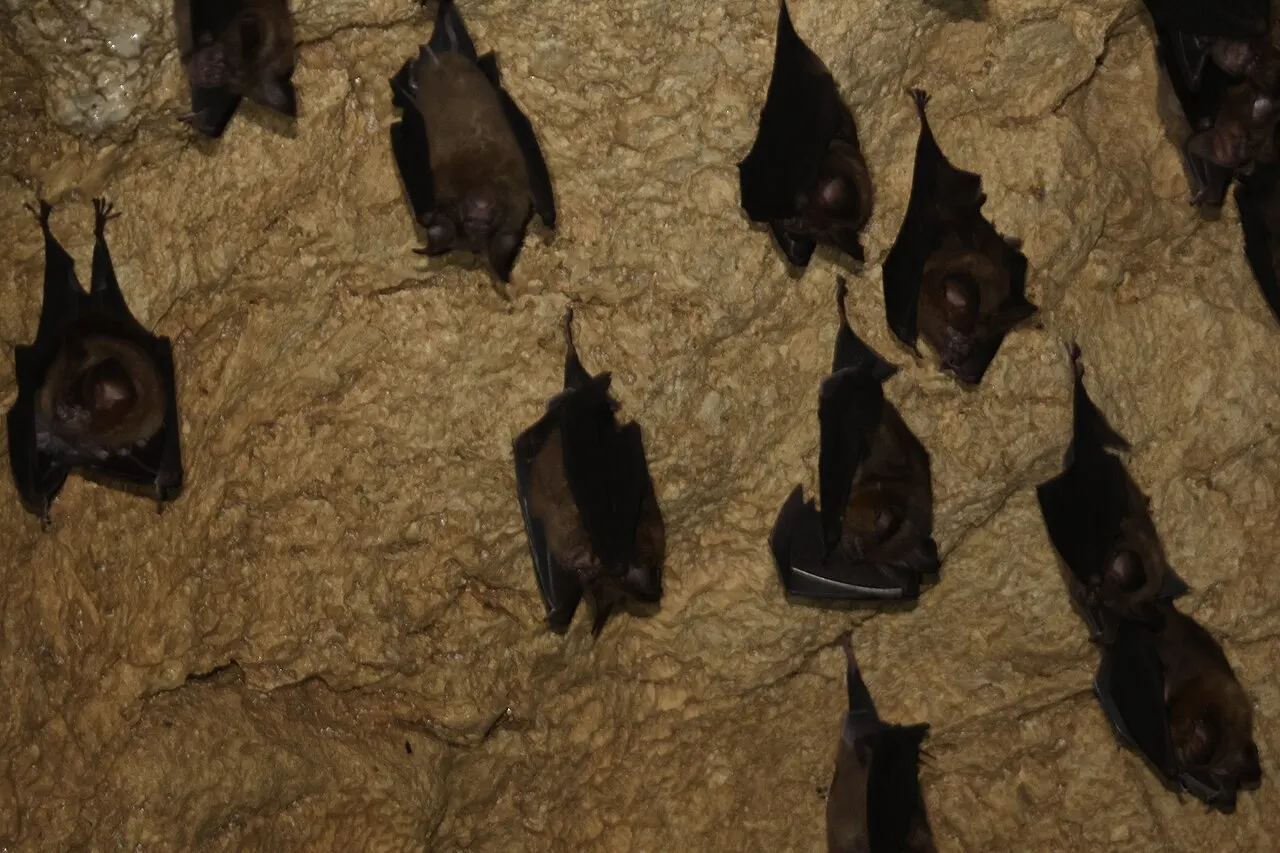
It has been recorded from near sea level up to about 500 metres. The Red List names three suitable habitats: lowland moist forest, caves, and underground karst water systems. By day the bats roost in natural caves, abandoned mines and bomb shelters. A visiting naturalist reported a colony in a small abandoned mine in Banna Park on Ishigaki in 2018.
A study of small-mammal remains from Ishigaki found fossil bones of this bat in cave and fissure deposits, and the bat still lives in the same Sabichi-do Cave today.
Pins are Wikidata “endemic to” fields. Orange dots, when present, are GBIF occurrence tiles — survey bias included.
How it lives
At night the bats forage in the woodland around their roosts. They eat a wide range of insects and some spiders, including flies, moths, beetles, dragonflies, bugs, grasshoppers and cockroaches. From spring to summer beetles make up most of the diet.
Maternity colonies include both sexes, and each female bears a single young, born between late May and June. Young bats begin feeding themselves at 5 to 6 weeks old. Most females first give birth at the end of their third year.
How many are left
There is no total count, but the IUCN lists colony estimates. Iriomote has at least five colonies, and its largest, in the cave Ohtomi-daiichi-do, holds more than 10,000 bats. Ishigaki is put at about 8,900, Yonaguni at 500 to 650 and Hateruma at fewer than 400. Roosts can hold up to 10,000 bats, which makes the species vulnerable to anything that disturbs a few key caves.
Why it is in trouble
Disturbance at roosts is the main problem. On Iriomote the main breeding colonies are packed into two caves. A nursing colony of about 1,000 bats in the west of the island has been disturbed by tourists since 2005. The forest around the caves is national forest, but there has been pressure to develop it. Farming and logging would strip the foraging areas and could cut caves off from one another.
On Ishigaki, a new airport was built in 2013 above several caves. Afterwards the number of newborn young in the maternity season stayed near 100 to 200, but autumn and hibernation counts fell to about 350 bats, against 900 to 1,730 in earlier counts. There has been pressure to build a holiday resort there too.
The 2019 assessment rates the listed threats, which include tourism and recreation areas, recreational activities and shifting agriculture, as low impact each.
What is being done
The IUCN records that sites of conservation importance have been identified across the whole range. Fences have been put up at some cave entrances to control visitors, and a small area first marked for development was proposed as a reserve. Near the Ishigaki airport an artificial cave was built as a substitute roost, though few bats use it so far.
Japan's national Red List classes the Yonaguni and Hateruma populations as threatened local populations. The actions the IUCN recommends are site and area management, awareness and communication, and action at the sub-national level.
Sources
Written for this catalog in our own words from the sources below, checked against them on 12 November 2026. Population figures are estimates and carry the year they were made. Status and assessment year: IUCN. 2026. The IUCN Red List of Threatened Species. Version 2026-1. iucnredlist.org.