Critically Endangered
Hadramphus tuberculatus
Hadramphus tuberculatus
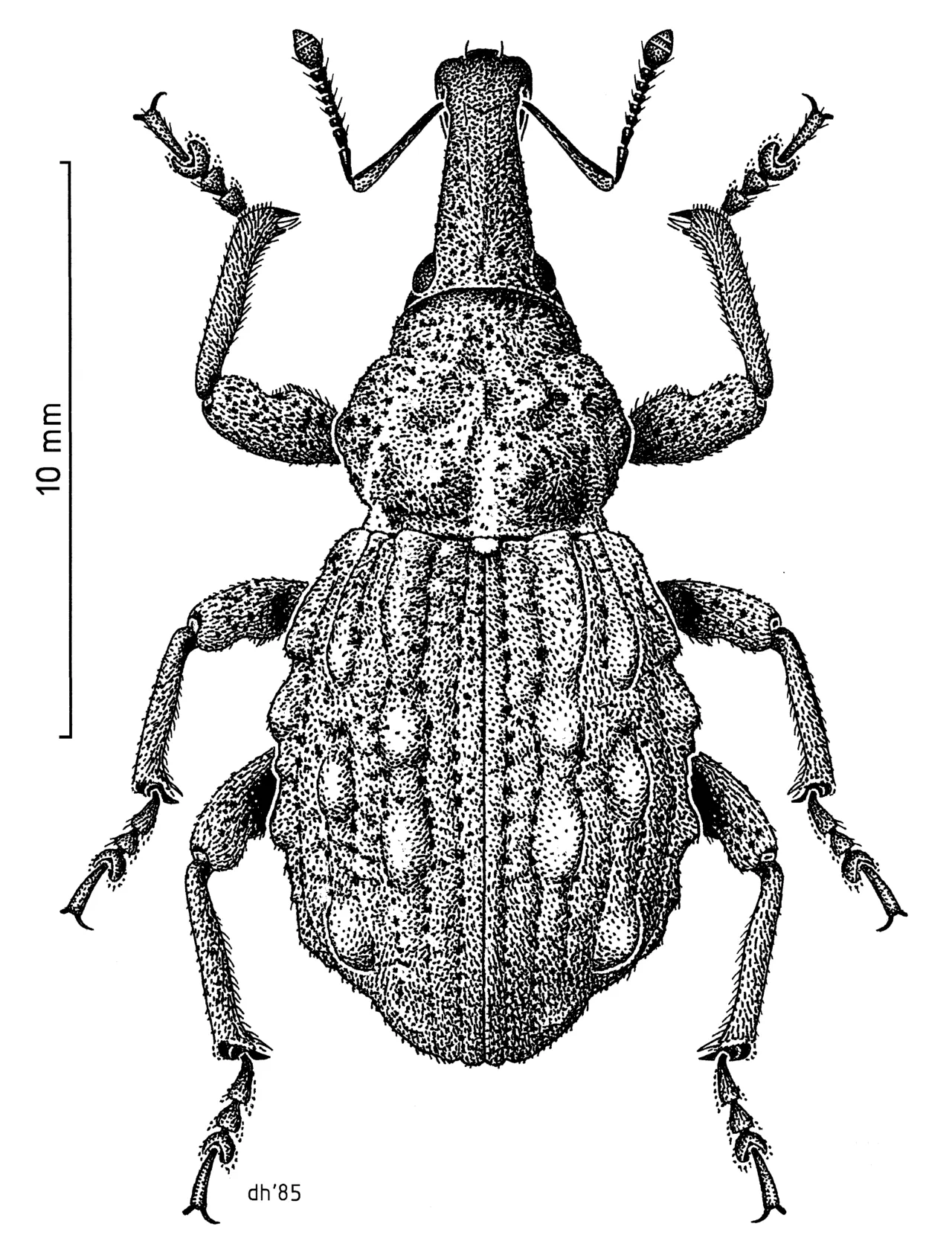
The Canterbury knobbled weevil (Hadramphus tuberculatus) is a big, flightless New Zealand beetle that feeds on speargrass. It was written off as extinct after 1922, then turned up again in 2004. The IUCN Red List rated it Critically Endangered in 2014, and only two wild populations are known.
How to recognise it
It's a flightless weevil, roughly 12 to 16 mm long, with a dark brown body covered in grey scales and a knobbly back that gives it its name. A newspaper in 2005 described it as one to two thumbnails long. It is the only surviving mainland species in Hadramphus, a genus of large, bumpy, flightless weevils found only in New Zealand.
Francis Pascoe described the species in 1877 from specimens collected in Canterbury, and it was reportedly common on the Canterbury Plains at that time.
Where it lives
The IUCN lists New Zealand as the only country. Its assessment recorded a single location at about 670 m above sea level, in temperate grassland. That is reportedly the Burkes Pass site, near Lake Tekapo, where University of Canterbury researchers found the weevil again in 2004. A master's student studying speargrass saw the first one, and a Canterbury Museum entomologist then trapped three in a single evening.
A second population was found in November 2024 at the Ashburton Lakes (Ōtūwharekai), about 80 km from Burkes Pass. Farmer and keen naturalist John Evans saw three weevils on a speargrass plant and posted photos online. A quick DOC survey in December counted 41.
Pins are Wikidata “endemic to” fields. Orange dots, when present, are GBIF occurrence tiles — survey bias included.
How it lives
Speargrass (Aciphylla, also called spaniard) is everything to this weevil. Adults eat its leaves and flowers, and the larvae feed on the taproot underground. The species is tied to patches of the plant.
Why it is in trouble
Habitat loss is the likely main cause of the decline. Speargrass was burned off and cleared as land became farmland. The Department of Conservation (DOC) names hedgehogs and mice as likely key predators and expects other introduced mammals to eat the weevils too. The IUCN assessment lists introduced species and a possible rise in fire frequency as threats.
Numbers are small. The 2014 IUCN assessment put the population at 138 individuals and listed the trend as unknown. A Lincoln University estimate reportedly fell from 138 in 2009 to 76 by 2011. DOC said in 2024 that the Burkes Pass population was in decline and probably at critically low numbers, and that fire or a run of poor growing seasons could wipe out small populations.
What is being done
The weevil is absolutely protected under New Zealand's Wildlife Act, so handling, disturbing or collecting it needs permission. A local trapping group has run about 120 traps for 14 years, and a fence built in 2022 around key habitat at Burkes Pass shields the host plants from rabbits and wallabies and keeps hedgehogs out.
DOC, Te Rūnanga o Arowhenua and the Bioeconomy Science Institute began a captive colony from six beetles. Staff tried a range of foods, including carrot, and the colony has grown past 200. By October 2026 some had been released as a trial into the Ashburton Lakes area, with covers over the plants for about a week. If the trial works, the plan is to establish new populations so the species is not confined to one place.
Sources
Written for this catalog in our own words from the sources below, checked against them on 12 November 2026. Population figures are estimates and carry the year they were made. Status and assessment year: IUCN. 2026. The IUCN Red List of Threatened Species. Version 2026-1. iucnredlist.org.
- IUCN Red List assessment, Hadramphus tuberculatus (2014)
- DOC media release, new population of critically endangered beetle found (20 December 2024)
- DOC media release, rare knobbled weevils released in Canterbury (23 October 2026)
- NZ Herald, extinct bug found alive and well in high country reserve (24 May 2005)
- Hadramphus tuberculatus (encyclopedia article)
- Entomological Society of NZ, Bug of the Year nominee




