Endangered
Guerrero Harvest Mouse
Reithrodontomys bakeri
Baker's small-toothed harvest mouse (Reithrodontomys bakeri), also called the Guerrero harvest mouse, is a medium to large harvest mouse from the mountains of Guerrero state, Mexico. Scientists described it only in 2004. The IUCN Red List assessed it as Endangered in 2018, with a decreasing population.
How to recognise it
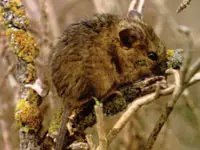
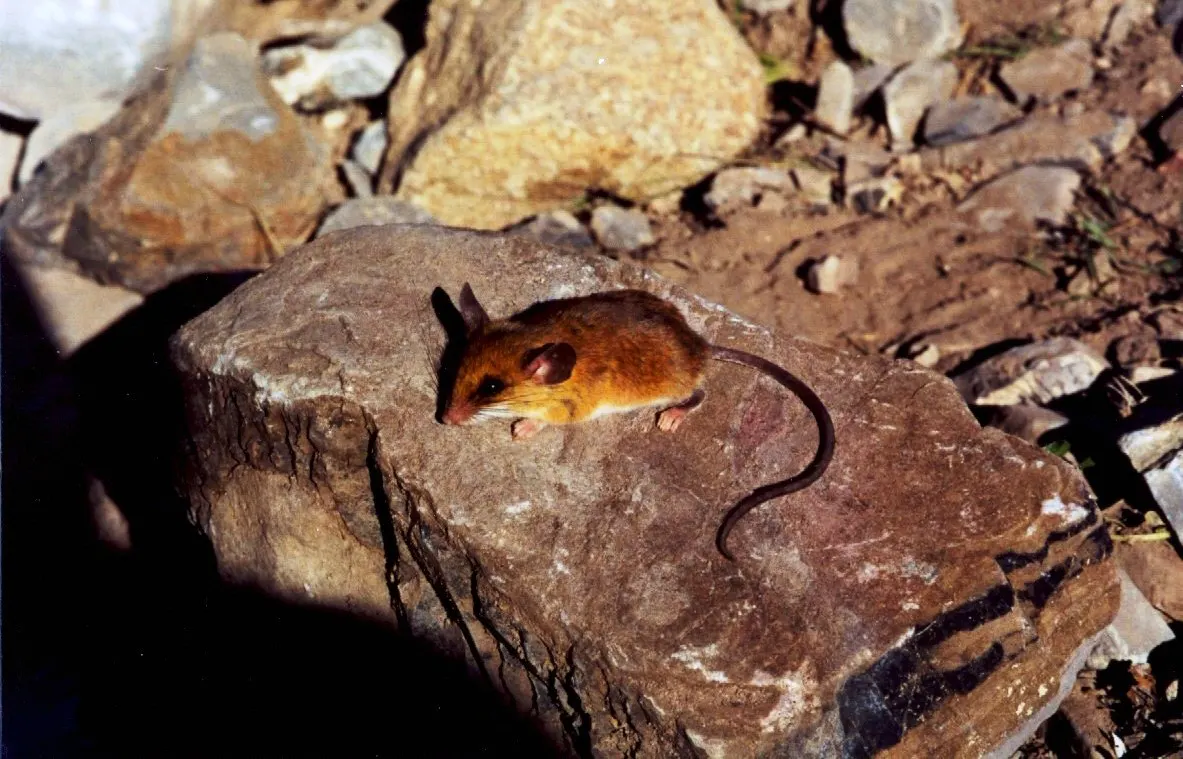
It is a medium to large harvest mouse. Head and body measure about 71 to 78 mm, the tail 94 to 107 mm, and it weighs around 20 g. The back is brown with blackish hair tips and tawny to orange sides, which gives an orangish look overall. The belly fur is white at the tips and dark at the base, a black stripe runs from ankle to toes, and the tail is uniformly gray.
A recent discovery
Three mice of the genus were collected near Filo de Caballo, Guerrero, in July 2000, and the holotype was taken on 20 July. They looked like the small-toothed harvest mouse (Reithrodontomys microdon) and were first labelled that way. DNA from the cytochrome b gene told another story: the gap from the two southern forms of R. microdon was 10 to 11 percent, the size usually seen between separate species.
A team led by Robert Bradley described it in 2004 in a Museum of Texas Tech University paper, and named it for the mammalogist Robert J. Baker. Until then, harvest mice from this area had been treated as the Mexico City subspecies of R. microdon, about 240 km away. Reithrodontomys is a genus of roughly 20 species of New World harvest mice in the family Cricetidae.
Where it lives
It is known only from the Sierra Madre del Sur in central Guerrero, at Filo de Caballo and Omiltemi, about 25 km apart. The original description puts it above 2,150 m, mostly in pine and oak woods tied to cloud forest, and says it may occur in other nearby mountains. The IUCN counts one location, lists subtropical or tropical dry forest and moist montane forest as its habitats, and gives an extent of occurrence of about 4,900 square kilometres.
Pins are Wikidata “endemic to” fields. Orange dots, when present, are GBIF occurrence tiles — survey bias included.
Why it is in trouble
The IUCN gave it Endangered status under criterion B1ab(iii): a small range, one location, and continuing decline in the quality of its habitat. Ecosystem degradation is the recorded stress, the cause is unrecorded, and the population trend is decreasing.
The IUCN lists no conservation actions. It records that the species does not occur in a protected area, and whether a recovery plan or monitoring exists is marked unknown. Its diet and breeding haven't been documented.
Sources
Written for this catalog in our own words from the sources below, checked against them on 12 November 2026. Population figures are estimates and carry the year they were made. Status and assessment year: IUCN. 2026. The IUCN Red List of Threatened Species. Version 2026-1. iucnredlist.org.