Critically Endangered
Duplessis' Agile Katydid
Griffiniana duplessisae
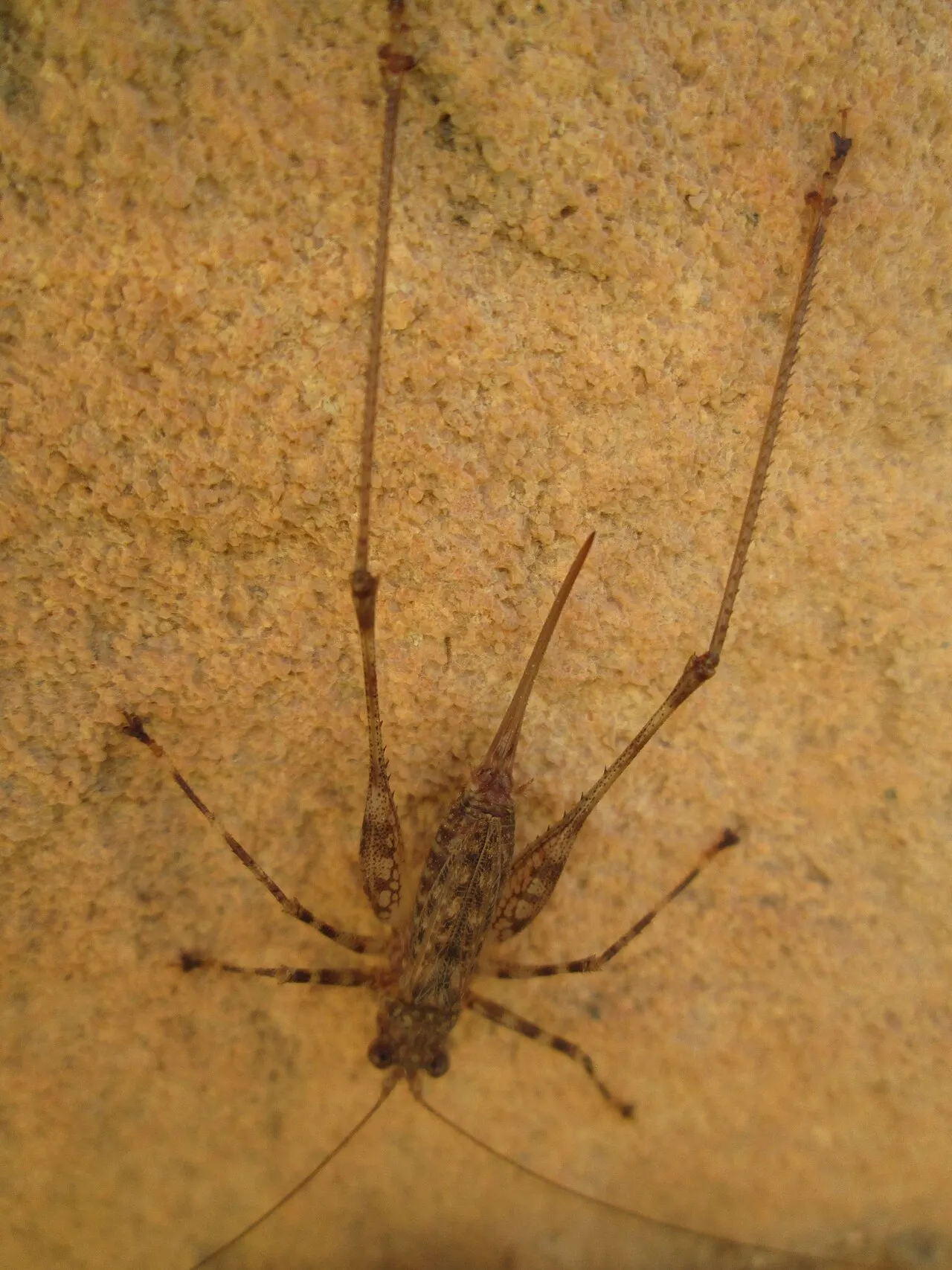
Duplessis' agile katydid (Griffiniana duplessisae) is a small, short-winged katydid known only from a few square kilometres of the Cederberg Mountains in South Africa's Western Cape. The IUCN Red List rated it Critically Endangered in 2014, mainly because its whole known range is tiny and treated as a single location.
How to recognise it
It is a katydid in the family Tettigoniidae, placed in the subfamily Mecopodinae by the scientists who described it. Some online references list it under a different subfamily, so you may see both.
Its wings are reduced in both sexes: the forewings are only about two to three times as long as the pronotum, the shield behind the head, which sets it apart from its relatives in the genus. In the original description the males measured about 12 to 15 mm in body length and the females about 25 to 29 mm.
Where it lives
The species is endemic to South Africa and is known only from the Cederberg Mountains in the Western Cape. The first specimen, a male, was collected on 17 March 2008 near Wolfberg Arch in the Cederberg Wilderness Area, at about 1,486 metres, and is held at the Iziko Museums of Cape Town. The describers also examined specimens from lower sites, from about 340 metres, including Matjiesrivier Nature Reserve. Two research-grade iNaturalist observations, from 2017 and 2023, are also recorded in the Western Cape.
It lives in fynbos, the shrubland of the Cape, where it is associated with Olifant Sandstone and Cederberg Sandstone Fynbos vegetation. South Africa's national assessment gives its extent of occurrence as about 70 square kilometres and counts a single location.
Pins are Wikidata “endemic to” fields. Orange dots, when present, are GBIF occurrence tiles — survey bias included.
How it lives
Very little has been published. Males call from the terminal branches of small bushes, usually no higher than 20 to 30 centimetres above the ground. The call is a series of long, repeated phrases lasting about 3.8 seconds each, separated by gaps slightly shorter than the phrases. The IUCN records it as not migratory. Diet, breeding and lifespan have not been documented in the sources available.
Why it is in trouble
The Red List assessment gives no population size, and the trend is recorded as unknown. The rating rests on the tiny range, the single location and a continuing decline in the area and quality of habitat.
The assessment lists housing and commercial development, tourism and recreation areas, crop farming, livestock grazing, invasive alien species, altered habitats, drought, temperature extremes and storms and flooding among the threats. South Africa's national assessment adds that altered fire regimes in the Cape region and climate-driven changes in rainfall and temperature are expected to degrade habitat over the long term.
What is being done
Between 91 and 100 percent of the population is estimated to lie inside protected areas, and the national assessment judges that the range is probably confined to the Cederberg Wilderness Area, which should secure it in the short term. Even so, the 2014 assessment records no recovery plan, no monitoring scheme, no invasive species control and no captive population, and it is marked as needing updating.
Sources
Written for this catalog in our own words from the sources below, checked against them on 12 November 2026. Population figures are estimates and carry the year they were made. Status and assessment year: IUCN. 2026. The IUCN Red List of Threatened Species. Version 2026-1. iucnredlist.org.




