Endangered
Gonospira uvula
Gonospira uvula
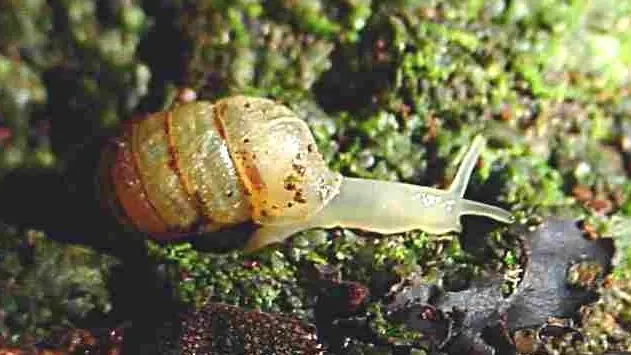
Gonospira uvula is a small land snail found only on Réunion, the volcanic island in the western Indian Ocean. It belongs to the Streptaxidae, a family of mostly meat-eating snails. The IUCN Red List last assessed it as Endangered in 1996, because its range is small and broken up.
What it is
Gérard Paul Deshayes described the species in 1863 under the name Pupa uvula, and it later moved to the genus Gonospira. Pupa canaliculata, named by Crosse in the same year, is listed as a synonym.
The family Streptaxidae holds roughly 1,000 species in about 60 genera, spread over tropical and subtropical parts of South America, Africa and Asia. Almost all of them are carnivorous, with a single known plant-eating exception. Whether Gonospira uvula follows the family habit has not been recorded, so its diet is unknown.
Where it lives
It is endemic to Réunion. The Global Biodiversity Information Facility (GBIF) holds only 18 records, most of them old preserved specimens labelled "Réunion" or with the island's old name, Bourbon. Two old museum lots are labelled Mauritius, without detail, and the Red List counts only Réunion.
Dated field observations are scarce. One was made at Colorado, in the La Montagne area in the north of the island, in April 1993. Another comes from 2007, and its entry remarks that the snail is a qualifying species for one of the island's natural-area inventory zones (a ZNIEFF, in the French system). Several undated observations cluster near 21.13 degrees south, 55.53 degrees east.
Pins are Wikidata “endemic to” fields. Orange dots, when present, are GBIF occurrence tiles — survey bias included.
What the Red List says
The 1996 assessment rates the snail Endangered under criteria B1+2a. These apply to species with a small extent of occurrence and a small area of occupancy that are severely fragmented or found at no more than five locations. An earlier assessment in 1994 had also rated it Endangered, under the older single-letter code E.
The assessment was made under version 2.3 of the Red List, and it carries no structured entries for threats, habitat, population size or conservation measures. No later reassessment appears, so the 1996 rating stands as the current one.
Sources
Written for this catalog in our own words from the sources below, checked against them on 12 November 2026. Population figures are estimates and carry the year they were made. Status and assessment year: IUCN. 2026. The IUCN Red List of Threatened Species. Version 2026-1. iucnredlist.org.




