Endangered
Canary brimstone
Gonepteryx cleobule
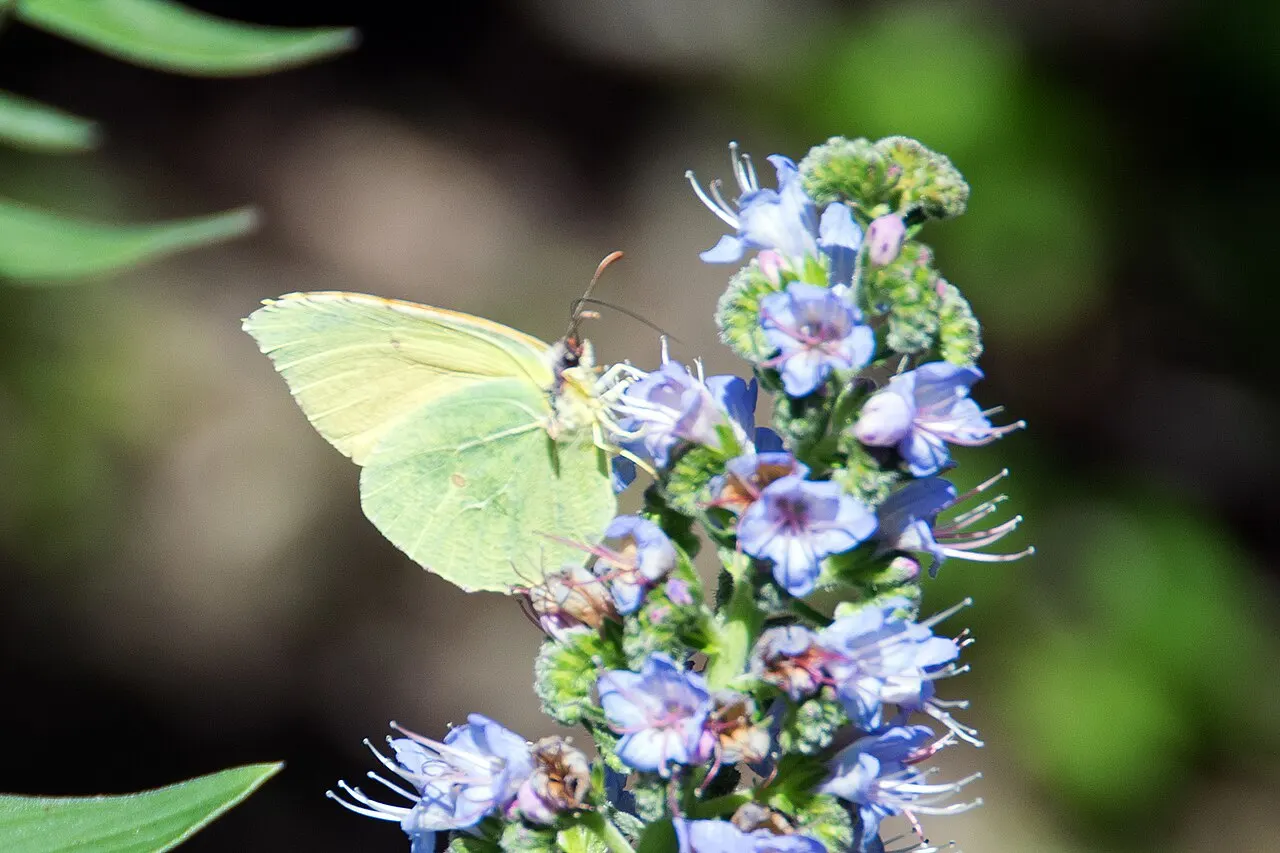
The Canary brimstone (Gonepteryx cleobule) is a yellow and orange butterfly that lives only in the Canary Islands, mostly in the damp laurel forests of the north. It is listed as Endangered (2025 assessment) because its habitat is scattered, shrinking, and found at just 5 to 10 locations.
How to recognise it
Males have bright yellow wings with orange touches, and females are a little paler. The undersides carry small green and reddish tinges. Wingspan is roughly 58 to 68 mm, depending on the source. Its close relative, the cleopatra butterfly, was long treated as the same species, though recent studies support them as separate species.
Where it lives
It is endemic to the Canary Islands, but accounts differ on which islands it occupies. One lists Tenerife, La Gomera, and northern La Palma, another Tenerife and Gran Canaria. It occurs only where its caterpillar food plants grow, usually on the northern, moister side of each island.
Its home is laurel forest, plus heath and fire tree woodland, scrub, juniper slopes, and damp pine forest, between about 200 and 1,400 m. On La Gomera, one observer found it at 300 to 800 m at the edge of dry, juniper-covered slopes.
Pins are Wikidata “endemic to” fields. Orange dots, when present, are GBIF occurrence tiles — survey bias included.
How it lives
Adults fly all year, most commonly in spring and summer, and are only moderately active in the cool winter forest. Caterpillars feed on two buckthorns, Rhamnus glandulosa in and around laurel forest and Rhamnus crenulata in drier places. Eggs go mostly on the underside of leaves while the caterpillars sit on the upper surface, and eggs and caterpillars have been found from December to May. A second generation may occur in warmer, lower areas, though this needs study. The Red List gives the generation length as one year.
Why it is in trouble
Laurel forest has been destroyed except for remnants. Nearby drier habitat is hit by vineyards, wildfires, new housing, and tourism developments, and the Red List says the population is severely fragmented and the habitat area is still shrinking. It was rated Vulnerable in 2010 and moved up to Endangered in 2025.
Taxonomy adds a wrinkle. Populations on La Palma and La Gomera have been described as separate species, G. palmae and G. eversi. Some lists treat these names as synonyms, and at least one author rejects the split as excessive and suggests subspecies at most.
What is being done
The Red List records site protection, habitat restoration, and awareness work, with a recovery plan in place and action at both national and regional level.
Sources
Written for this catalog in our own words from the sources below, checked against them on 12 November 2026. Population figures are estimates and carry the year they were made. Status and assessment year: IUCN. 2026. The IUCN Red List of Threatened Species. Version 2026-1. iucnredlist.org.




