Endangered
Golden-bellied mangabey
Cercocebus chrysogaster
The golden-bellied mangabey (Cercocebus chrysogaster) is a large, ground-foraging monkey of swampy lowland forest south of the Congo River in the Democratic Republic of the Congo. The IUCN Red List rated it Endangered in 2020, mainly because of hunting and habitat loss.
How to recognise it
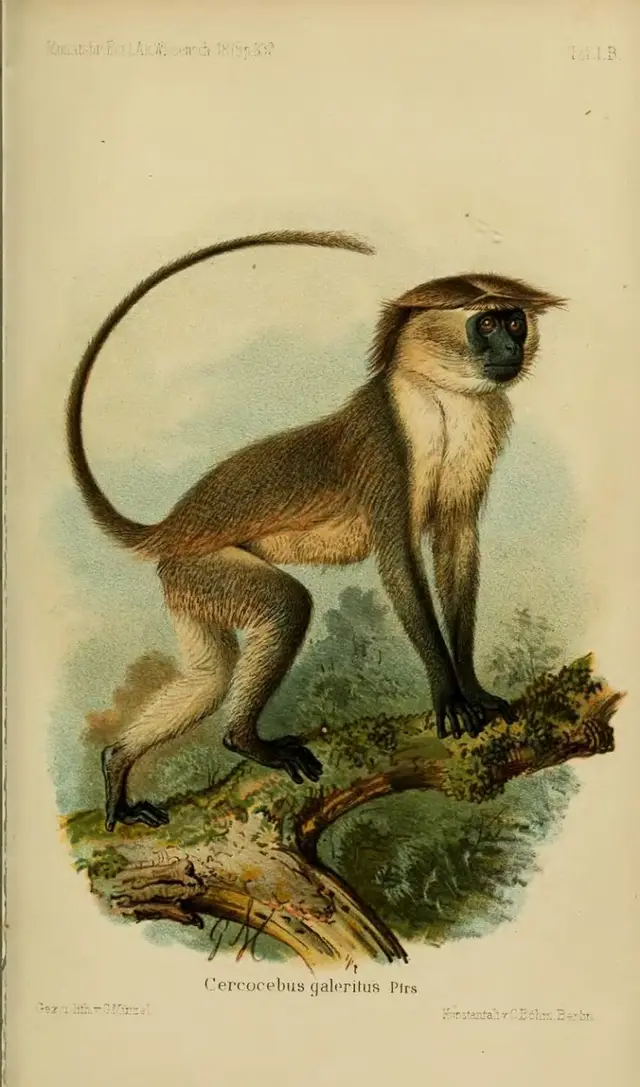
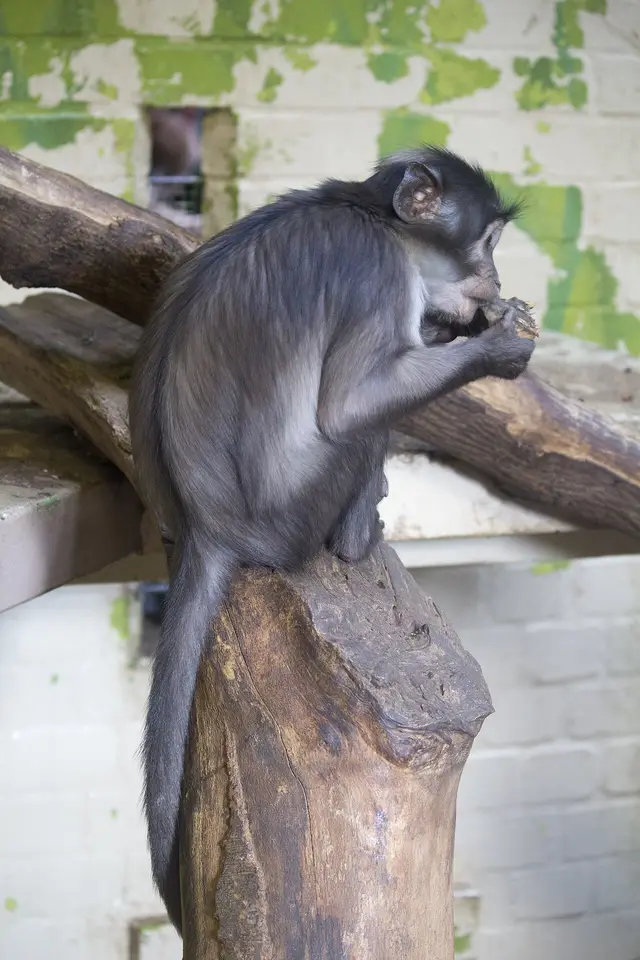
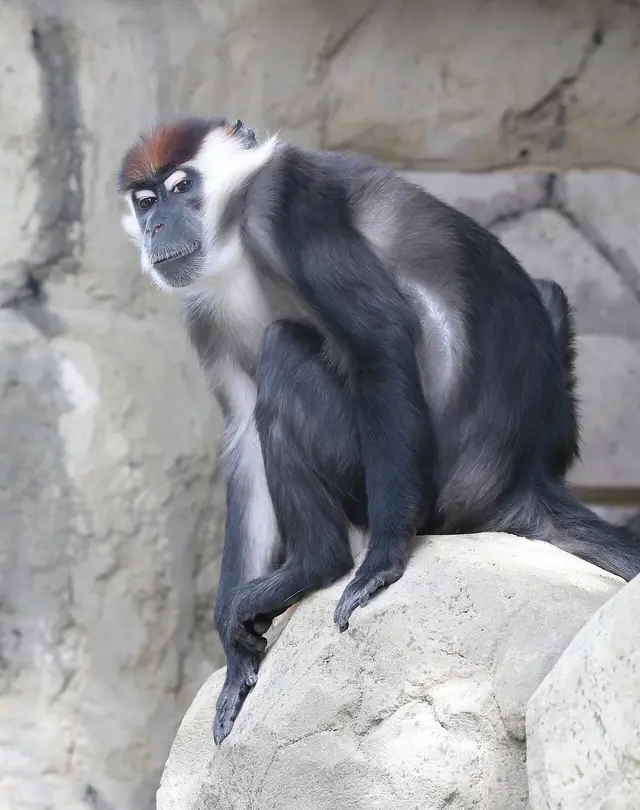
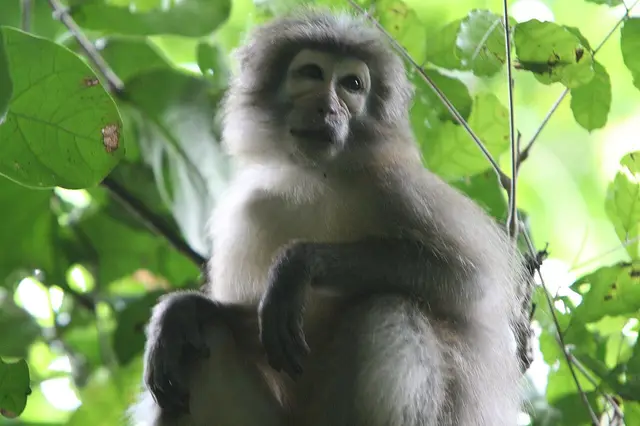
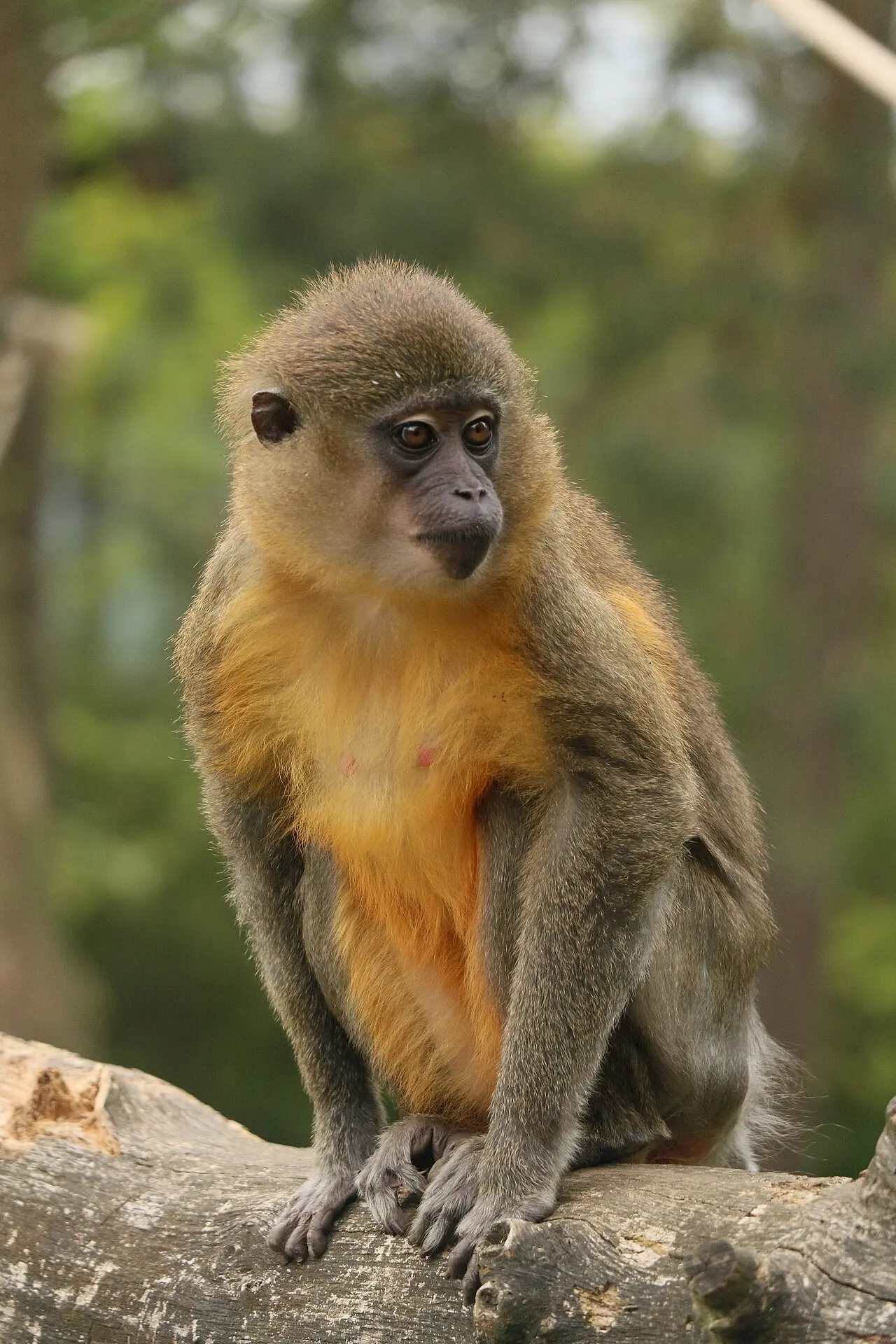
The chest, belly and inner thighs are golden-yellow to orange, which gives the species its name. The rest of the fur runs from reddish brown to grey, the face is dark, and the eyelids are pale. It has a sturdy build, and males are larger than females. The New England Primate Conservancy gives adult males as roughly 10 to 14 kg and females as 6 to 10 kg.
It has at times been classed as a subspecies of the agile mangabey (Cercocebus agilis), but the IUCN and recent arguments favour full species status. The name Cercocebus chrysogaster dates to Richard Lydekker in 1900.
Where it lives
It's found only in the Democratic Republic of the Congo, south of the Congo River, in lowland forest up to about 500 m. A 2013 survey in the Journal of Threatened Taxa put its present range at about 70,000 square km, with the species absent from more than 37 percent (about 25,000 square km) of its presumed former range. About 58 percent of that range is permanent swamp or seasonally flooded forest.
The range is reported to fall into two unconnected blocks. The western block is mostly swamp, while the eastern block is drier forest, which the monkeys reportedly prefer.
Pins are Wikidata “endemic to” fields. Orange dots, when present, are GBIF occurrence tiles — survey bias included.
How it lives
Mangabeys spend much of their time on the ground and live in groups with several adult males. A 2021 field study at LuiKotale, in community forests next to Salonga National Park, followed one group of about 65 animals. An earlier survey described groups of up to 15 foraging on the ground, so group size seems to vary a lot.
Fruit and nuts are main foods, and the monkeys can crack hard seeds. The LuiKotale study, published in the Journal of Tropical Ecology in 2022, recorded five cases of the monkeys catching or eating mammals: four duikers (mostly blue duikers) and one Alexander's cusimanse. Adult males made at least three of the catches, and in one case a female let a juvenile take pieces of a blue duiker. Food sharing of this kind is rare in monkeys of this type. The monkeys also share forest with bonobos.
Why it is in trouble
Hunting is the biggest pressure. The 2013 survey found that more than 70 percent of the hunted animals counted on one road during 48 hours were this species, and in early 2003 it found 21 live mangabeys held at three sites in Kinshasa. Villagers also regard the monkeys as crop pests, which may lead to persecution. Almost the whole range lies inside logging concessions, and the IUCN lists shifting agriculture among the threats.
The IUCN assessment lists a decreasing population and estimates an ongoing reduction of about 50 percent, based on habitat loss and exploitation. It records no protection inside a protected area.
What is being done
Very little targeted work is under way. International trade is controlled (the species is in CITES Appendix II). The New England Primate Conservancy reports no species-specific conservation programme, though researchers are studying wild groups, including the one at LuiKotale. The 2013 survey called for treatment as a threatened species at least nationally in the DRC and more research on its range, abundance, ecology and taxonomy.
Sources
Written for this catalog in our own words from the sources below, checked against them on 12 November 2026. Population figures are estimates and carry the year they were made. Status and assessment year: IUCN. 2026. The IUCN Red List of Threatened Species. Version 2026-1. iucnredlist.org.