Endangered
Giant bushy-tailed cloud rat
Crateromys schadenbergi
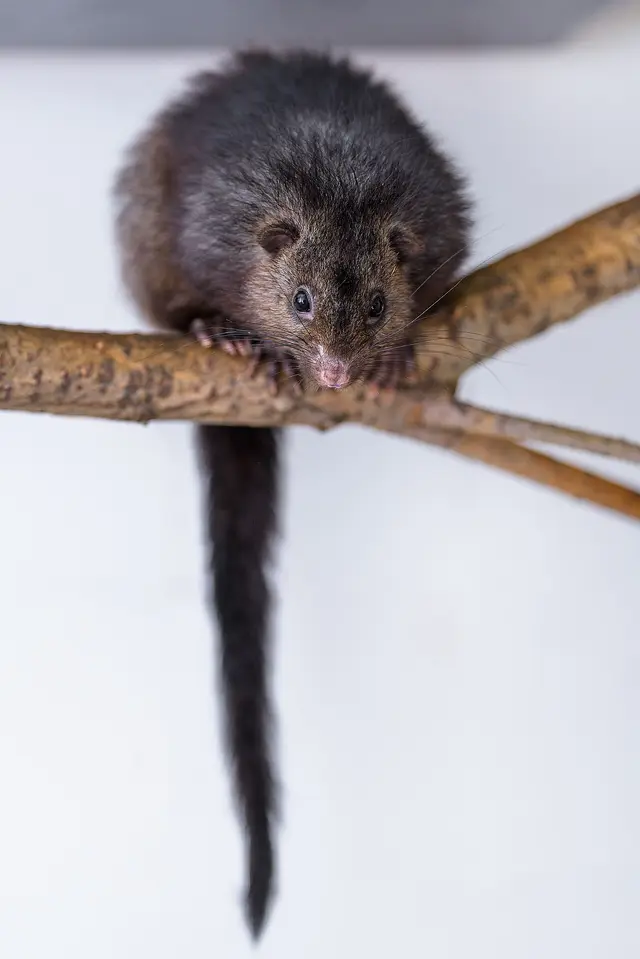
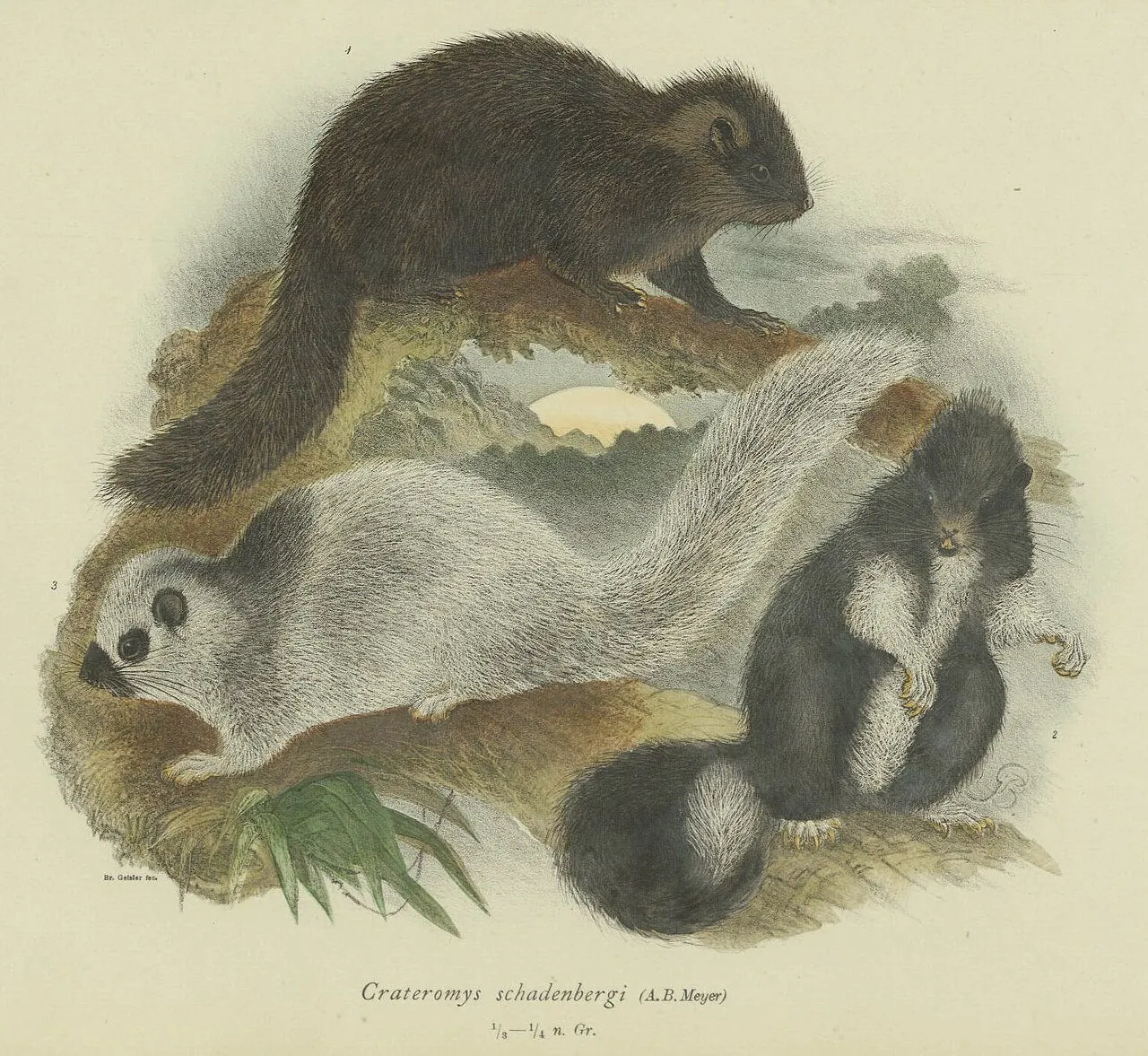
The giant bushy-tailed cloud rat (Crateromys schadenbergi) is a big, long-furred tree rodent found only in the high forests of the Central Cordillera on Luzon, in the Philippines. The IUCN Red List classed it as Endangered in 2018, and it is hunted for its pelt and food while its forest is cleared.
How to recognise it
This is no ordinary rat. An adult weighs roughly 1.35 to 1.5 kg and measures about 73 to 76 cm from nose to tail tip. The fur is very long and soft, and it covers the bushy tail too. Most animals are dark brown to black on top with grey sides and a lighter grey underside, though some have white or brownish fur on the front of the body.
It fills the niche of a big tropical tree squirrel, an animal group that doesn't occur naturally on Luzon. It has five digits on each hand and foot, and the thumb carries a flattened nail rather than a claw.
Where it lives
It is known only from the mountains of northern Luzon, in the Central Cordillera, where it has been recorded in Benguet, Ifugao and Mountain Province. It lives in pine and mossy forest. Sources give its elevation range as 2,000 to 2,500 m (the Red List) or up to 2,740 m in other accounts. The Red List counts it as a single location with an extent of occurrence of about 3,300 square km, and records that both its extent and its area of occupancy are still shrinking.
Locally it is still described as moderately common in oak and pine forest, and as common on some high mountains and plateaus.
Pins are Wikidata “endemic to” fields. Orange dots, when present, are GBIF occurrence tiles — survey bias included.
How it lives
It is nocturnal and spends its life in the trees. By day it reportedly rests in tree cavities or in hollows among roots. It eats mostly plant material, including the buds and bark of pines, fruit and flowers, and it gives a shrill cry that may be a call to others of its kind.
Very little is known about its breeding. A single young, born in October, has been reported. Breeding season and how long young stay dependent are unrecorded. One captive animal is on record as living 4 years and 3 months.
Why it is in trouble
People hunt it on purpose. Its pelt is sold and made into bags, hats and wall decorations, and the Red List records use for food and for clothing and accessories. Some animals have been kept as pets.
Its forest is shrinking as well. The Red List names shifting agriculture and small-holder farming as causes of forest conversion and degradation, and it records a decreasing population trend.
What is being done
Conservation sites have been identified across its entire range, according to the 2018 assessment, and the listed actions include site management, awareness work and control of harvesting. A 2004 newspaper report on Benguet's cloud rats suggested training hunters to breed the animals as one way to relieve pressure on wild populations. No population count exists for the species.
Sources
Written for this catalog in our own words from the sources below, checked against them on 12 November 2026. Population figures are estimates and carry the year they were made. Status and assessment year: IUCN. 2026. The IUCN Red List of Threatened Species. Version 2026-1. iucnredlist.org.