Critically Endangered
Gambusia hurtadoi
Gambusia hurtadoi
The crescent gambusia (Gambusia hurtadoi) is a fish of up to 3.5 cm that lives in a single warm spring, El Ojo de la Hacienda Dolores, in Chihuahua, Mexico. The IUCN Red List rated it Critically Endangered in 2019. Its entire world is a patch of shallow water that people also use for swimming.
How to recognise it
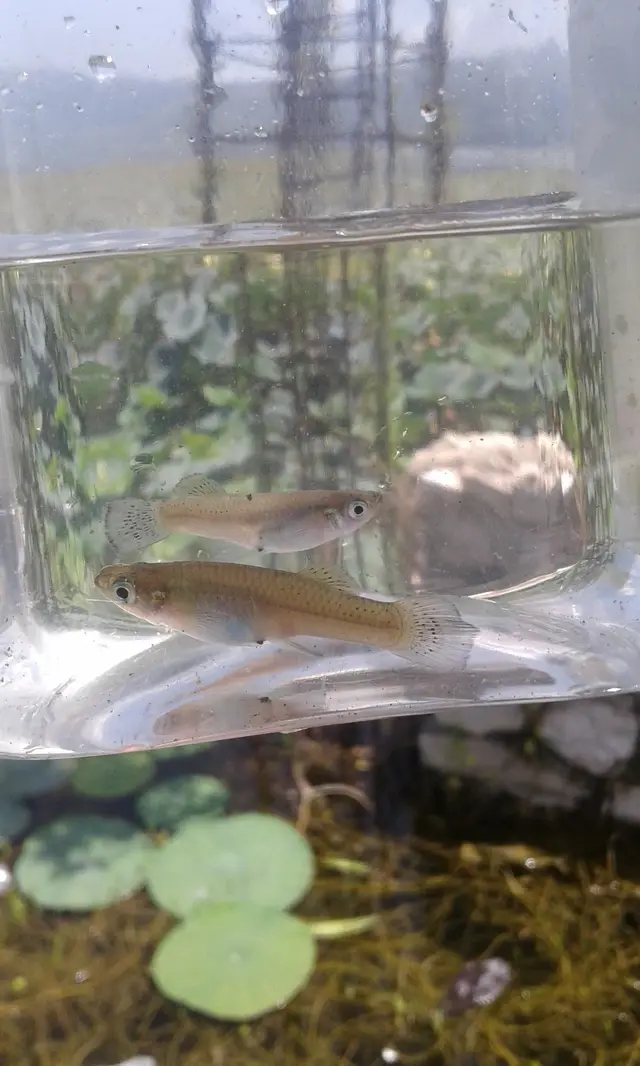
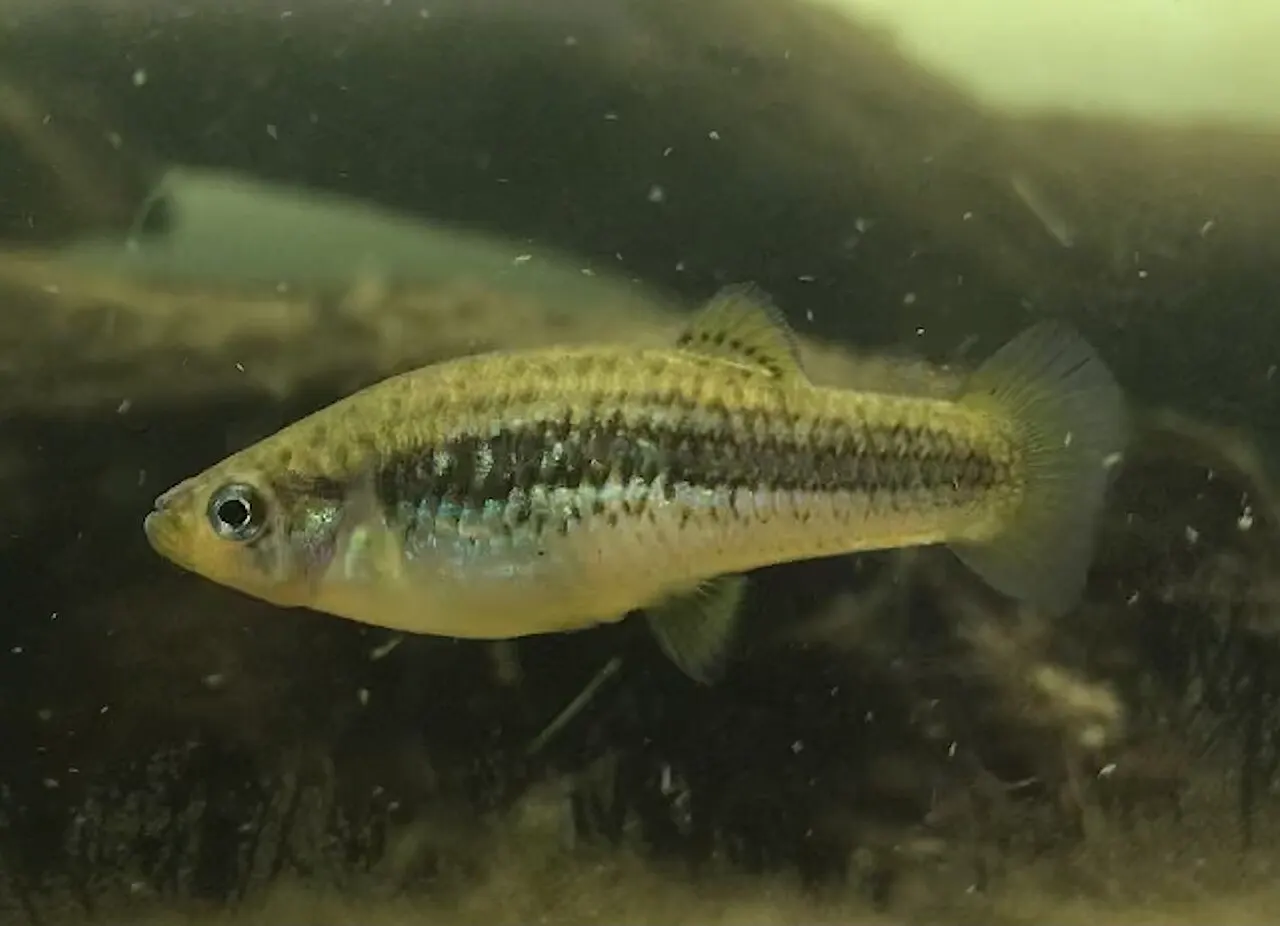
It's a small livebearer in the family Poeciliidae, the group that includes guppies and mosquitofish. It reportedly reaches about 3.5 cm in total length. Females carry a broad dark stripe along the body with a pale blue line beneath it, and the dorsal and anal fins are yellow, with some males an especially bright yellow.
Hubbs and Springer described it in 1957. It is reportedly named for Leopoldo Hurtado Olin, a Chihuahua state official who helped their 1951 expedition and told them where the spring was. In Mexico it is called guayacon de Hacienda Dolores.
Where it lives
The species is known only from the spring where it was first collected, about 7 miles (roughly 11 km) south of Jimenez in southern Chihuahua. The IUCN counts it as a single location, with an estimated area of occupancy and extent of occurrence of about 4 (square km, the IUCN's standard unit). An aquarium wholesaler's profile gives the same figure of under 4 square km.
The spring is clear and warm. A visitor guide gives its temperature as 20 to 35 C, and a Mexican local-history article gives 29 to 34 C. The IUCN records depths in the habitat of 0.3 to 1.2 m. It shares the water with another endemic fish, a pupfish, Cyprinodon macrolepis (cachorrito escamudo).
Pins are Wikidata “endemic to” fields. Orange dots, when present, are GBIF occurrence tiles — survey bias included.
How it lives
The IUCN lists it as not migratory and living in freshwater springs and oases. Very little else has been published about its behaviour in the wild.
An aquarium wholesaler describes the fish as quite peaceful compared with the poor reputation of its genus, but says it is meant for experienced keepers and is held only in limited stocks.
Why it is in trouble
A population confined to one pool is exposed to anything that changes it. The IUCN assessment lists several ongoing pressures: groundwater pumping, surface water abstraction, recreation, and tourism and recreation areas, the last two affecting the whole population. Future alteration of the habitat is also flagged. An aquarium wholesaler adds that heavy groundwater extraction in the area could lead to the species' extinction.
The spring is a popular bathing and camping site, known locally as the playas termales. The IUCN records the population trend as unknown and the area of habitat as continuing to decline.
What is being done
The IUCN lists site and area management as a conservation action for the species. It notes that the fish has been the subject of recent education and awareness programmes, but that no recovery plan or monitoring scheme exists and that it does not occur in a protected area.
Sources
Written for this catalog in our own words from the sources below, checked against them on 12 November 2026. Population figures are estimates and carry the year they were made. Status and assessment year: IUCN. 2026. The IUCN Red List of Threatened Species. Version 2026-1. iucnredlist.org.