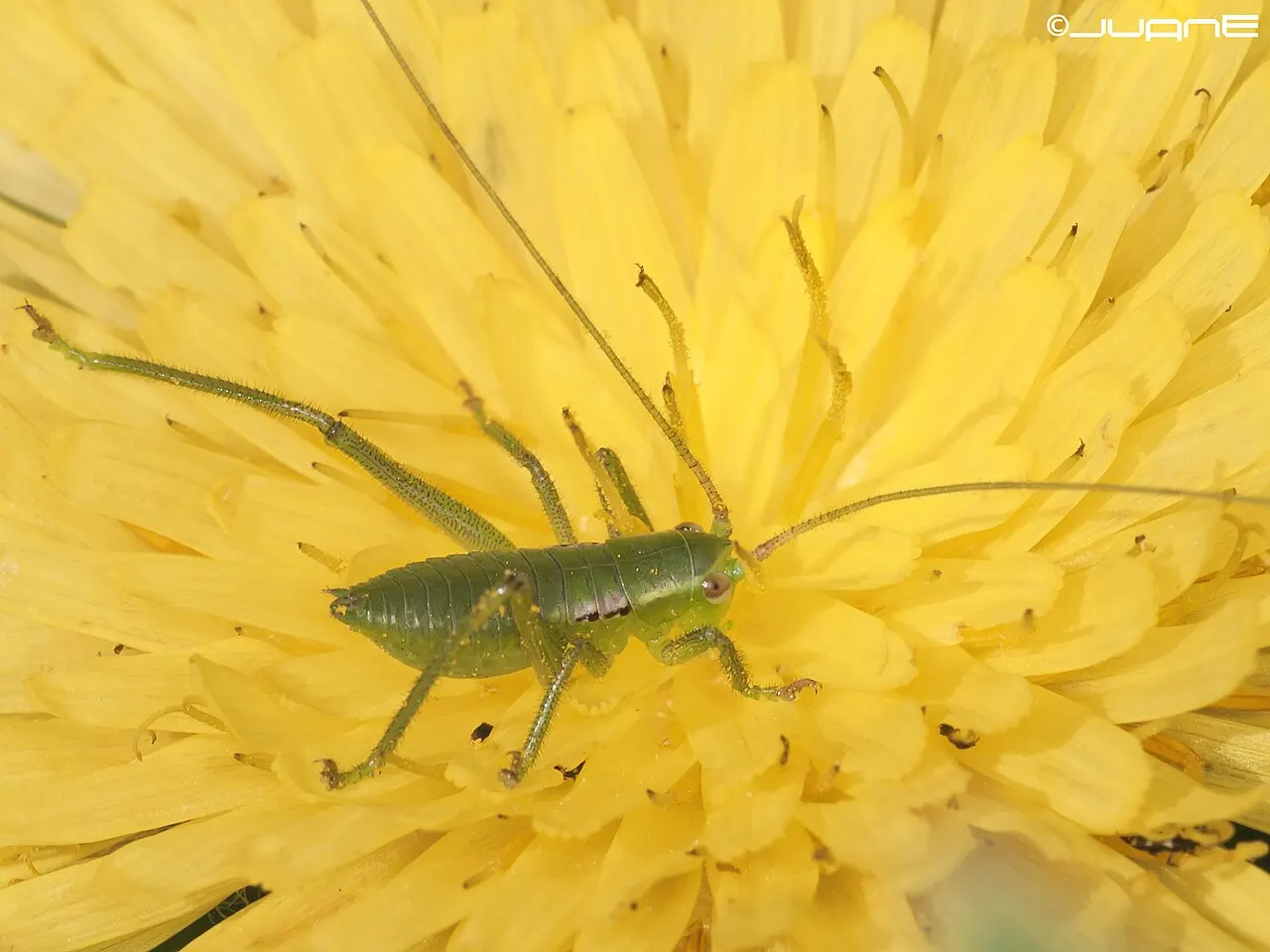
Critically Endangered
Gran Canaria Bush-cricket
Evergoderes cabrerai
The Gran Canaria bush-cricket (Evergoderes cabrerai) is a katydid found only on Gran Canaria, in Spain's Canary Islands, and it is the sole species in its genus. The IUCN Red List assessed it as Critically Endangered, possibly extinct, in 2016, two years before researchers found a living female.
A species known from two specimens
For most of the twentieth century this insect was little more than a museum label. The Spanish entomologist Ignacio Bolívar described it in 1936 in a paper titled "Nuevo decticino de Canarias" (a new decticine bush-cricket from the Canaries). The type specimen is an adult male held at the national natural history museum in Madrid, and the only male on record was caught in 1930 near the Agaete spa on Gran Canaria. The genus has never gained another member.
The only other specimen known before 2018 was a female collected in 1964 at a place nobody recorded. Researchers from several institutions searched for the species for about 20 years without success. The IUCN listed it as possibly extinct and gave its population trend as decreasing.
Rediscovery
In October 2018 the IPNA-CSIC research institute announced that three Erasmus students, Lukas Knob, Lisa Mahla and Jann Kolmsee, had found a female in the last week of a three-month field stay on Gran Canaria. They were students of Professor Axel Hochkirch at the University of Trier in Germany, and they had been searching for grasshoppers and katydids recorded long ago but not seen since.
Hochkirch's earlier students had also taken part in rediscovering Dericorys minutus, another Gran Canaria insect known from a single male collected at Maspalomas in 1949. The 2018 find ruled out extinction and opened up questions about the bush-cricket's biology, ecology and behaviour, and about whether its rarity reflects a real threat.
Where it lives
Gran Canaria is the only island with records. The Red List assessment gives an elevation range of 300 to 400 metres and an estimated range of about 4 square km in 2016, and it records the habitat as unknown. One species listing names the Barranco de Agaete, the ravine at the type locality, as its distribution.
Amateur observers have reported it since then. GBIF holds 30 human observation records, most of them from 2021 and 2023. Reports on the citizen-science site Observation.org place single insects, and once five together, around Agaete, San Nicolás de Tolentino and Mogán. The coordinates of iNaturalist records are blurred because the species is threatened. These are casual sightings, not a population survey, and the 2016 range figures predate them.
Pins are Wikidata “endemic to” fields. Orange dots, when present, are GBIF occurrence tiles — survey bias included.
Why it is in trouble
The assessment lists several pressures but marks the scale and severity of most as unknown. Small-holder farming and grazing, and housing and urban areas, are listed as ongoing and affecting the whole range. More frequent or more intense fires are also ongoing. Landslides and avalanches are recorded as a past cause of very rapid decline that could return. The species is not known from any protected area.
What is being done
The assessment calls for site protection and management, and for research on threats, life history and ecology, and population size, distribution and trends. After the 2018 find, the researchers said they planned to study the insect's biology, ecology and behaviour. No recovery programme is listed in the assessment.
Sources
Written for this catalog in our own words from the sources below, checked against them on 12 November 2026. Population figures are estimates and carry the year they were made. Status and assessment year: IUCN. 2026. The IUCN Red List of Threatened Species. Version 2026-1. iucnredlist.org.




