Endangered
Epioblasma triquetra
Epioblasma triquetra
The snuffbox (Epioblasma triquetra) is a medium-sized freshwater mussel of eastern North American rivers, once found across the Great Lakes and Mississippi basins. The IUCN Red List rated it Endangered in 2017. Females reportedly trap fish to hold their larvae, and the species is shrinking as clean rivers disappear.
How to recognise it
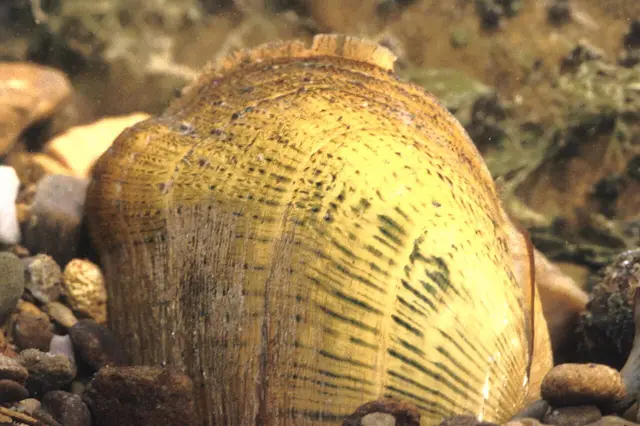
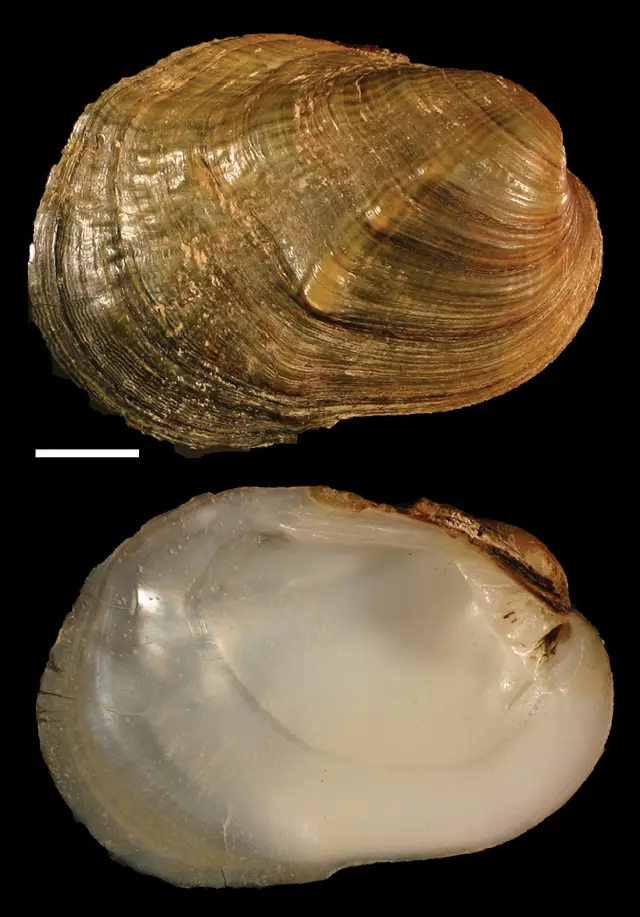
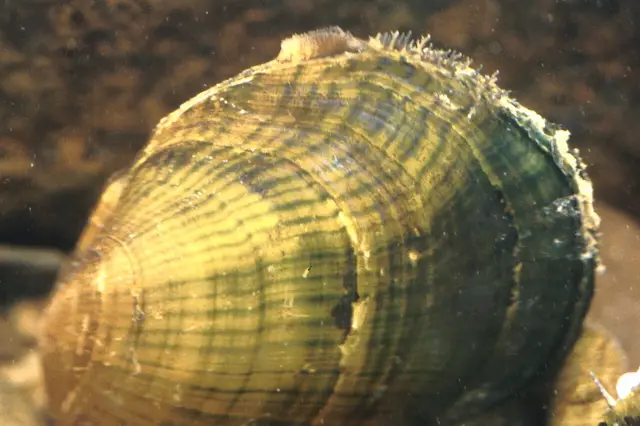
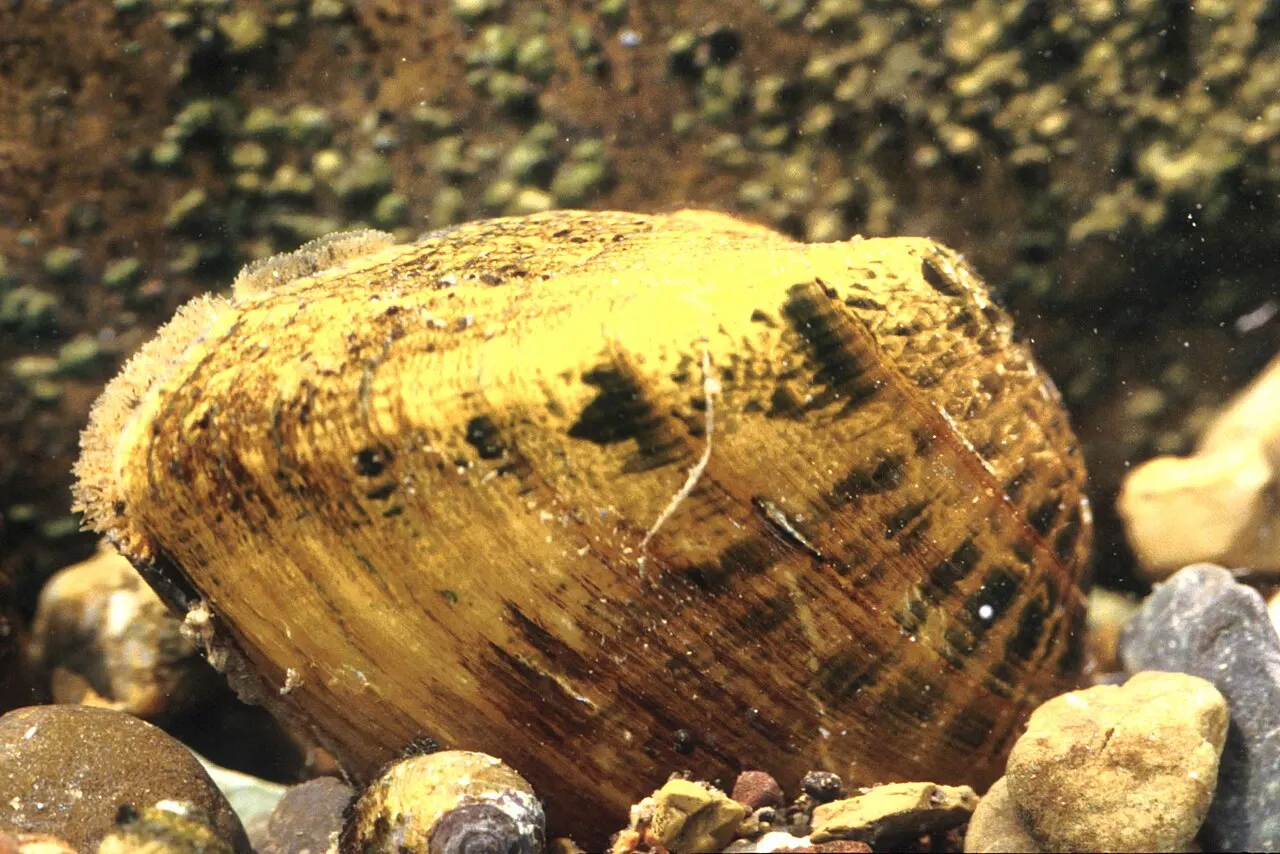
The snuffbox has a triangular shell, yellow, green or brown with green rays, blotches or chevron-shaped lines that fade and darken with age. The inside is white. Males reach about 70 mm, and females stay noticeably smaller. A female's shell is drawn out at one end, while a male has a narrow, shallow groove.
Where it lives
It lives in the Great Lakes and Mississippi River systems, mostly in shallow riffles of small to medium rivers where the water runs clean and fast over rock, gravel or sand. It also once lived on wave-washed lake shores. The IUCN assessment lists the United States and Canada, with an estimated 31 to 79 locations.
Historically it was recorded from at least 213 streams and lakes. A U.S. Fish and Wildlife Service profile counts it as present in 85 streams today, across 14 states and Ontario. In Ontario it survives only in the East Sydenham and Ausable rivers, having once lived in Lake Erie, Lake St. Clair and the Thames, Detroit, Grand and Niagara rivers.
Pins are Wikidata “endemic to” fields. Orange dots, when present, are GBIF occurrence tiles — survey bias included.
How it lives
Like other freshwater mussels, it filters bacteria, algae and fine organic particles from the water. Adults can live up to about 25 years and mature around age 3.
Its young are parasites at first. Females carry fertilised eggs that develop into larvae called glochidia, and these must reach a suitable fish or die. Females reportedly seize a fish by the head and pump glochidia into its gills, a behaviour described in 2004. The main host is the logperch, which survives the encounter. Darters, largemouth bass, mottled sculpin and brook stickleback are other possible hosts in Ontario. The larvae stay on the fish for several weeks before dropping to the riverbed as juveniles.
Why it is in trouble
The IUCN assessment records a decreasing population, severely fragmented, with continuing decline in area, and estimates a past reduction of 50 to 70 percent. Threats range from farming, housing and roads to sewage, nutrient runoff, drought and flooding. Siltation and pollution wash in from farmland and towns, and harm to the logperch would also hurt the mussel.
Invasive zebra mussels are a particular danger, because they can kill native mussels. It is reportedly still the most widespread and abundant member of its genus, while the other Epioblasma species are extinct or severely imperiled.
What is being done
The snuffbox is listed as endangered in the United States and Canada. Ontario issued a recovery strategy in 2010 and a five-year review in 2016, and its habitat has had general legal protection since 30 June 2013. Ontario asks the public to report sightings, keep natural vegetation along creeks and rivers, and help limit invasive species. The IUCN assessment lists no specific conservation actions in place.
Sources
Written for this catalog in our own words from the sources below, checked against them on 12 November 2026. Population figures are estimates and carry the year they were made. Status and assessment year: IUCN. 2026. The IUCN Red List of Threatened Species. Version 2026-1. iucnredlist.org.