Endangered
Roughskin skate
Roughskin skate
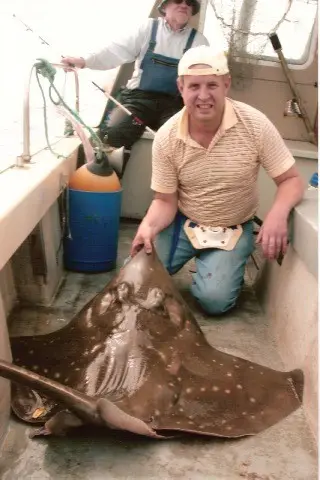
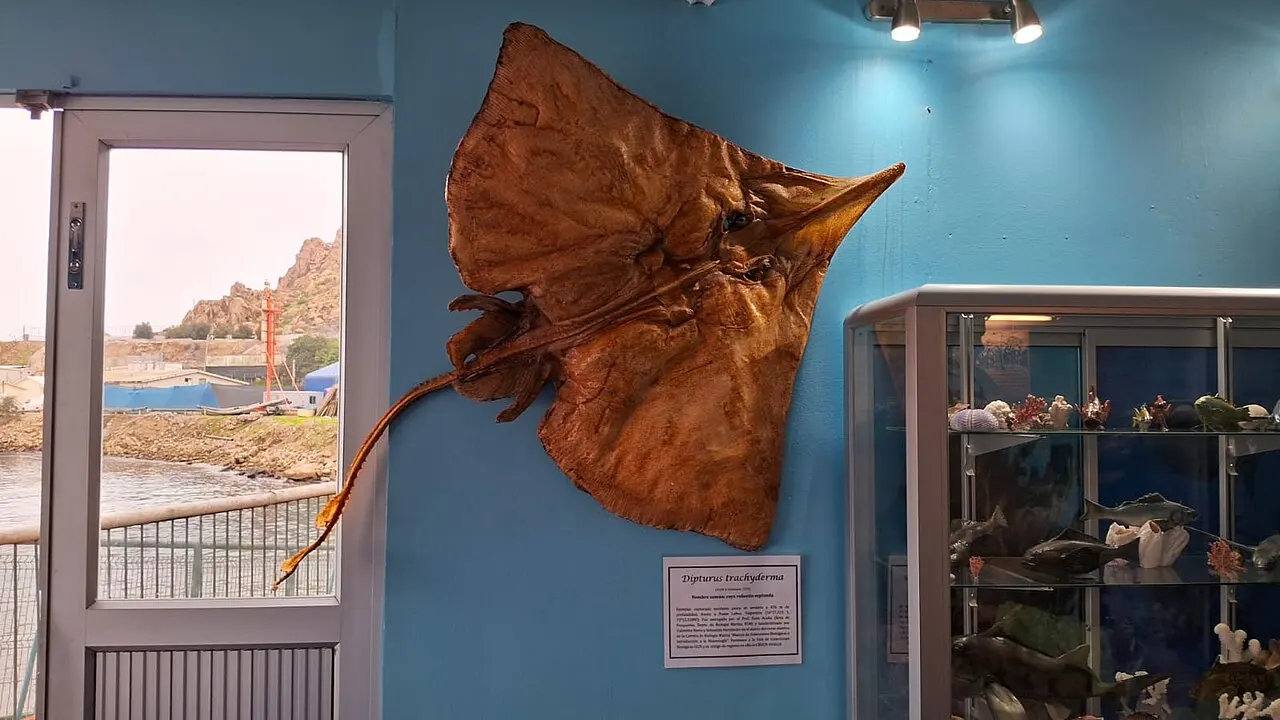
The roughskin skate is one of the largest skates in the sea, reaching about 2.6 metres long. It lives on cold, soft sea floors off southern South America, from Chile around Cape Horn to Uruguay and Brazil. The Red List classed it as Endangered in 2020 because of fishing.
How to recognise it
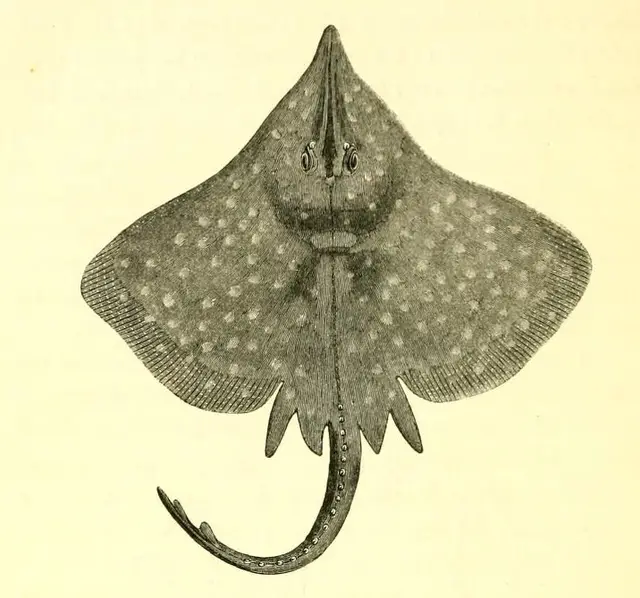
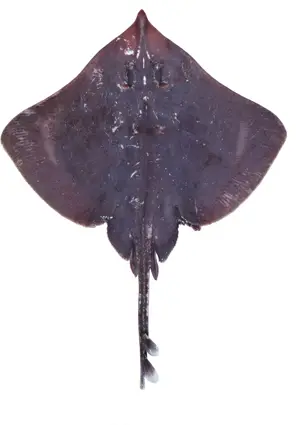
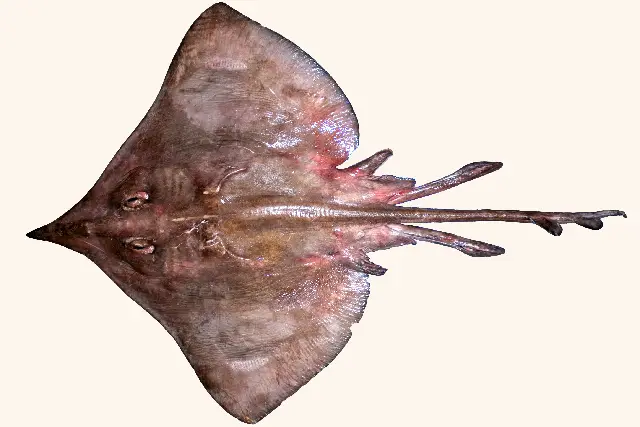
Roughskin skate is a large, flat skate with broad pectoral fins that work like wings and a long tail carrying a single row of small spines. Its upper surface is rough to the touch, which gives it its common name. The largest recorded fish reach about 264 to 265 cm in total length, and females grow bigger than males.
The Red List files it under the variant spelling Dipturus trachydermus. It is the same species.
Where it lives
The species ranges across the south-east Pacific and south-west Atlantic, from around Coquimbo in Chile south around Cape Horn and north to the Rio de la Plata. The Red List records it from Chile, Argentina, Uruguay, Brazil and the Falkland Islands.
It stays near the bottom over sand and mud on the outer shelf and upper slope. The Red List gives a depth range of about 85 to 480 m, and FishBase lists records as shallow as 20 m.
Pins are Wikidata “endemic to” fields. Orange dots, when present, are GBIF occurrence tiles — survey bias included.
How it lives
A study by Licandeo and colleagues off Chile (ICES Journal of Marine Science, 2007) aged 201 fish from their vertebrae. The oldest female was 26 years old and the oldest male 25. Half of the females were mature at about 215 cm and 17 years, and half of the males at about 195 cm and 15 years. FishBase gives a lower figure of about 13 years for first maturity.
Females lay eggs in cases roughly 20 to 30 cm long, and the same study counted 28 to 68 developing egg follicles per female. FishBase reports that the skate feeds mainly on bony fishes and crustaceans.
Why it is in trouble
A fish that grows slowly and matures after well over a decade can't absorb heavy fishing. Skates were reportedly taken in Chile and Argentina from the 1970s, and from 1993 demand from South Korea for hongeo, a fermented skate dish, reportedly pushed targeting up. The Red List records international use of the species as human food.
The 2020 assessment (criterion A2bd) lists harvest as the threat, both targeted and unintended catch, at large and small scales. A generation is about 21.5 years, so three generations span about 64.5 years, and a decline of 50 to 79 percent over that span has been reported. Skates are still caught as bycatch in trawl and longline fisheries aimed at other species, such as hake, and illegal fishing is reportedly continuing.
What is being done
Very little is recorded for this species. The Red List notes no recovery plan, no harvest management plan, no systematic monitoring and no captive population, and it is unknown whether the skate lives in any protected area. It lists harvest management, trade management and species recovery as actions that are needed. No population estimate exists.
Sources
Written for this catalog in our own words from the sources below, checked against them on 12 November 2026. Population figures are estimates and carry the year they were made. Status and assessment year: IUCN. 2026. The IUCN Red List of Threatened Species. Version 2026-1. iucnredlist.org.