Endangered
Dekeyser's nectar bat
Lonchophylla dekeyseri
Dekeyser's nectar bat (Lonchophylla dekeyseri) is a small, cave-roosting bat of the Brazilian Cerrado that feeds mostly on flower nectar. The IUCN Red List rated it Endangered in 2016, with a decreasing population split into small, scattered groups. Cave disturbance, mining and the loss of cerrado all weigh on it.
How to recognise it
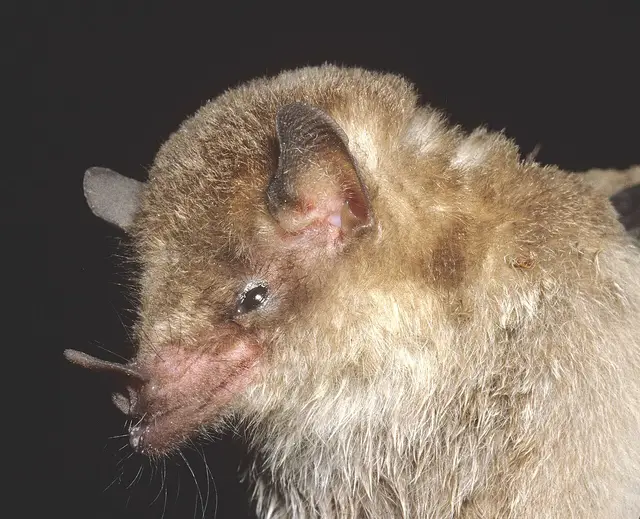
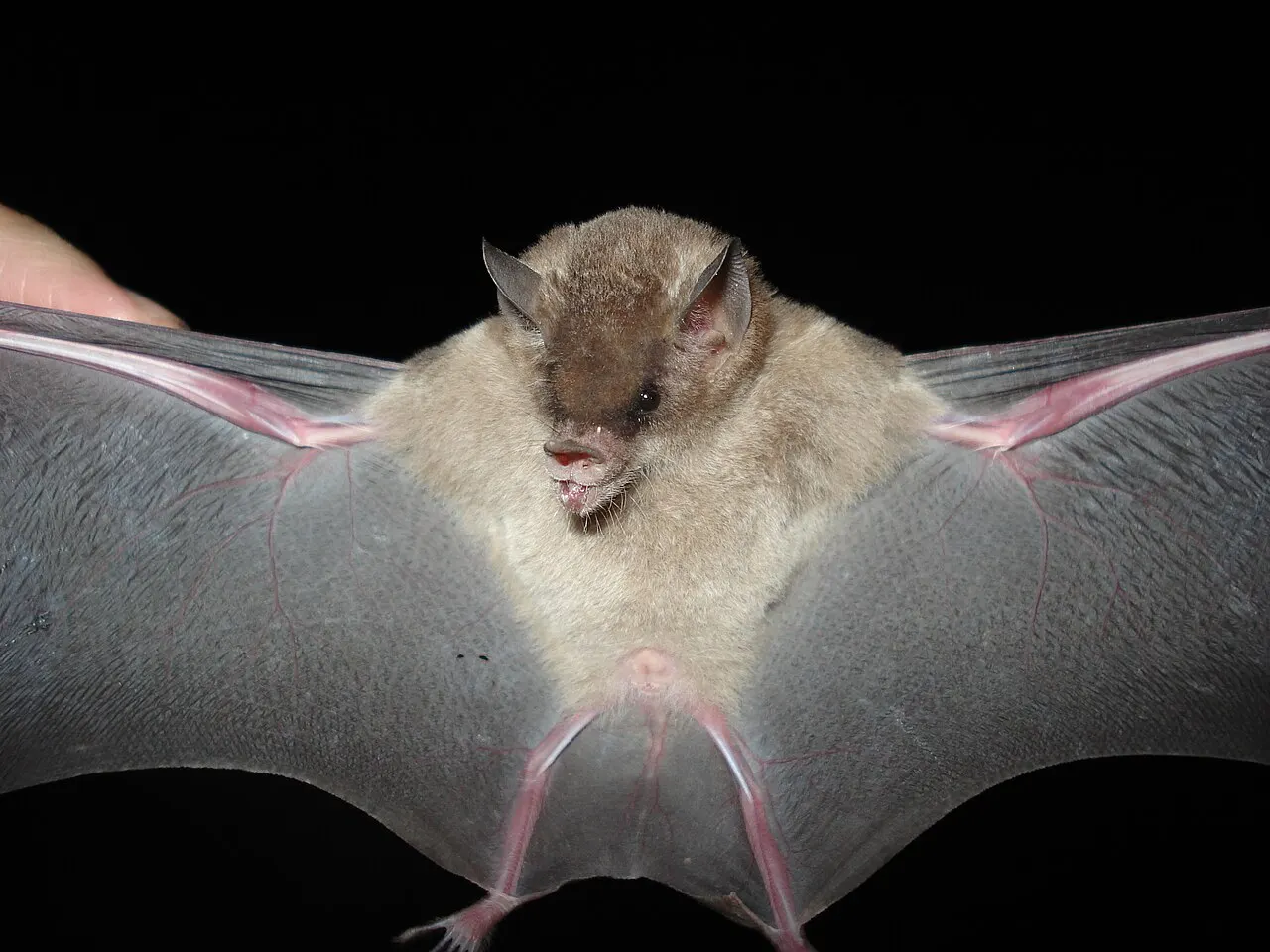
This is one of the smaller nectar bats. Adults weigh roughly 10 to 11 grams, with a forearm of about 34 to 38 mm and a head and body length of 48 to 63 mm. The fur runs from pale brown to yellowish or cinnamon, darker on the back than on the belly, and the wing membranes are plain brown.
The snout is long, with well-developed whiskers on the lips. The chin has a groove edged with tiny wart-like bumps. Its skull is wider than those of similar-sized relatives in the same genus, but generally shorter.
Where it lives
The bat was described in 1983 from Brasilia National Park in the Federal District of Brazil, where it was first collected in 1970. It is known from cerrado, the dry savanna of central Brazil, in Tocantins, Mato Grosso, Goias, the Federal District, Minas Gerais and Mato Grosso do Sul, with one provisional record from a cerrado and caatinga transition zone in Piaui.
The IUCN lists both Brazil and Bolivia as range countries. Later taxonomic work has questioned the older reports from Bolivian savannas, and most researchers treat the species as endemic to the Cerrado. It favours dry forest and savanna, often near limestone outcrops where caves form.
Pins are Wikidata “endemic to” fields. Orange dots, when present, are GBIF occurrence tiles — survey bias included.
How it lives
By day it hangs in caves, and it also uses tunnels and crevices. In one Federal District cave it shared space with a common nectar bat and nine other bat species. Colonies skew heavily female. One cave colony of about 150 bats had roughly three to six females for every male.
At night it visits flowers, including Bauhinia, Pseudobombax and Lafoensia trees, and Bauhinia supplied over 70 percent of the pollen samples in one study. Insects, mostly beetles, and some fruit round out the diet, and insects and fruit matter more in the wet season. Two radio-tracked bats ranged over about 640 hectares, roughly half cerrado and half pasture. Pregnant females have been recorded between March and June, and young have been found from July to November.
Why it is in trouble
The IUCN estimated about 600 individuals in 2016, in six subpopulations, the largest holding around 100. It counts recreation in caves, persecution and mining among the ongoing threats, and the species' extent of occurrence is about 28,600 square kilometres. Earlier Red List ratings were Vulnerable in 1996 and Near Threatened in 2008, so the trend has been downhill.
Roost disturbance is a particular worry. Culls aimed at vampire bats can involve sealing caves or dynamiting them, and these methods are indiscriminate, killing other bats that share the roost.
A 2022 study in Hystrix modelled the bat's potential range and found that 43.7 percent of it had been deforested between 2000 and 2019, and that 55.8 percent was under threat from mining. Around suitable caves, much of the vegetation had been converted to pasture (67.5 percent) and soybean (22 percent). Only about 4 percent of the potential range and about 15 percent of suitable roosting caves fall inside strictly protected areas.
What is being done
The IUCN lists site protection, awareness work and training as conservation actions. The bat occurs in Brasilia National Park, its type locality. Bat Conservation International and Brazilian partners surveyed 113 caves in Brazil, working with the national cave research and conservation centre on protocols to reduce harm to bats, though that work covers cave bats in general rather than this species alone. The 2022 study calls for more strictly protected areas in its habitat.
Sources
Written for this catalog in our own words from the sources below, checked against them on 12 November 2026. Population figures are estimates and carry the year they were made. Status and assessment year: IUCN. 2026. The IUCN Red List of Threatened Species. Version 2026-1. iucnredlist.org.