Endangered
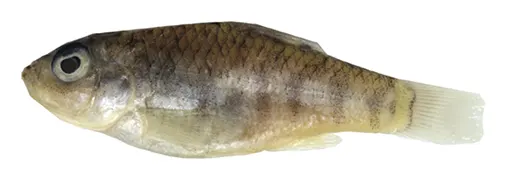
Hispaniola pupfish
Cyprinodon bondi
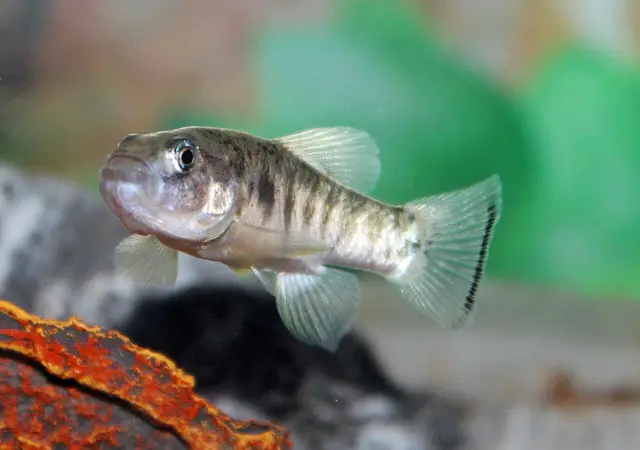
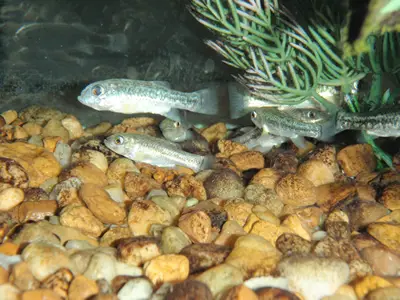
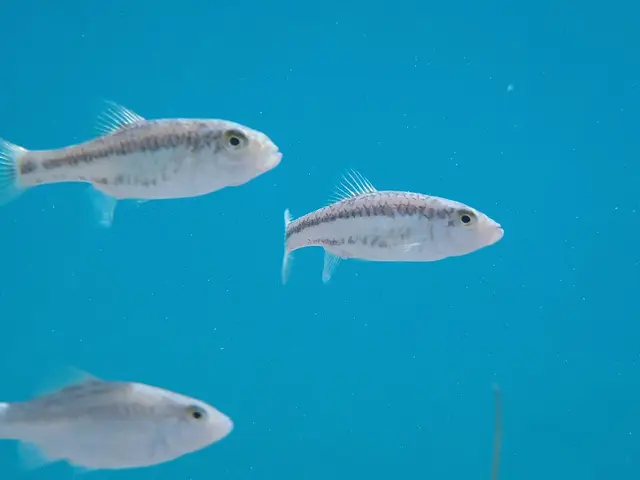
The Hispaniola pupfish (Cyprinodon bondi) is a small fish of the brackish lakes of Hispaniola, in Haiti and the Dominican Republic. It is large for a pupfish. The IUCN Red List rated it Endangered in 2021, with a single location, an unknown population trend and no recovery plan in place.
How to recognise it
It's a pupfish, a small killifish of the family Cyprinodontidae. Adults reach up to about 82 mm in total length (62 mm without the tail fin), which is large for the genus Cyprinodon.
George S. Myers described the species in 1935 and named it after Bond, who collected the specimens. The type series all came from Étang Saumâtre in Haiti.
Where it lives
The IUCN lists the fish as present in both Haiti and the Dominican Republic, in permanent saline or brackish lakes, and counts its range as a single location. The two lakes usually named are Étang Saumâtre and Lake Enriquillo, which lie in the same rift valley on either side of the border.
Whether Enriquillo really holds this species is disputed. In 1989 the ichthyologist Michael Leonard Smith argued that Enriquillo specimens identified as C. bondi were misidentified and that the species is limited to Étang Saumâtre. The IUCN assessment and other accounts still list both countries.
Étang Saumâtre is the largest lake in Haiti, about 170 km2 and at most about 30 m deep, with brackish water. Lake Enriquillo is bigger, roughly 375 to 380 km2, and sits about 46 m below sea level. Its salinity has been reported from about 33 parts per thousand (near seawater) to over 100. The pupfish is reportedly one of three native fish listed for that lake, alongside the blackbanded limia and the Hispaniolan gambusia.
Pins are Wikidata “endemic to” fields. Orange dots, when present, are GBIF occurrence tiles — survey bias included.
Why it is in trouble
The IUCN's 2021 assessment gives Endangered under criterion B1ab(iii), meaning a small range limited to few locations, with habitat quality declining. The area it occupies is recorded as still shrinking, though the population trend is listed as unknown. No population count exists.
The threats named are soil erosion and sedimentation, mining and quarrying, small-holder farming, tourism and recreation areas, and unintended catch in small-scale subsistence fishing. Around Étang Saumâtre, deforestation and erosion in the catchment, nutrient pollution that feeds algae, and plastic waste have also been reported. Lake Enriquillo's surface roughly doubled between 2004 and 2009, flooding farmland, which shows how unstable these lakes can be as habitat.
What is being done
Little, as far as the record shows. The 2021 assessment lists no recovery plan, no monitoring scheme, no protected area covering the fish, no harvest management and no captive population. Lake Enriquillo has national park status on the Dominican side, but Étang Saumâtre has had far less conservation attention. The two governments have identified a joint environmental programme for the watersheds of both lakes, with European Union funding.
Sources
Written for this catalog in our own words from the sources below, checked against them on 12 November 2026. Population figures are estimates and carry the year they were made. Status and assessment year: IUCN. 2026. The IUCN Red List of Threatened Species. Version 2026-1. iucnredlist.org.