Endangered
Cumberland monkeyface pearly mussel
Quadrula intermedia
The Cumberland monkeyface (Theliderma intermedia) is a medium-sized freshwater mussel of the middle and upper Tennessee River system in the eastern United States. The IUCN Red List rated it Endangered in 2012. Once found in several rivers, it now survives in only two, the Duck and the Powell, with the Duck holding the stronger population.
How to recognise it
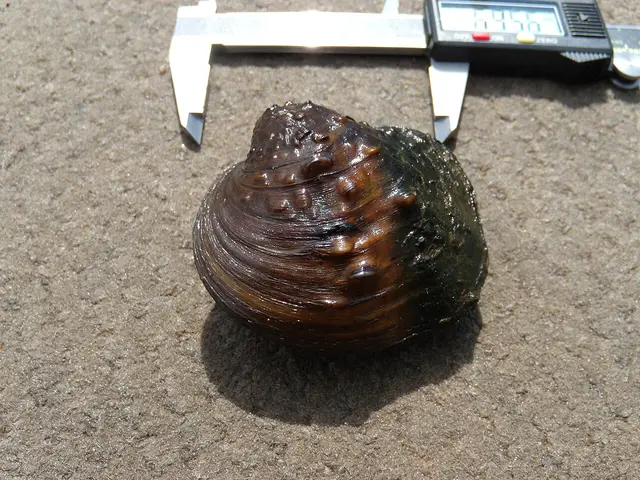
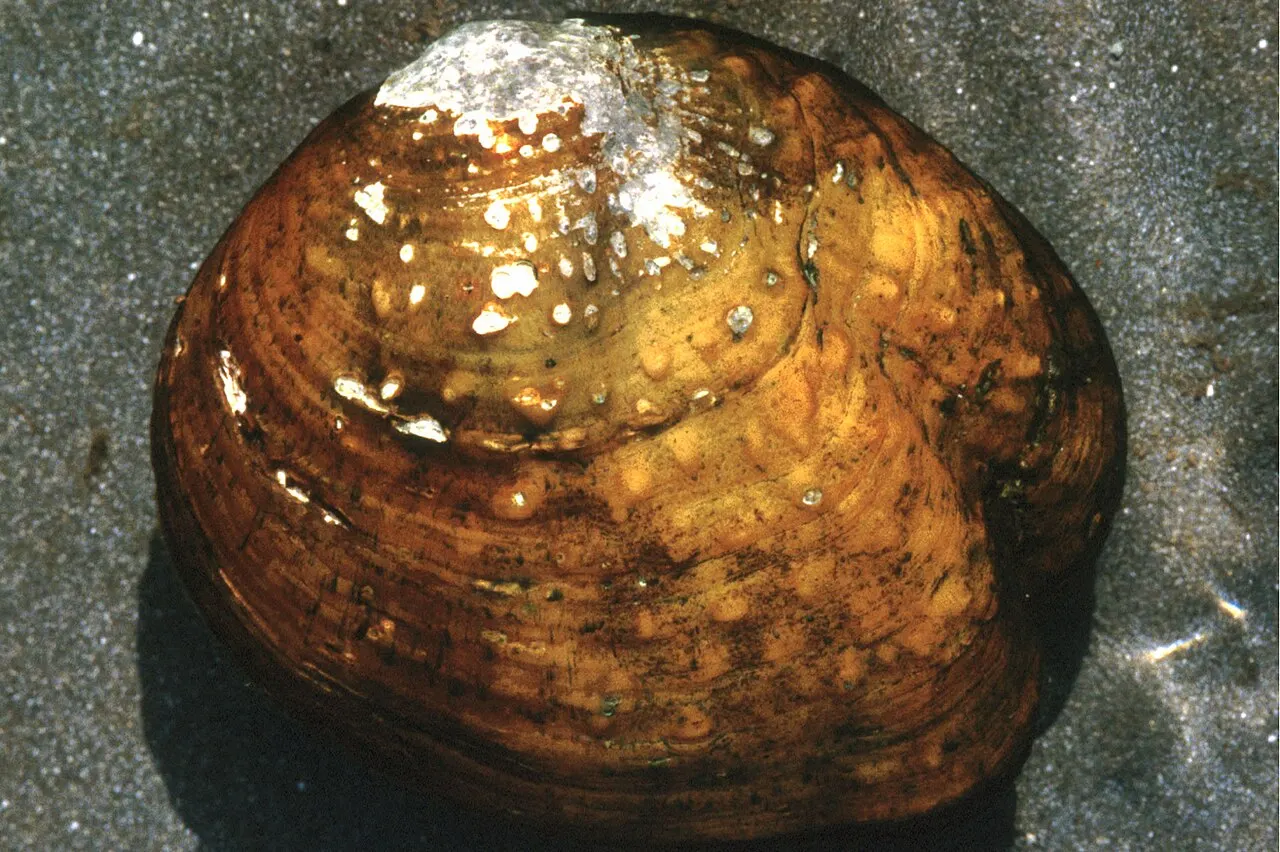
It's a medium-sized mussel, roughly 2 inches (about 5 cm) long according to the US Fish and Wildlife Service, though another reference gives 2.8 inches (7.1 cm). The shell is triangular to rectangular with rounded corners, with flat valves and a deep hollow under the beak.
The outside is greenish yellow, patterned with spots, chevrons, zigzags and rays, and covered in knobs. The inside is white, straw-colored or salmon. The species long went by the name Quadrula intermedia, and Theliderma is the genus now used by the Red List.
Where it lives
The species belongs to the middle and upper Tennessee River system and has always been considered rare. It needs clean, flowing water over stable cobble, gravel and sand, and it lives half buried in shallow riffles and shoals.
Today it's known from just two rivers. The Powell River crosses the Virginia and Tennessee line. The Duck River lies wholly in Tennessee. The Elk River in Tennessee held a few animals in 1980, when a survey turned up one live mussel and five freshly dead ones. Sampling from 1990 to 2005 found none, and the population is treated as lost.
Pins are Wikidata “endemic to” fields. Orange dots, when present, are GBIF occurrence tiles — survey bias included.
How it lives
Like other freshwater mussels, its young begin as larvae that must clamp onto a fish to develop. Probable hosts include the Tennessee shiner, the streamline chub and the blotched chub, though another reference says the hosts are unknown. Females carrying larvae are found in May and June, and they readily drop the larvae if disturbed.
Shells from the Powell River have been aged at 7 to 35 years, averaging 23. Growth was fast in the first 14 years and then slowed sharply, which suggests the animal matures late.
Why it is in trouble
Impoundments, silt and pollution were named as the major causes of decline. Cold, fluctuating releases below Tims Ford Dam degraded mussel habitat in the Elk River. In the Powell River, coal mining upstream is a growing pressure, and a 2011 federal review described it as increasing. Water withdrawals, particularly for municipal supply, are a concern on the Duck.
The Powell population has fallen over the past three decades. A 2008 to 2009 survey found 68 live mussels at 12 of 23 sites, with animals under 10 years old in only one half-mile stretch. Targeted searches in 2018 and 2019 turned up just six live mussels at four sites. The IUCN lists the overall trend as decreasing and the population as severely fragmented across three locations.
What is being done
It has been federally listed as endangered in the United States since June 1976. The proposed Columbia Dam on the Duck River was never completed, and the state now manages about 12,800 acres of former reservoir land along 32 river miles. Better oxygen levels and higher minimum flows below Normandy Dam, started in the mid-1990s, helped the Duck population grow. Surveys in 2000 to 2003 found it in a 22-mile reach, up from 16 miles in 1988.
A federal review in 2011 judged recovery objectives only 1 to 25 percent achieved, and a 2020 addendum kept the status as endangered, noting no sign of expansion on the Duck since 2010. Release areas for endangered mussels exist on the lower Holston and French Broad rivers and below Wilson Dam on the Tennessee, but the reviews report that none of this species had been placed there.
Sources
Written for this catalog in our own words from the sources below, checked against them on 12 November 2026. Population figures are estimates and carry the year they were made. Status and assessment year: IUCN. 2026. The IUCN Red List of Threatened Species. Version 2026-1. iucnredlist.org.