Critically Endangered
Winged mapleleaf
Quadrula fragosa
The winged mapleleaf (Quadrula fragosa) is a freshwater mussel from the central United States, once spread through rivers of the Mississippi basin and now reduced to a handful of river systems. The IUCN Red List rated it Critically Endangered in 1996, and it is listed as endangered under US federal law.
How to recognise it
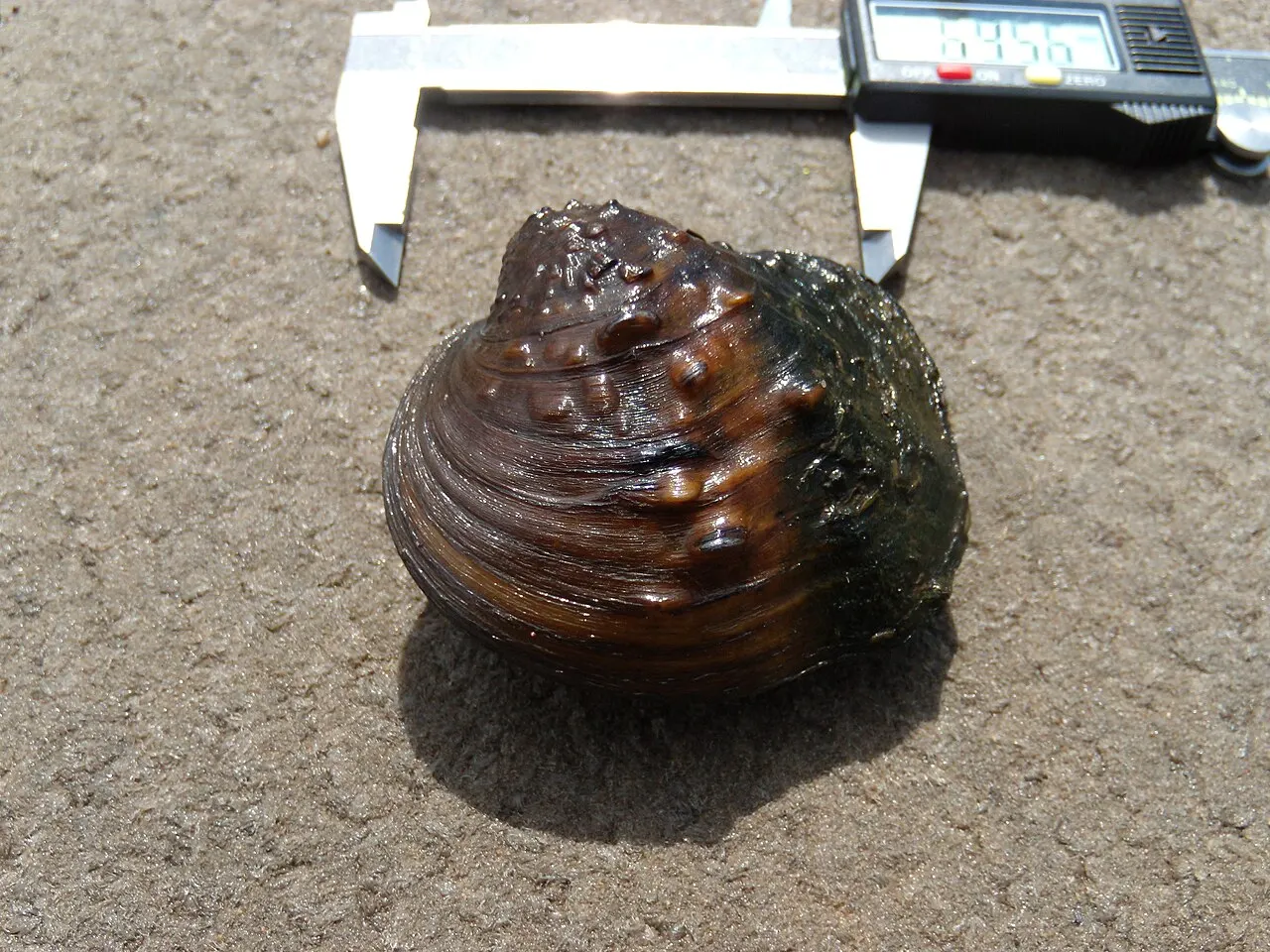
Adults reach about 4 inches (10 cm) long. The shell is very thick and ranges from yellowish-green to light or dark brown outside, often with broad green rays, and white inside, sometimes iridescent at one end. Rows of bumps run from the hinge to the shell edge, a pattern that helps separate it from similar mussels.
Where it lives
It needs clean, moving water in medium to large rivers, usually on gravel, sand or rubble bottoms, in water roughly 0.4 to 2 metres deep. It reportedly once lived in 13 states, and the US Fish and Wildlife Service counts 38 historic places in the Midwest, from Minnesota to Arkansas.
Surviving populations are known from the St. Croix River on the Minnesota and Wisconsin border, the Ouachita and Saline rivers in Arkansas, the Little River in Oklahoma and the Bourbeuse River in Missouri. Only the St. Croix population was known when the 1997 recovery plan was approved, and it is the only one proven to persist. Total numbers are uncertain, with one estimate of 10,000 to 100,000 individuals rangewide. An experimental population has also been released in the Tennessee River, though it is not yet shown to be reproducing.
Pins are Wikidata “endemic to” fields. Orange dots, when present, are GBIF occurrence tiles — survey bias included.
How it lives
The mussel filters tiny plankton from the water. Males release sperm into the river, and females take it in and fertilise eggs held on their gills. The resulting larvae must attach to the gills of a host fish before they can grow into juveniles and drop to the riverbed. The only known hosts are channel catfish and blue catfish. Lifespan is unknown, but the oldest known animal in the St. Croix was 22 years old.
Why it is in trouble
Only one known population is reproducing, so a flood, a pollution spill or a dam problem could cause extinction. Zebra mussels, an invasive species, became established in the lower St. Croix in 2000 and smother native mussels. Fine sediment is increasing in the habitat, according to a 2008 study by Hornbach and Hove, and pollution and changes in flow from development and upstream dams add to the pressure. Peaking operations at the St. Croix Falls dam once harmed mussel beds nearby.
What is being done
The species has been federally listed as endangered since July 22, 1991. The dam operator, Xcel Energy, working with the Wisconsin Department of Natural Resources, agreed to run St. Croix Falls in run-of-river mode, which ended the damaging peaking operations. Keeping zebra mussels out of occupied habitat is treated as essential. Partner agencies are developing a way to produce enough mussels for reintroduction into former river reaches.
Sources
Written for this catalog in our own words from the sources below, checked against them on 12 November 2026. Population figures are estimates and carry the year they were made. Status and assessment year: IUCN. 2026. The IUCN Red List of Threatened Species. Version 2026-1. iucnredlist.org.




