Critically Endangered
Cottus petiti
Cottus petiti
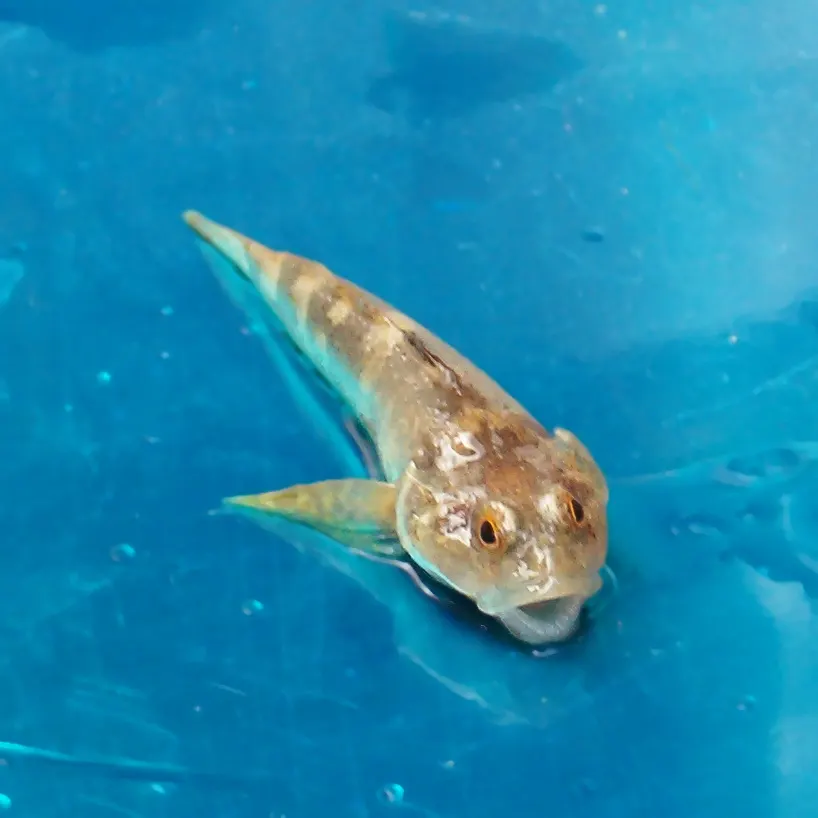
The Lez sculpin (Cottus petiti), known in French as the chabot du Lez, is a tiny freshwater fish found nowhere except the upper River Lez near Montpellier in southern France. Rated Critically Endangered in the 2024 Red List assessment, it lives in a single small, spring-fed stretch of river.
How to recognise it
This is a small, bottom-dwelling sculpin. Males typically measure around 5.6 centimetres, and the largest recorded is about 6.4 centimetres in standard length, with a maximum published weight of about 4 grams.
It was described in 1964 by Băcescu and Băcescu-Meşter and named for the French zoologist Georges Petit. It belongs to the Cottus gobio complex and is genetically very close to the European bullhead (C. gobio). A 2005 study by Jörg Freyhof, Maurice Kottelat and Arne Nolte confirmed it as a separate species.
Where it lives
The Lez sculpin is endemic to France. It occupies cold, permanent flowing water fed by karstic springs. One account describes its range as a stretch of about 3 kilometres of the river.
The 2024 assessment treats it as a single location with one subpopulation. It estimates the occupied area at about 20 square kilometres, within a total range of roughly 80 square kilometres. The spring-fed setting may have let this isolated population survive over geological time.
Pins are Wikidata “endemic to” fields. Orange dots, when present, are GBIF occurrence tiles — survey bias included.
How it lives
In laboratory tests at a steady 15 to 16 degrees Celsius, a female laid eggs several times, less than a month apart. A female lays roughly 20 to 70 relatively large eggs, each about 2.1 millimetres across.
Why it is in trouble
With so small a range, any change to the river counts. The Red List names ongoing groundwater pumping for household, commercial and farm use, which may lower river flow. Other ongoing pressures are recreation along the river and nutrient pollution, with competing species and future drought also listed.
The listed effects include habitat degradation, competition, hybridisation, disturbance, reduced breeding success and death of fish. The assessment records that all of the known range lies within sites identified for conservation, that 91 to 100 percent of the population is in a protected area, and that a recovery plan and awareness programmes exist. No systematic monitoring scheme is recorded, and the population trend is listed as unknown.
Sources
Written for this catalog in our own words from the sources below, checked against them on 12 November 2026. Population figures are estimates and carry the year they were made. Status and assessment year: IUCN. 2026. The IUCN Red List of Threatened Species. Version 2026-1. iucnredlist.org.




