Endangered
Sarracenia Spiketail
Cordulegaster sarracenia
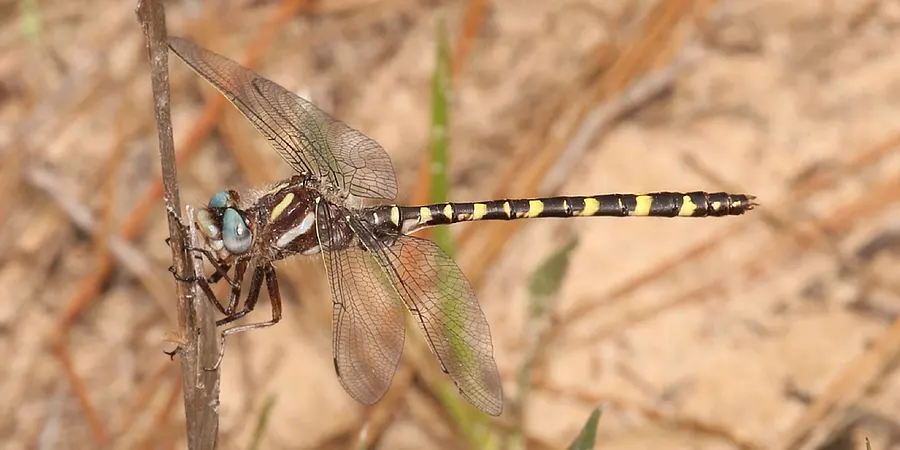
The Sarracenia spiketail (Cordulegaster sarracenia, now Zoraena sarracenia in some recent work) is a dragonfly known only from pitcher plant bogs and spring seeps in east Texas and western Louisiana. It was described as new to science in 2011, flies very early in spring, and was rated Endangered by the IUCN in 2018.
A dragonfly of pitcher plant bogs
Spiketails are a family of dragonflies, and this one was only recognised as a separate species in 2011, when John Abbott and Troy Hibbitts described it in the journal Zootaxa from east Texas and western Louisiana. Females have a very short ovipositor, the egg-laying organ at the tip of the abdomen.
The species has two scientific names in use. GBIF and the IUCN list it as Cordulegaster sarracenia. A 2026 Zootaxa paper by Abbott and Kenneth Tennessen treats it as Zoraena sarracenia.
Where it lives
The species is known from five counties in east Texas and one parish in western Louisiana, and the IUCN lists only those two states. Named sites include Jasper County in Texas and Natchitoches Parish in Louisiana, including Kisatchie National Forest and the Peason Ridge Wildlife Management Area.
The IUCN estimates its extent of occurrence at about 20,000 square kilometres and the area it actually occupies at about 1,000 square kilometres, across 15 to 18 locations. It lists bogs, marshes, swamps and fens as its habitat. Records are tied to boggy areas with the pitcher plant Sarracenia alata, and the young have also been found in shaded seepages.
Pins are Wikidata “endemic to” fields. Orange dots, when present, are GBIF occurrence tiles — survey bias included.
How it lives
It's an early flier. Adults have been recorded between about 14 March and 29 April, and in 2011 none were found after roughly 11 April. Males perch on pitcher plants, including the red stems of new plants, new growth and the previous year's dead pitchers. A mating pair photographed in Jasper County in April 2011 was the first recorded.
The young live in small boggy rivulets and seepages. The 2026 Zootaxa paper described the last-stage nymph for the first time, from 34 lab-reared and field-collected specimens from Texas and Louisiana. Rearing suggested a minimum of about two years to develop, and some individuals needed three.
Why it is in trouble
The 2018 assessment rates the species Endangered under criterion C2a(i) and records a decreasing population, with a continuing decline. No population size is given, and the population is not considered severely fragmented. The threats it lists are more frequent or intense fire, drought, grazing and ranching, and unintentional harm from small-scale harvest, though the scope and severity of each are marked unknown.
The 2026 paper calls the species geographically restricted. Because it depends on small, wet habitats in two states, anything that dries or degrades a seep matters.
What is being done
The IUCN lists site protection and habitat protection as the conservation actions in place or needed. The 2026 nymph description was written partly to help identify the species and support its conservation assessment.
Sources
Written for this catalog in our own words from the sources below, checked against them on 12 November 2026. Population figures are estimates and carry the year they were made. Status and assessment year: IUCN. 2026. The IUCN Red List of Threatened Species. Version 2026-1. iucnredlist.org.




