Endangered
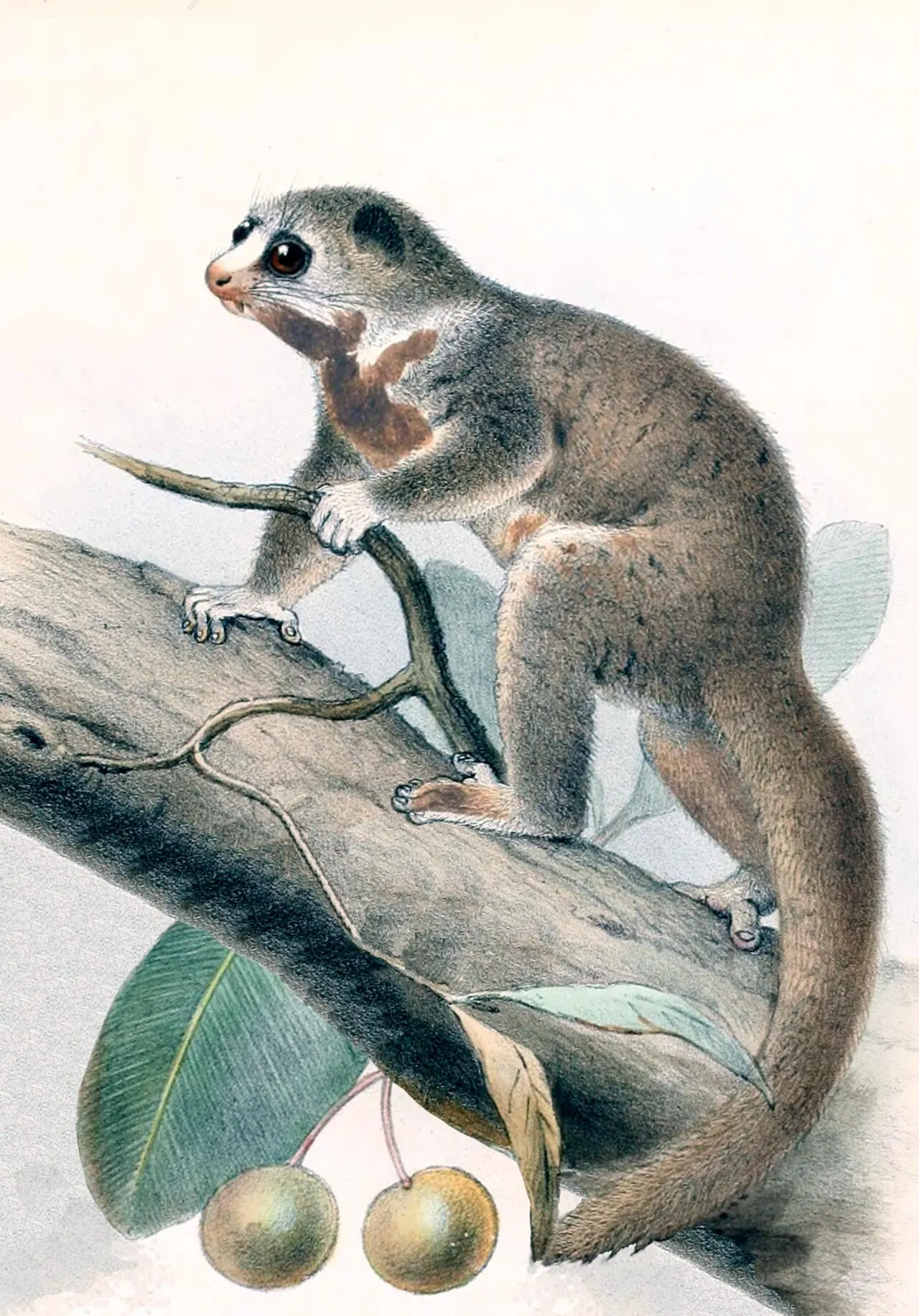
Thomas' dwarf lemur
Cheirogaleus thomasi
Thomas' dwarf lemur is a small nocturnal primate known only from a stretch of forest in Anosy, in far southeastern Madagascar. The IUCN Red List assessed it as Endangered in 2020, with a population that is declining and split into fragments.
What it is
Charles Forsyth Major described this animal in 1894 as Opolemur thomasi, from a specimen collected at Fort Dauphin on the southeast coast. It later moved between names, and a 2014 revision of Madagascar's dwarf lemurs by Lei and colleagues lists it as a species of Cheirogaleus.
Dwarf lemurs as a group are nocturnal and live in the lower layers of eastern Madagascar's forests. They store fat in the tail, and the genus reportedly spends four to five winter months inactive. Nothing specific to this species on size or diet appears to have been published.
Where it lives
The species is found only in Madagascar, in the Anosy region, where it lives in forest near the coast. The IUCN lists tropical dry forest and moist montane forest as its habitat, at elevations up to 40 m. Its extent of occurrence is about 458 square kilometres, and the area it actually occupies is estimated at between 12 and 260 square kilometres.
Pins are Wikidata “endemic to” fields. Orange dots, when present, are GBIF occurrence tiles — survey bias included.
Why it is in trouble
The IUCN assessment records the population as decreasing and severely fragmented, with its occupied area still shrinking. Generation length is put at 8 years. Threats listed are small-holder farming, mining and quarrying, and unintentional effects of small-scale harvesting. The assessors rate the scope and severity of each as unknown, so the exact pressure on the animal is not well measured.
What is being done
Conservation sites have been identified across the whole range, and the species occurs in at least one protected area. It is covered by international legislation and trade controls. Actions listed as needed include site protection and management and habitat restoration, along with research on population and habitat trends.
Sources
Written for this catalog in our own words from the sources below, checked against them on 12 November 2026. Population figures are estimates and carry the year they were made. Status and assessment year: IUCN. 2026. The IUCN Red List of Threatened Species. Version 2026-1. iucnredlist.org.



