Endangered
Cheirodon pisciculus
Cheirodon pisciculus
Cheirodon pisciculus is a tiny characin fish found only in Chile, in rivers and lake shallows between the Huasco and Rapel basins. Its Spanish name is pocha común. The IUCN Red List assessed it as Endangered in 2023 because dams, pollution and introduced fish are shrinking and degrading its habitat.
How to recognise it
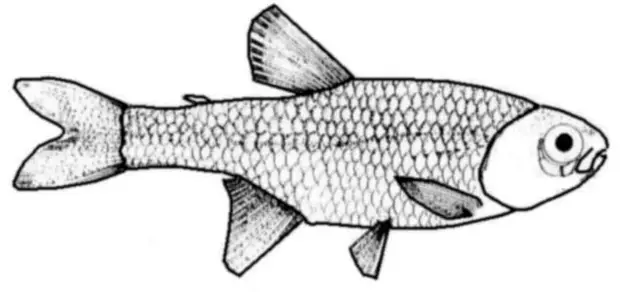
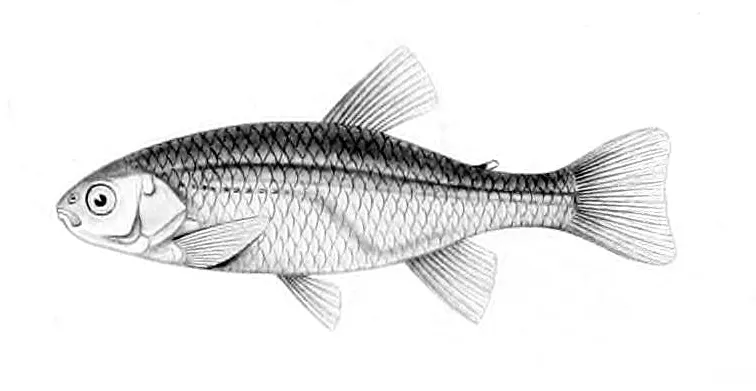
It's a small silvery characin that reaches about 5.5 cm in standard length. Its teeth are distinctive: each is widened at the tip with at least five small cone-shaped points, the middle one longest, a bit like the fingers of a hand. The genus name comes from the Greek words for hand and tooth.
Where it lives
The species is endemic to Chile. Its range runs from the Huasco River basin at about 28 degrees south to the Rapel basin at about 34 degrees south, taking in basins such as the Aconcagua and Maipo on the Pacific slope. The 2023 assessment estimates an extent of occurrence of about 118,000 square kilometres and an area of occupancy of about 50,000.
It's common in slow or nearly still water, such as river backwaters and lake shores with water plants. Only larger adults are found in faster current. The Red List also records seasonal streams, shrubby wetlands and small marshes and pools among its habitats.
Pins are Wikidata “endemic to” fields. Orange dots, when present, are GBIF occurrence tiles — survey bias included.
How it lives
Little is documented about its diet or breeding. The Red List describes it as a schooling, dispersive fish that doesn't migrate, with a generation length of 1 to 2 years.
Why it is in trouble
Central Chile has a dense and growing human population, and pollution and hydroelectric development have degraded its rivers. The Red List lists dams as an ongoing, low-impact threat, along with five introduced fish: rainbow trout, brown trout, common carp, eastern mosquitofish and Cheirodon interruptus.
The assessment estimates a 40 percent past decline and projects a further 50 percent reduction, both based on loss of habitat area and quality. The population trend is decreasing.
What is being done
The species occurs in at least one protected area, and an area-based management plan and invasive species control are recorded as in place. The assessment also lists education, awareness and policy measures among its conservation actions. No monitoring scheme or recovery plan exists.
Sources
Written for this catalog in our own words from the sources below, checked against them on 12 November 2026. Population figures are estimates and carry the year they were made. Status and assessment year: IUCN. 2026. The IUCN Red List of Threatened Species. Version 2026-1. iucnredlist.org.