Endangered
Burmese eyed turtle
Morenia ocellata
The Burmese eyed turtle (Morenia ocellata) is a small freshwater turtle from the lowland wetlands of Myanmar, named for the dark, yellow-ringed eyespots on its shell. The IUCN Red List rated it Endangered in 2021, after a steep fall driven by harvest for food and trade and by loss of wetland habitat.
How to recognise it
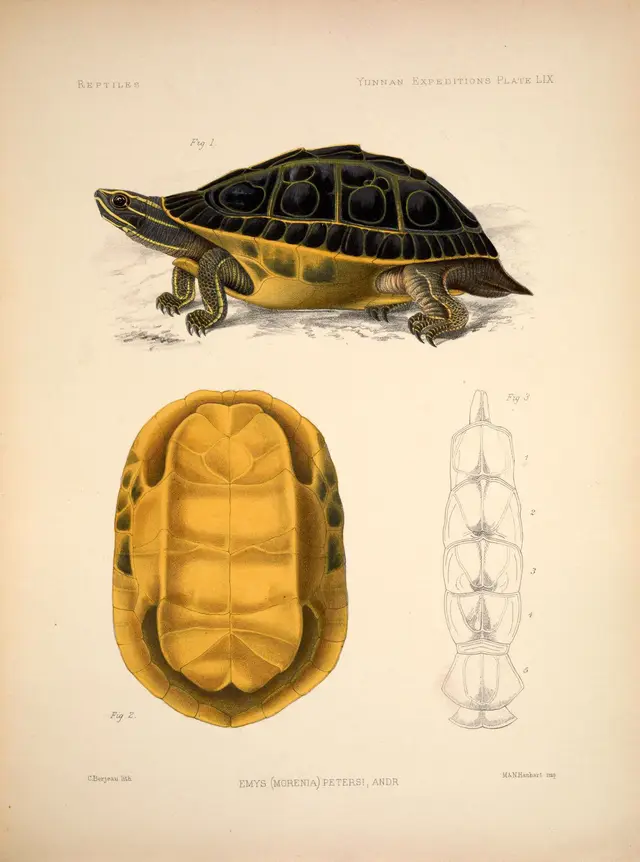
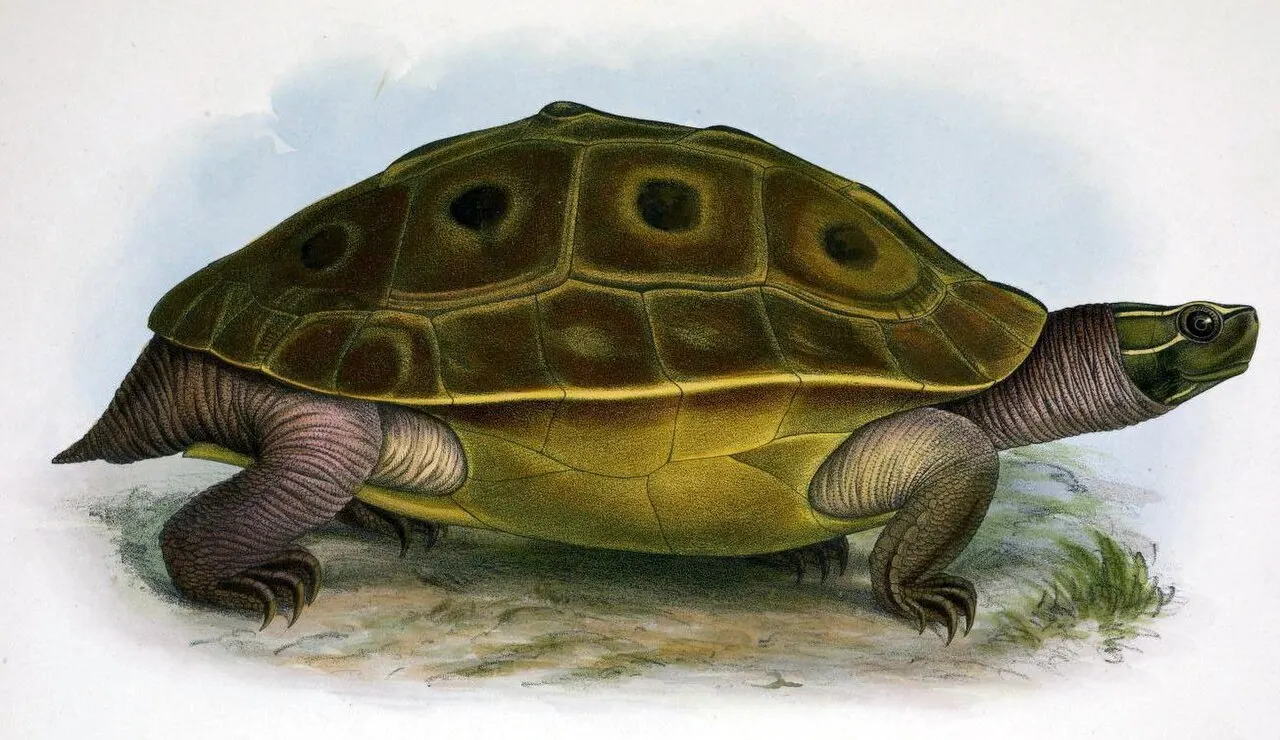
This is a modest-sized turtle. Females reportedly reach a shell length of about 24 cm, and males stay smaller, with a narrower, more domed shell and a larger tail. The shell is olive, dark brown or grayish black, and the large plates each carry a dark spot ringed in yellow. Those eyespots give the species its name and are most striking on young turtles.
The underside is plain yellow. The head is olive or dark brown with two yellow stripes running back to the neck.
Where it lives
The Red List treats the species as native to Myanmar only, at elevations from sea level up to about 500 m. It has been recorded in mangrove swamps, marshes, permanent rivers and pools, and seasonally flooded farmland such as rice paddies. Older suspicions that it also occurs in West Bengal and Bangladesh have been discarded, and a possible record from Yunnan in China is unresolved. The Reptile Database lists southern China and the northwestern Malay Peninsula as well, which the Red List does not.
The species is reported as common around Yangon and in many other parts of Myanmar.
Pins are Wikidata “endemic to” fields. Orange dots, when present, are GBIF occurrence tiles — survey bias included.
How it lives
It eats plants, grazing on vegetation in shallow water. Little else about its daily life has been studied, and the Turtle Survival Alliance describes its natural history as virtually unknown.
Females lay eggs. Nesting is reportedly between September and April, the dry season, with 5 to 15 eggs in a clutch. The Red List puts one generation at roughly 21 years, so a turtle that takes this long to replace itself cannot rebuild quickly after heavy harvesting.
Why it is in trouble
Collecting has been the main blow. People take the turtles for local food and for sale, and large numbers are sent north to wildlife markets in southern China. Turtles are also bought as offerings for pagoda ponds.
Habitat is shrinking as well. The Red List names farming, small-scale aquaculture, shifting cultivation, seepage from mining, soil washing into water, pesticides and herbicides, plus storms, flooding and temperature extremes. It estimates a population reduction of about 50 percent, past and ongoing, based on habitat decline and exploitation.
What is being done
In September 2022 the Turtle Survival Alliance and Wildlife Conservation Society's Myanmar Turtle Team moved 24 turtles, rescued from a monastery pond in Rakhine State, to a recently established assurance colony near Bago, about 45 miles north of Yangon. The colony is meant to hedge against extinction in the wild and to produce young for later release into protected habitat.
The Red List records that the species occurs in at least one protected area and is covered by international trade controls. Its listed conservation needs include habitat protection and restoration, harvest and trade management, and captive breeding.
Sources
Written for this catalog in our own words from the sources below, checked against them on 12 November 2026. Population figures are estimates and carry the year they were made. Status and assessment year: IUCN. 2026. The IUCN Red List of Threatened Species. Version 2026-1. iucnredlist.org.