Critically Endangered
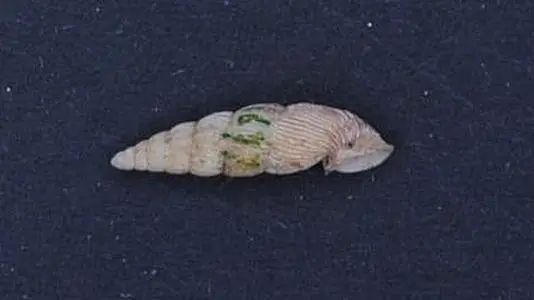
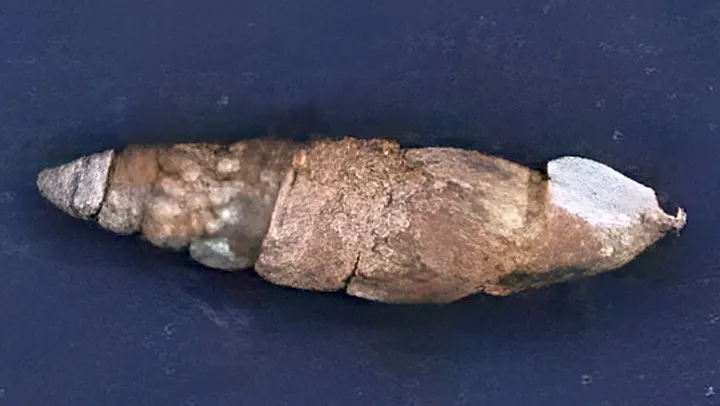
Boettgeria obesiuscula
Boettgeria obesiuscula
Boettgeria obesiuscula is a small, very elongate door snail found only on the island of Madeira, in the Atlantic. The IUCN Red List rated it Critically Endangered in 2017, with a single known location covering about 4 square kilometres, where development, roadworks and other human activity are cutting into its habitat.
How to recognise it
It's a land snail with a small, very elongate shell, one of the door snails (family Clausiliidae). Door snails all have a clausilium, a small plate inside the shell that can close off the opening. It breathes air, like other land snails. Shell size, colour and biology are poorly documented, and the IUCN lists no common name for it.
A Madeiran discovery
R. T. Lowe described the species in 1863 as Clausilia obesiuscula, in a short paper on two new Madeiran land shells discovered by the Baron de Paiva and J. M. Moniz. It was later moved to Boettgeria and is sometimes placed in the subgenus Loosjesiella.
Where it lives
The IUCN assessment records the snail only from Madeira, an island belonging to Portugal, and treats it as endemic to Portugal. It counts a single location, with both extent of occurrence and area of occupancy estimated at about 4 square kilometres, at roughly 50 to 250 m above sea level. The habitat is Mediterranean-type shrubland.
Museum specimens in GBIF, mostly collected in the 1980s, carry labels from Funchal, the mouth of the Ribeira de Porto Novo, the Ribeira das Lages and the Ribeira de Porto Novo valley above Caniço. These are old collection labels, not current records.
Pins are Wikidata “endemic to” fields. Orange dots, when present, are GBIF occurrence tiles — survey bias included.
Why it is in trouble
The assessment lists three pressures. Human activity and work in the area is the main one, affecting most of the range and causing slow but significant declines. Roads and railroads affect a smaller part but are tied to rapid declines. Dumped rubbish was also recorded as a past problem that is unlikely to return. Together these are shrinking and degrading the snail's tiny area, and the assessment lists the population trend as decreasing.
What is being done
Site protection is listed as a conservation action, but the assessment says it is unknown whether the snail occurs inside a protected area. The research priorities it names are population size, distribution and trends, and habitat trends. No captive breeding or species recovery programme is recorded.
Sources
Written for this catalog in our own words from the sources below, checked against them on 12 November 2026. Population figures are estimates and carry the year they were made. Status and assessment year: IUCN. 2026. The IUCN Red List of Threatened Species. Version 2026-1. iucnredlist.org.