Endangered
Boettgeria crispa
Boettgeria crispa
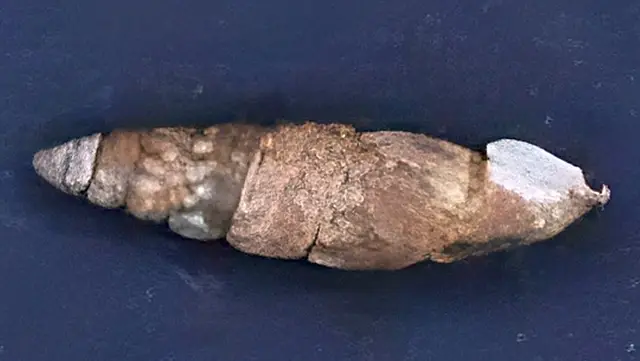
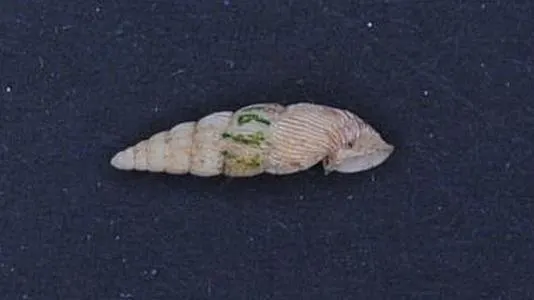
Boettgeria crispa is a small, very slender air-breathing land snail found only on the island of Madeira, Portugal, in forest between roughly 300 and 1,000 m. It belongs to the door snails, which close the shell with a small plate. The IUCN Red List rated it Endangered in 2017.
How to recognise it
This is one of the door snails (family Clausiliidae), a group that closes the shell opening with a small hinged plate called a clausilium. B. crispa is a very elongate species. It was first described by the British naturalist Richard Lowe in 1831, under the name Clausilia crispa, and was later placed in the genus Boettgeria.
Where it lives
The IUCN assessment lists it as endemic to Portugal, found on Madeira and nowhere else, in temperate forest at 300 to 1,000 m. It puts the extent of its range at about 212 km2 and the area it actually occupies at about 124 km2, split across 4 to 15 locations.
Museum records fit that picture. Specimens come from the Ribeiro Frio area (a 1975 lot), Ribeira Brava, and Curral das Freiras, where some lots date from 1881. Few recent records are available.
Pins are Wikidata “endemic to” fields. Orange dots, when present, are GBIF occurrence tiles — survey bias included.
Why it is in trouble
The assessment records a decreasing population, a fragmented range and continuing decline in both occupied area and number of subpopulations. It names three threats: more frequent and intense fires, storms and flooding, and shifts in habitat conditions. Fire is rated as affecting a minority of the population but causing rapid declines, while habitat shifting touches nearly all of it, more slowly.
Fire is a real concern on the island. In August 2024 wildfires burned parts of Madeira, and Miguel Sequeira, a botanist at the University of Madeira, told Times of Madeira that damaged laurel forest takes about 180 years to reach maturity again. How the fires affected this particular snail has not been reported.
What is being done
The IUCN estimates that 71 to 80% of the population lives inside protected areas. Site and area management and habitat restoration are listed as conservation actions needed. The assessment also calls for research on threats, habitat and population trends, and a species action plan. No recent population counts exist.
Sources
Written for this catalog in our own words from the sources below, checked against them on 12 November 2026. Population figures are estimates and carry the year they were made. Status and assessment year: IUCN. 2026. The IUCN Red List of Threatened Species. Version 2026-1. iucnredlist.org.