Endangered
Biak Dark Crow
Euploea albicosta
The Biak dark crow (Euploea albicosta) is a butterfly in the milkweed butterfly group, recorded only from Indonesia, and its common name refers to Biak, an island off the north coast of New Guinea. The Red List rated it Endangered in 1996, and that assessment has not been updated since.
What it is
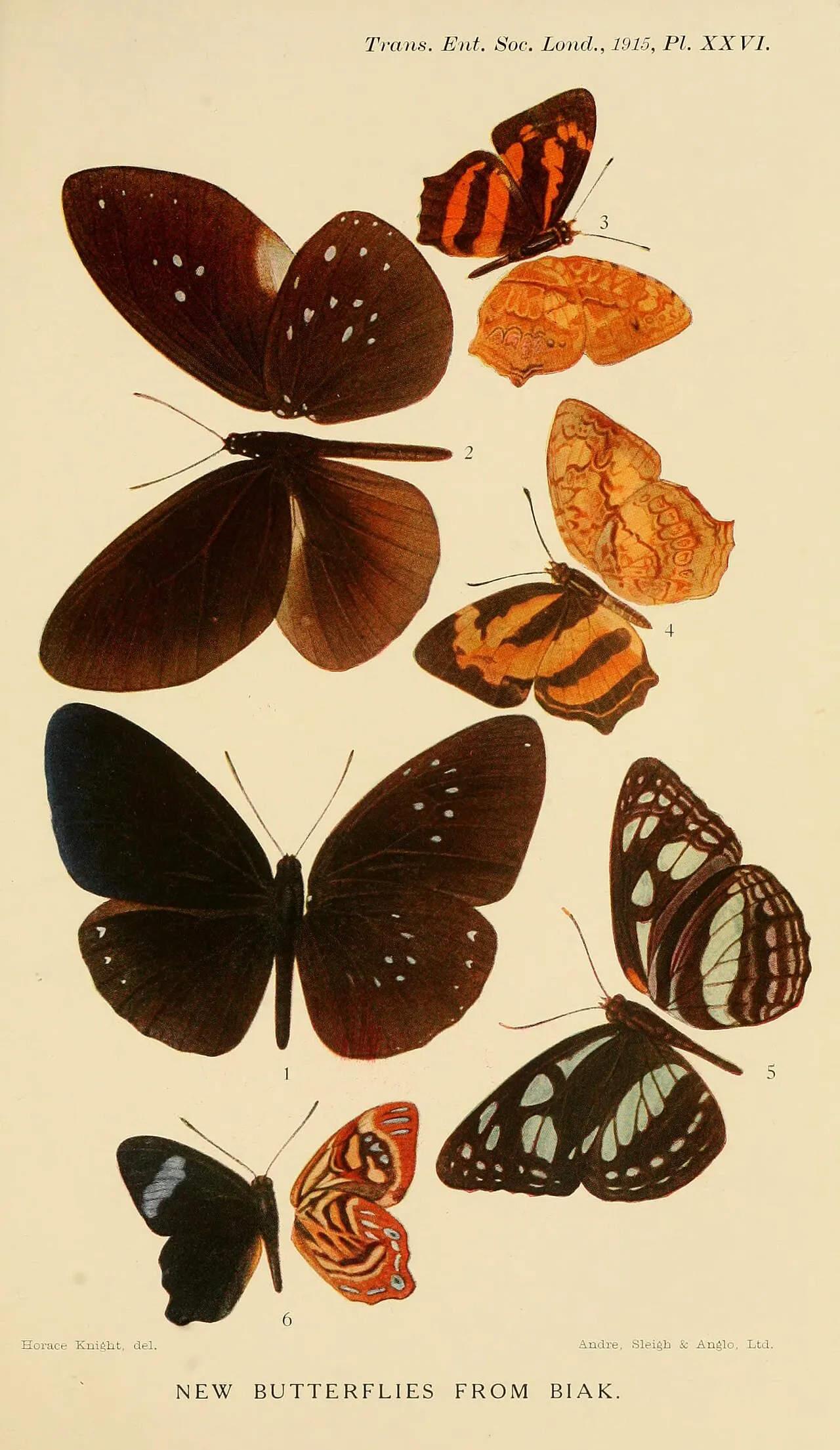
It is a nymphalid butterfly of the subfamily Danainae, in the genus Euploea, whose members are known as crows because most are generally dark in colour. James John Joicey and Noakes described the species in 1915.
Crows are medium to large butterflies with slender bodies and long, fairly narrow wings, usually dark blue, brown or black, often with white spots near the edge. Their caterpillars feed on milkweeds and other toxic plants, which makes the adults poisonous, and less toxic butterflies sometimes mimic them. These are traits of the genus. Almost nothing has been published on this species itself.
Where it lives
The Red List records it as native to Indonesia and gives no finer locality. Biak, the island named in its common name, covers about 2,455 square kilometres and rises to around 740 m. It has a tropical rainforest climate and lies in the Biak-Numfoor rain forests, which have the largest number of endemic bird species of any single area in the New Guinea region. About 122,000 people lived on the island at the 2020 census, mostly around the town of Biak.
Nothing in the published record shows whether the butterfly still occurs on the island.
Pins are Wikidata “endemic to” fields. Orange dots, when present, are GBIF occurrence tiles — survey bias included.
Its status
The Lepidoptera Specialist Group assessed it as Endangered in 1996, under the older version 2.3 system, using criteria B1+2c, which concern a restricted geographic range. Earlier assessments from 1986 to 1994 rated it Rare. The record lists no population figure, habitat, threats or conservation measures, and no later survey has turned up. Whether its range is changing, and how many butterflies remain, is unknown.
Sources
Written for this catalog in our own words from the sources below, checked against them on 12 November 2026. Population figures are estimates and carry the year they were made. Status and assessment year: IUCN. 2026. The IUCN Red List of Threatened Species. Version 2026-1. iucnredlist.org.