Critically Endangered
Austrolebias cinereus
Austrolebias cinereus
Austrolebias cinereus is a small annual killifish known from Colonia department in southwestern Uruguay, where it lives in seasonal pools that dry out each year. The IUCN rated it Critically Endangered in 2007, citing its tiny range and the loss and degradation of its wetland habitat.
What kind of fish it is
It belongs to the family Rivulidae, the Neotropical annual killifishes. The ichthyologist Amato described it in 1986 as Cynolebias cinereus. The type locality is floodland on Route 21, about 2 km northwest of the Viboras Creek in Colonia, Uruguay.
Names have shifted since. The IUCN record and the 2011 paper use Austrolebias, while the Catalog of Fishes now lists the species as Cypholebias cinereus.
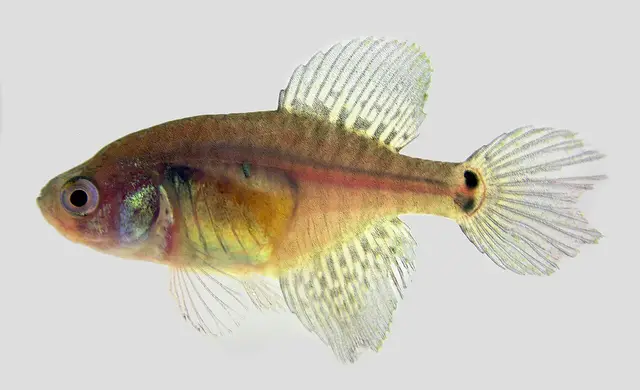
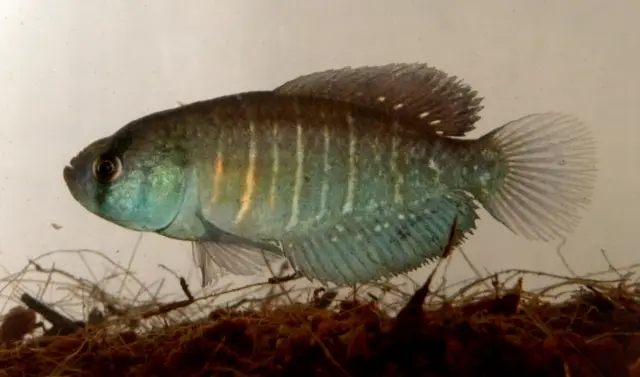
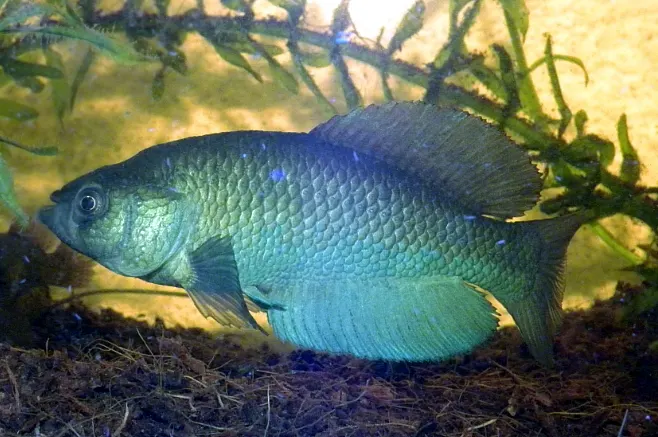
Its appearance is poorly documented. For the genus Austrolebias as a whole, species range from about 35 mm to over 200 mm in standard length, and males are usually larger than females.
Where it lives
A 2011 paper in Neotropical Ichthyology called it critically endangered and described it as known from a single pond in the lower Uruguay River basin. GBIF holds 50 records, 33 of them preserved specimens and 15 citations of museum material. Of those with a recorded year, the largest group, seven records, dates from 1985, and a few come from 2004 and 2019. Most records with a recorded province are from Colonia, and two are from Rio Grande do Sul in Brazil.
The IUCN lists Uruguay as its only country and gives its habitat as small seasonal freshwater marshes and pools under 8 hectares. The Catalog of Fishes describes a wider range that includes Brazil, so the northern limit is not settled.
Pins are Wikidata “endemic to” fields. Orange dots, when present, are GBIF occurrence tiles — survey bias included.
How it lives
Little has been written about this species itself, but annual killifishes of the genus Austrolebias follow a shared pattern. Adults breed in the rainy season and bury their eggs in the muddy bottom of the pond. When the water dries up, the adults die. The embryos wait in developmental arrest and hatch when the pond floods again.
Young fish reach breeding age within a few weeks, and a generation lasts about a year. This life cycle is described for the genus, not measured in A. cinereus.
Why it is in trouble
The IUCN names commercial and industrial areas, tourism and recreation areas, housing and urban areas, and roads and railroads as threats. All of them convert or degrade the temporary wetlands the fish needs.
The 2007 assessment, under criterion B1ab(iii)+2ab(iii), treats it as having a very small range in which habitat quality is declining. The population trend is listed as unknown, and no population size is given.
What is being done
The IUCN records several kinds of action for the species, including site protection and management, trade management, harvest management, awareness work, education, and a genome resource bank. It also marks the species as subject to ex situ conservation, meaning some fish are held in captivity. The assessment does not say how many fish are kept or where.
Sources
Written for this catalog in our own words from the sources below, checked against them on 12 November 2026. Population figures are estimates and carry the year they were made. Status and assessment year: IUCN. 2026. The IUCN Red List of Threatened Species. Version 2026-1. iucnredlist.org.