Endangered
Austroaeschna muelleri
Austroaeschna muelleri
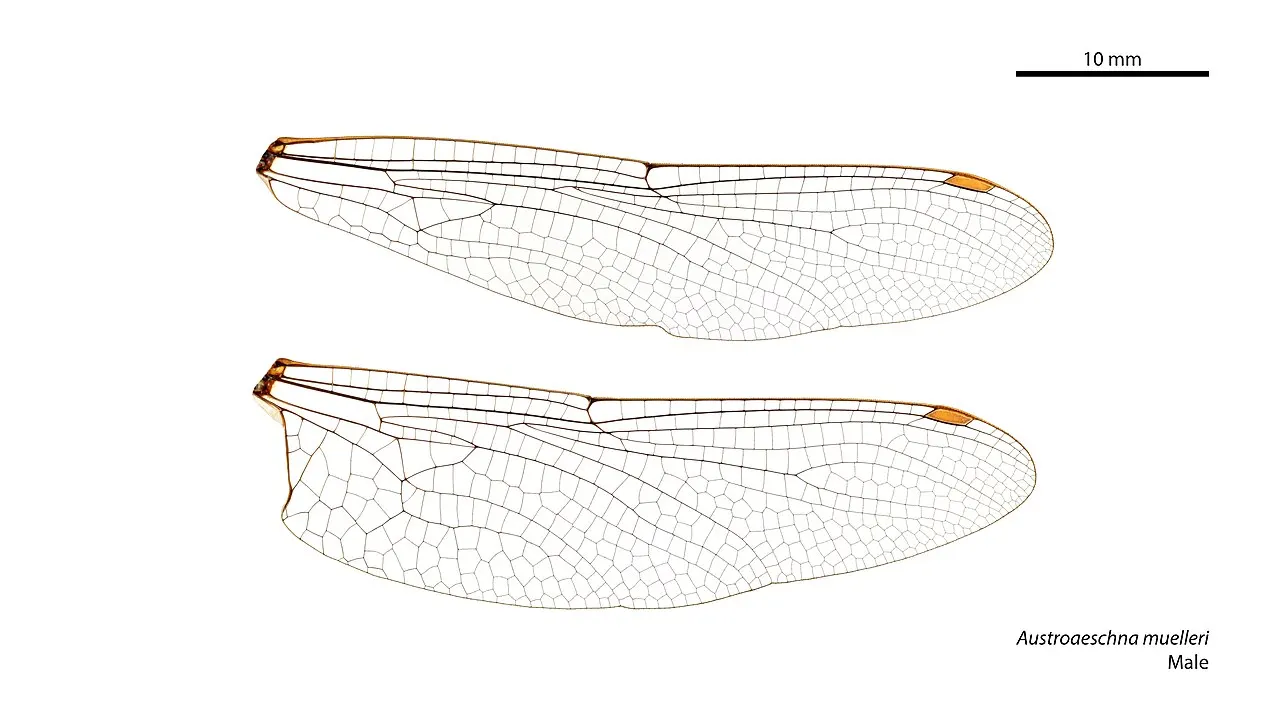
The Carnarvon darner (Austroaeschna muelleri) is a large dragonfly known only from small rocky streams in Carnarvon National Park, central Queensland, Australia. The IUCN Red List rated it Endangered in 2017. Males are black with blue markings, while females are brown with yellow.
How to recognise it
Carnarvon darners are large dragonflies, and the two sexes look quite different. Males are black with blue markings. Females are brown with yellow markings.
The species belongs to the Australian darner genus Austroaeschna. Gunther Theischinger described it in 1982. He named it for Leonard Muller of Berowra, New South Wales, a friend and supporter of his work.
Where it lives
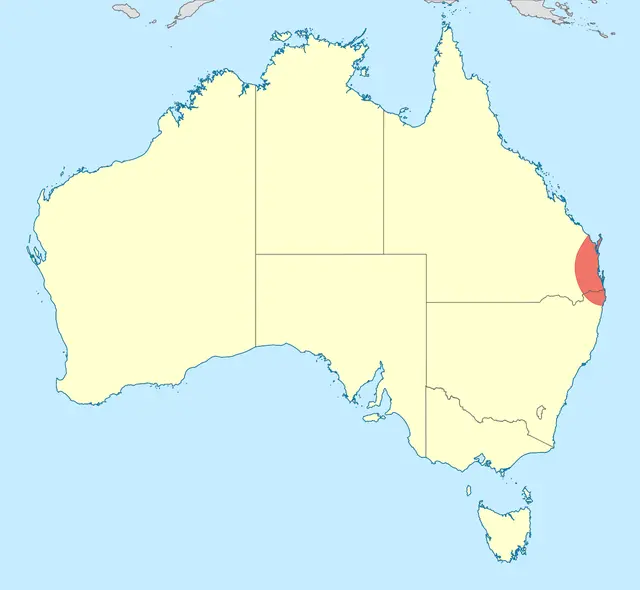
The Carnarvon darner has been found only in Carnarvon National Park in central Queensland, so it occurs nowhere else in the world. It lives along permanent streams, including small rocky creeks.
The Red List assessment counts just one or two locations. Its extent of occurrence is about 3,200 square kilometres, but the area it actually occupies is estimated at somewhere between 12 and 200 square kilometres.
Pins are Wikidata “endemic to” fields. Orange dots, when present, are GBIF occurrence tiles — survey bias included.
How it lives
Like other dragonflies, it spends its early life as an aquatic larva before emerging as a flying adult. Little has been published about this species' breeding season, diet or lifespan, and no population count exists. The assessment lists the population trend as unknown.
Why it is in trouble
The species is rated Endangered under criteria B1ab(iii)+2ab(iii), which cover a very small range, few locations and a continuing decline in the quality of its habitat. The assessment names recreational activities and habitat shifting and alteration among the pressures on the streams it depends on.
With its whole known range inside one park, a single local problem could reach a large share of the species.
What is being done
The only protection recorded in the assessment is that the species occurs in a protected area, the national park. The assessment lists no specific conservation actions, and no recovery plan or monitoring programme is recorded.
Sources
Written for this catalog in our own words from the sources below, checked against them on 12 November 2026. Population figures are estimates and carry the year they were made. Status and assessment year: IUCN. 2026. The IUCN Red List of Threatened Species. Version 2026-1. iucnredlist.org.