Endangered
Austroaeschna cooloola
Austroaeschna cooloola
The Wallum darner (Austroaeschna cooloola) is a large dragonfly known only from sandy streams in south-eastern Queensland, Australia. It is dark brown to black with blue markings. Described in 1991 and named for the Cooloola area where it was first recorded, it is listed as Endangered on the IUCN Red List (2019).
How to recognise it
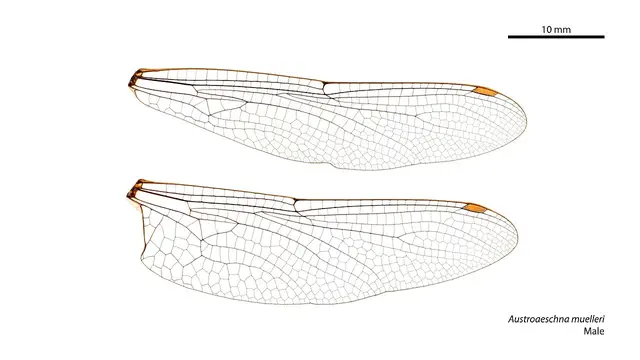
Adults are large darner dragonflies (family Aeshnidae), dark brown to black with blue markings. That pattern is close to two relatives, the unicorn darner (Austroaeschna unicornis) and the tropical unicorn darner (Austroaeschna speciosa), so a firm identification usually depends on a specimen examined by someone who knows the group.
The species was described by Gunther Theischinger in 1991. The genus name joins the Latin for south wind with Aeshna, the name of a related darner genus.
Where it lives
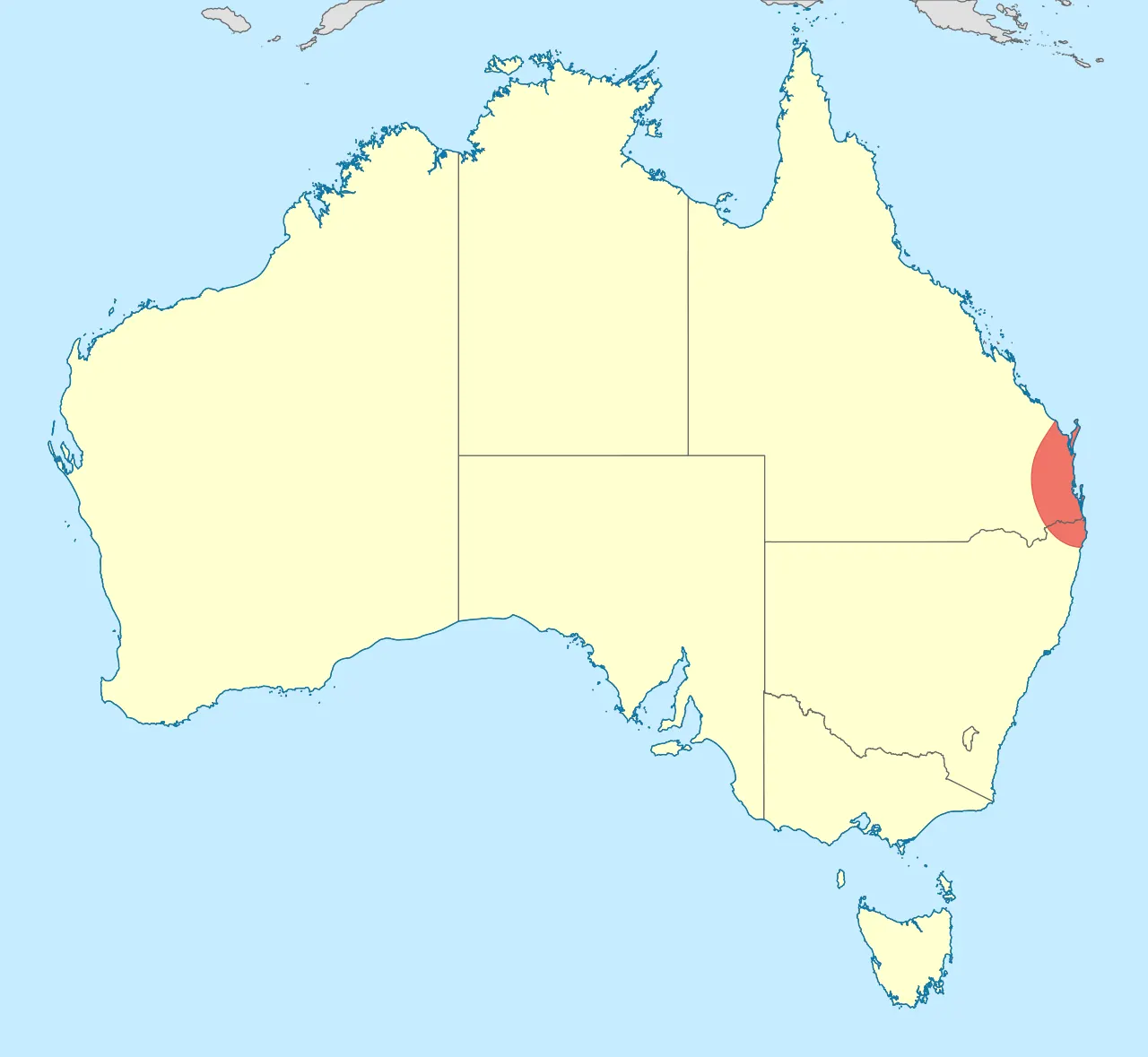
The Wallum darner has only been found in south-eastern Queensland. The first specimens came from Cooloola National Park, now part of Great Sandy National Park. An adult male held in the Australian National Insect Collection was taken at Searys Creek in Cooloola in February 1987.
The Red List records it from four locations and gives its extent of occurrence as roughly 5,800 to 21,200 square kilometres, with an area of occupancy of about 479 square kilometres. Its habitat is listed as permanent rivers, streams and creeks, and it occurs in at least one protected area.
The Global Biodiversity Information Facility (GBIF) holds 73 occurrence records, 71 of them from Queensland. At least 56 date from 2018 onward and the earliest are from the 1970s and 1980s, so the species is recorded fairly regularly in a well-visited region.
Pins are Wikidata “endemic to” fields. Orange dots, when present, are GBIF occurrence tiles — survey bias included.
Why it is in trouble
The 2019 assessment rates it Endangered under criterion B2ab(iii), which applies to species with a small area of occupancy, few locations and ongoing loss of habitat quality. Its population trend is listed as unknown, and no population size has been estimated.
The threats named are mining and quarrying, which is recorded as ongoing and affecting a minority of the range, along with recreation and tourism development, which are listed as future concerns. The stress identified is degradation of the stream ecosystems the larvae depend on.
What is being done
The Red List assessment lists no species-specific conservation actions in place, and records that the species occurs in at least one protected area. Better knowledge of where the larvae live in the wider sandy-stream country would show whether the four known locations are all there is.
Sources
Written for this catalog in our own words from the sources below, checked against them on 12 November 2026. Population figures are estimates and carry the year they were made. Status and assessment year: IUCN. 2026. The IUCN Red List of Threatened Species. Version 2026-1. iucnredlist.org.