Endangered
Atya intermedia
Atya intermedia
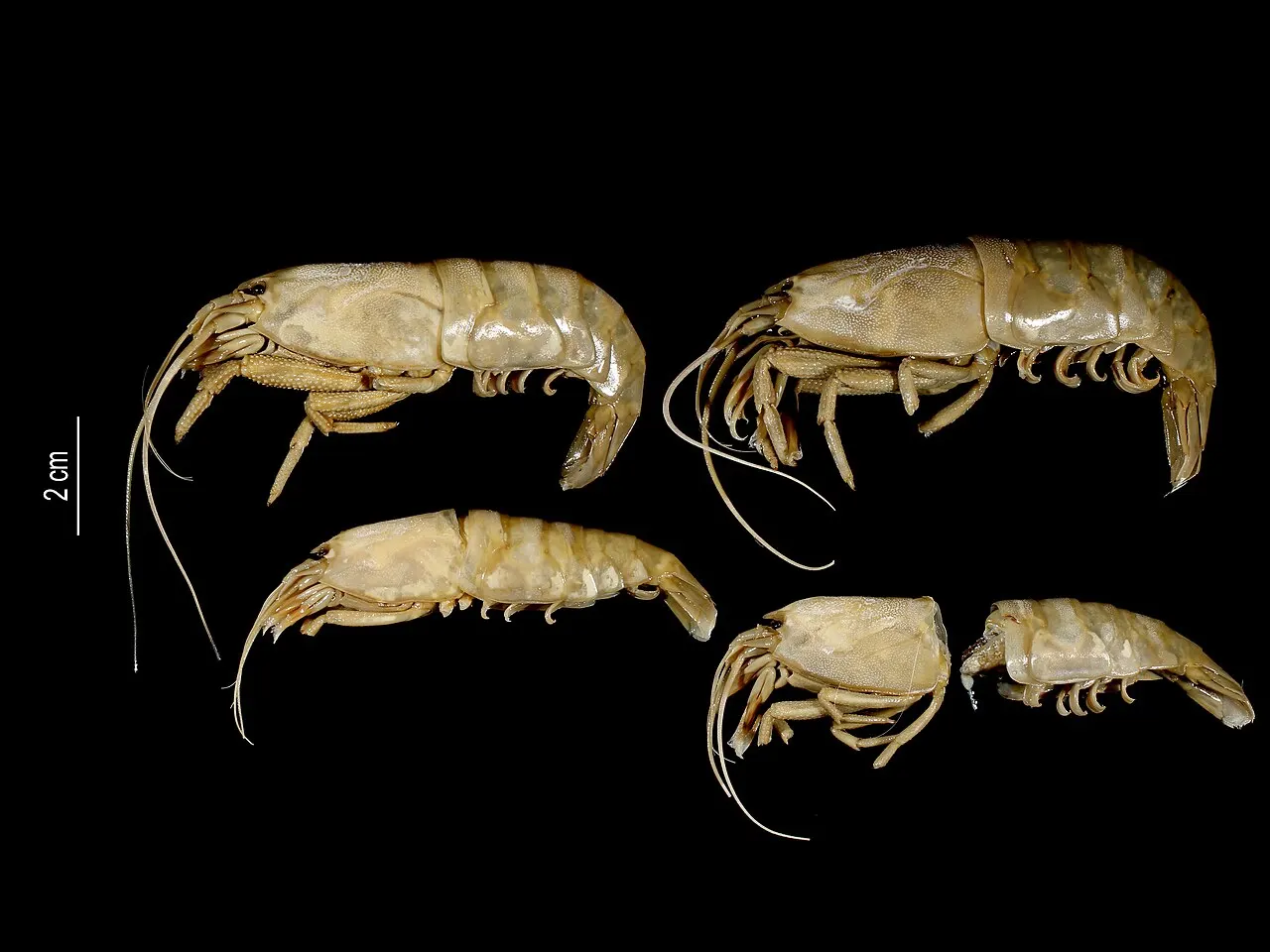
Atya intermedia is a freshwater shrimp from the Gulf of Guinea islands of São Tomé and Annobón, off the coast of central Africa. It lives in permanent streams, is listed as Endangered by the IUCN (assessed 2013), and is known mostly from a few records rather than counts.
What it is
Atya intermedia belongs to the Atyidae, a large family of shrimps whose adults are almost always confined to fresh water. The zoologist E.-L. Bouvier described the species in 1904, in the Bulletin du Museum d'Histoire naturelle, and it's still accepted as a valid species.
The genus Atya is spread through the Antilles, Central and South America and western Africa. One relative, Atya scabra, lives on rocky river bottoms linked to the Atlantic and also occurs on Gulf of Guinea islands, but it's rated Least Concern and ranges from the Americas to Africa. A. intermedia is known only from two islands.
Where it lives
The Red List gives its range as São Tomé, part of São Tomé and Príncipe, and the island of Annobón, which belongs to Equatorial Guinea. In both places it counts as native and resident. The only habitat recorded is permanent rivers and streams, waterfalls included.
No population estimate, area of occupancy or number of locations has been published in the assessment, and the population trend is listed as unknown.
Pins are Wikidata “endemic to” fields. Orange dots, when present, are GBIF occurrence tiles — survey bias included.
Why it is in trouble
The 2013 assessment rates it Endangered under criteria B1ab(iii) and B2ab(iii), which rest on a restricted range and a continuing decline in habitat quality. The threats it names are all about water quality: run-off, sewage, soil erosion and sediment washing into streams, and nutrient loads. All four are recorded as ongoing.
What is being done
No conservation measures are recorded as in place. The assessment lists habitat and resource protection and site protection as measures the species needs, and it flags research on threats, life history and ecology, and population size and distribution. No recovery plan or monitoring programme for the species turned up in the sources reviewed.
Sources
Written for this catalog in our own words from the sources below, checked against them on 12 November 2026. Population figures are estimates and carry the year they were made. Status and assessment year: IUCN. 2026. The IUCN Red List of Threatened Species. Version 2026-1. iucnredlist.org.




