Critically Endangered
Aphaniops sirhani
Aphanius sirhani
The Azraq toothcarp (Aphanius sirhani, also placed in Aphaniops) is a small killifish found only in the remnants of the Azraq oasis in eastern Jordan. The IUCN Red List assessed it as Critically Endangered in 2026. Its natural springs dried up in 1992, and it survives on managed water.
How to recognise it
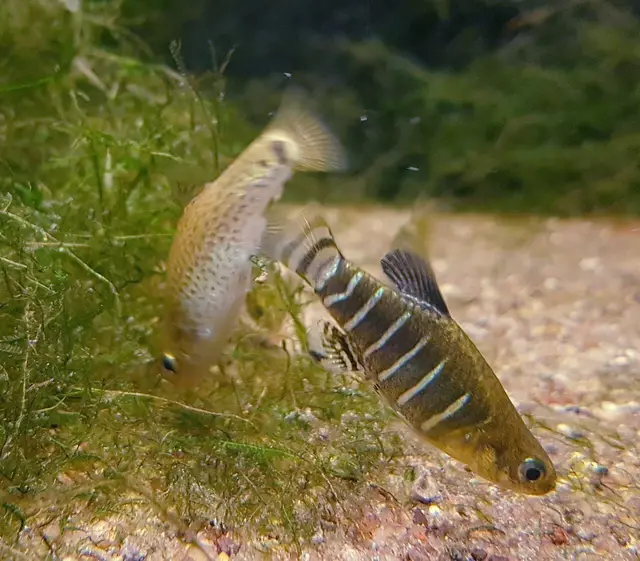
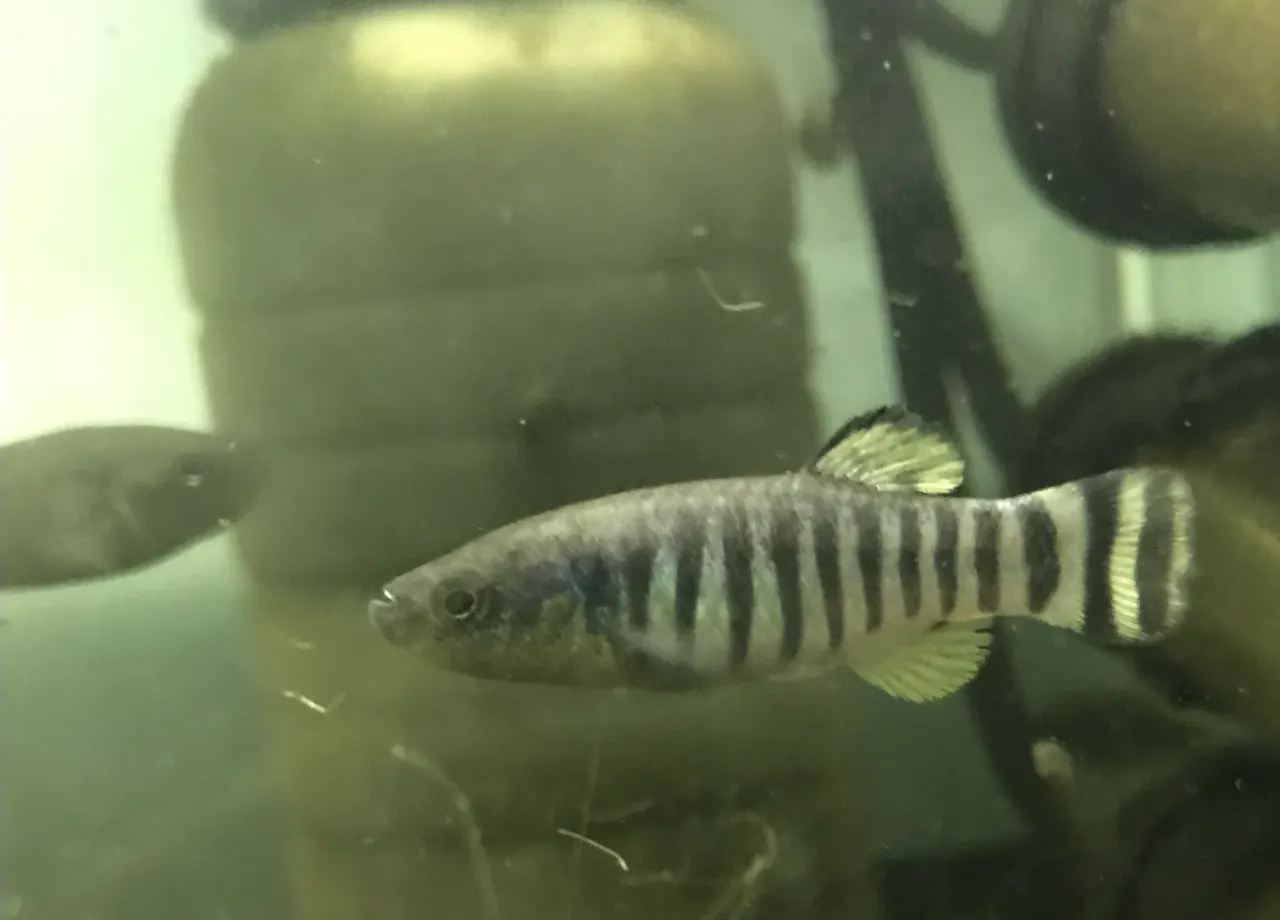
This is a fish of about 50 millimeters (2 inches) at most. Males carry dark vertical bars on the flanks, usually two bars in the tail fin, and yellowish fins with dark markings. Females are larger and plainer, with irregular dark spots on the body and clear fins.
Where it lives
The species is endemic to the Azraq oasis, a wetland in the Wadi Sirhan depression on the edge of the Syrian Desert in Jordan, and is described as the country's only endemic vertebrate. It lives only in what remains of the oasis.
It uses shallow water with vegetation and stones, or muddy bottoms. Some of the fish now live in man-made lagoons where no other fish species occurs.
Pins are Wikidata “endemic to” fields. Orange dots, when present, are GBIF occurrence tiles — survey bias included.
How it lives
The toothcarp is a small predator of crustaceans, worms, insect larvae and zooplankton. Females spawn almost continuously from May to November, with peaks in May to July and again in October and November. The eggs are very small and stick to algae or other surfaces by fine threads. They hatch in about 6 to 14 days, depending on temperature.
Why it is in trouble
Azraq was once a large, spring-fed permanent wetland. Pumping groundwater to supply Amman, which began in the 1960s, lowered the water table, and the feeder springs dried completely in 1992. That caused the near collapse of the ecosystem. Illegal wells and introduced predatory fish, including the mango tilapia, added to the pressure, and the toothcarp was presumed extinct through much of the 1990s.
Today the restored wetland depends on managed water supplies, partly to offset illegal extraction. The population was reportedly stable as of 2014, but without sustained water management the fish would again face a severe risk of disappearing.
What is being done
In 2000 only about 45 adults were found, and two Austrian scientists collected 45 specimens. A rescue program followed, with captive breeding in Jordan, the United Arab Emirates and Vienna Zoo (Tiergarten Schonbrunn). Zoos in Cologne and Dusseldorf and private aquarists later joined in. Reintroductions began in the early 2000s, including into man-made lagoons.
Wider success depends on removing the mango tilapia and securing a stable natural water supply.
Sources
Written for this catalog in our own words from the sources below, checked against them on 12 November 2026. Population figures are estimates and carry the year they were made. Status and assessment year: IUCN. 2026. The IUCN Red List of Threatened Species. Version 2026-1. iucnredlist.org.