Endangered
Ligurian Alpine Bush-cricket
Anonconotus ligustinus
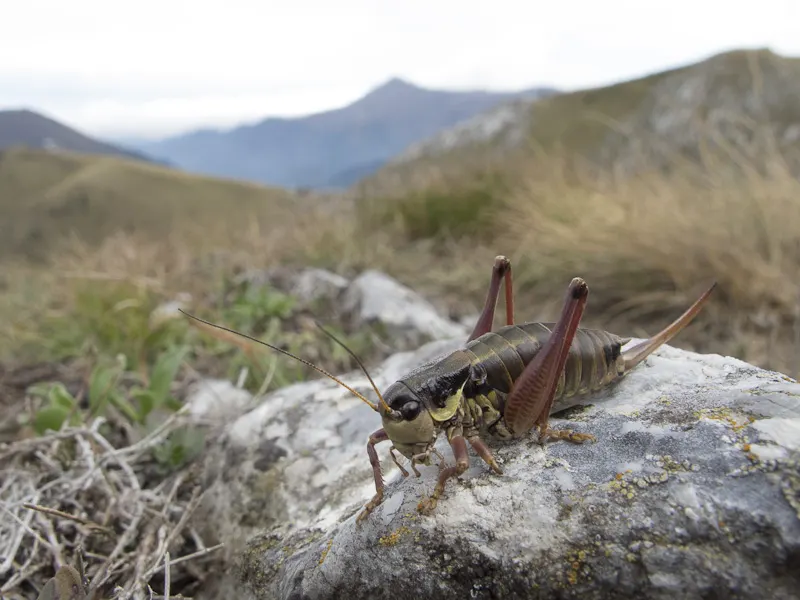
The Ligurian Alpine bush-cricket (Anonconotus ligustinus) is a small alpine katydid of the Maritime and Ligurian Alps, recorded around the Tende pass on the French and Italian border. The IUCN Red List assessed it as Endangered in 2016. It was only recognised as a species in 2002.
How it was named
Alpine bush-crickets (genus Anonconotus) are a Palaearctic group, with most records in western Europe from France through to Austria and Italy. The Italian entomologist Antonio Galvagni described this one as new to science in 2002, in a paper that also named a second species from the Monti Sibillini in central Italy. The name points to the Ligurian Alps.
The male used as the type specimen came from Punta Marguareis near the Rifugio Cervino, at about 2,000 m. Galvagni separated the species from its relatives mainly by the shape of the male's genital structures and of the female's subgenital plate, so identification is a job for a specialist. Crickets collected at the Colle di Tenda at 1,800 to 1,900 m had been listed under another Anonconotus species in 1959, before the split.
Where it lives
The species is known from Italy and France. Its recorded habitat is alpine grassland and pasture with stones, plus sparse dwarf-shrub heath, between roughly 1,700 and 2,350 m (one source gives about 2,400 m). Adults are seen from July to October.
Records cluster around the Tende pass. The French nature database Silene lists 176 observations between 2007 and 2025, from five communes in the Alpes-Maritimes: Belvédère, Fontan, Isola, La Brigue and Tende. The 2016 assessment puts its extent of occurrence at 665 square kilometres and records that it occurs in at least one protected area.
Pins are Wikidata “endemic to” fields. Orange dots, when present, are GBIF occurrence tiles — survey bias included.
Why it is in trouble
It is listed as Endangered under criterion B1ac(iv), a test that applies to a very restricted range. The population trend is recorded as unknown, and no population size has been estimated.
The threats listed are small-scale grazing and farming and other modifications of its ecosystem, both ongoing. The assessment records no conservation measures other than its presence in a protected area.
Sources
Written for this catalog in our own words from the sources below, checked against them on 12 November 2026. Population figures are estimates and carry the year they were made. Status and assessment year: IUCN. 2026. The IUCN Red List of Threatened Species. Version 2026-1. iucnredlist.org.




