Endangered
Anaglyptus luteofasciatus
Anaglyptus luteofasciatus
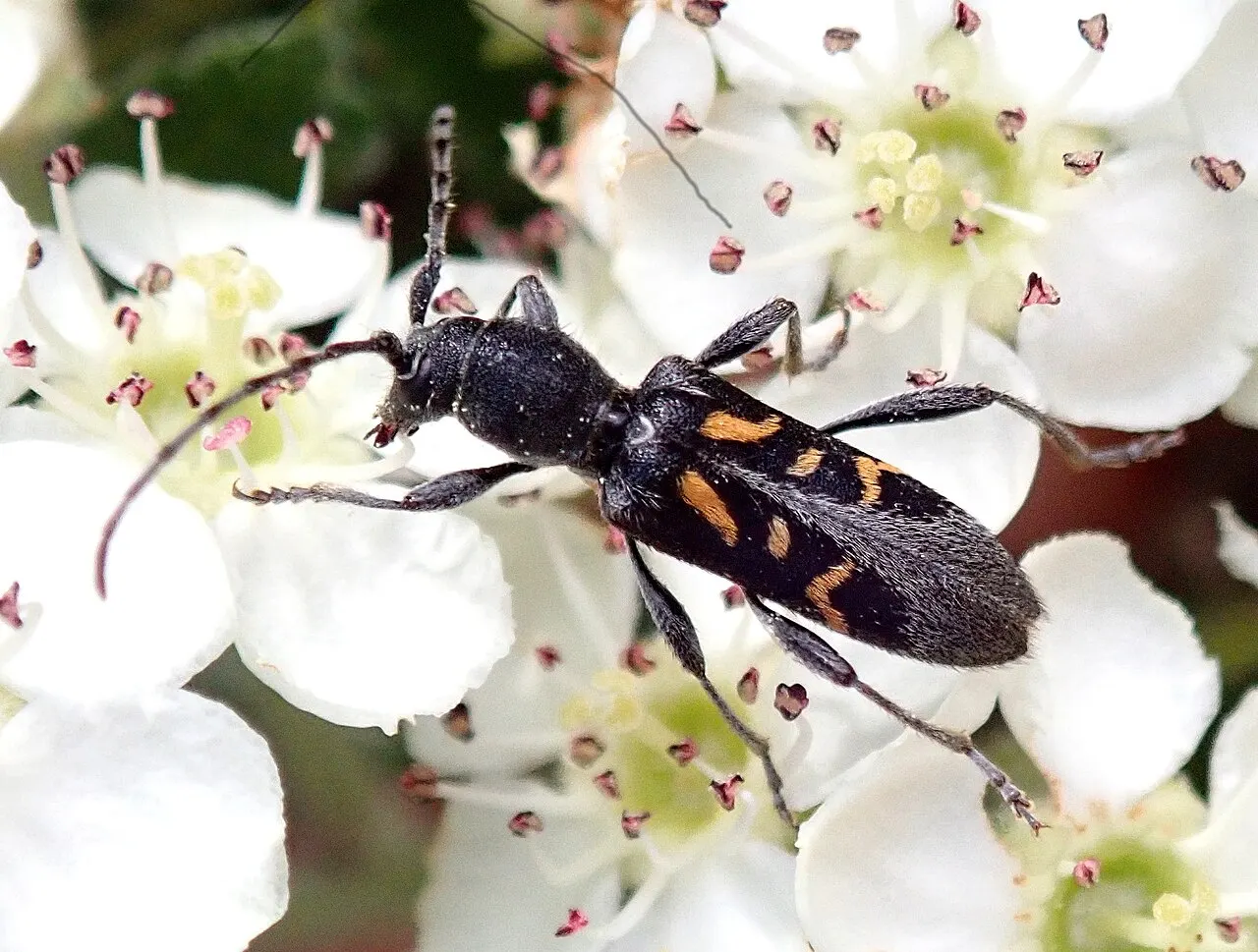
Anaglyptus luteofasciatus is a small longhorn beetle that lives only in southern Greece, in the mountains of the Peloponnese. The IUCN Red List classes it as Endangered (assessed 2025). It is rare, hard to spot, and known from just a handful of scattered sites.
What it is
This is a small longhorn beetle (family Cerambycidae, tribe Anaglyptini), 10 to 15 mm long. The French entomologist Maurice Pic described it in 1905 from the area around Kalavryta in the Peloponnese.
A second name, Anaglyptus moreanus, was published in 1970 from near Trikala, but it is treated as the same species. The beetle has no widely used common name.
Where it lives
A specialist account of European longhorn beetles describes the species as endemic to the Peloponnese peninsula. The 2025 Red List assessment counts five locations on the Greek mainland and places it in temperate forest.
Recent records come from the Menalo Mountains in Arcadia. One adult was beaten from a flowering hawthorn near the village of Vytina on 25 May 2022, and another beetle was reared from a larva found in dead Prunus wood near Alonistaina in 2013. Citing the 2010 Red List text, the same account describes the range as a few severely fragmented localities, with an area of occupancy under 500 square kilometres.
Pins are Wikidata “endemic to” fields. Orange dots, when present, are GBIF occurrence tiles — survey bias included.
How it lives
Adults fly in May and June and turn up on flowers, especially blossoming hawthorn. They are most active in the afternoon but are hard to observe, moving among twigs and leaves and only rarely visiting the flower clusters themselves.
The larvae develop in dry wood of broadleaved trees, with Prunus the only host reported so far. The life cycle takes two to three years, and the new adult overwinters before emerging.
Why it is in trouble
The Red List assessment names housing and urban development, farming and grazing, and more frequent or intense fires as threats, and it records a continuing decline in the area its habitat covers. The population trend is listed as unknown, because nobody has counted it.
Because the larvae need dead wood, woodland clearance and fire are likely to matter, and the few known sites leave little room for error.
What is being done
The assessment records that the species occurs in at least one protected area and lists site and area management among actions in place, at a regional scale. It has been listed as Endangered in each of the 2010, 2016 and 2025 assessments. No species-specific conservation programme turned up in the sources used here.
Sources
Written for this catalog in our own words from the sources below, checked against them on 12 November 2026. Population figures are estimates and carry the year they were made. Status and assessment year: IUCN. 2026. The IUCN Red List of Threatened Species. Version 2026-1. iucnredlist.org.




