Endangered
Acropora verweyi
Acropora verweyi
Acropora verweyi is a stony coral that forms low plates and cushions on shallow, exposed reefs across the Indian Ocean and the western and central Pacific. The IUCN Red List lists it as Endangered (2024 assessment, criterion A3ce), with a decreasing population. It is also in CITES Appendix II.
How to recognise it
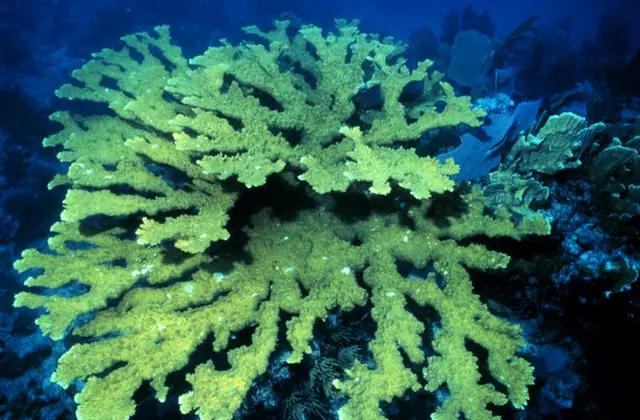
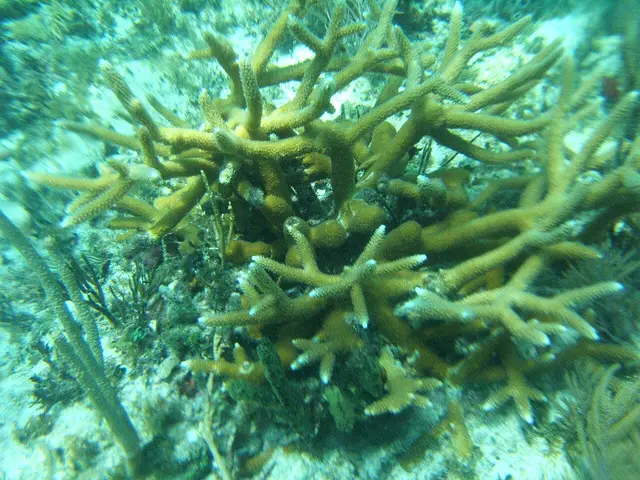
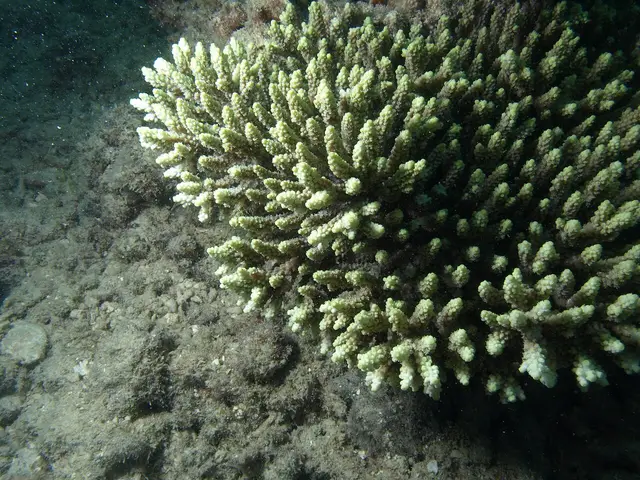
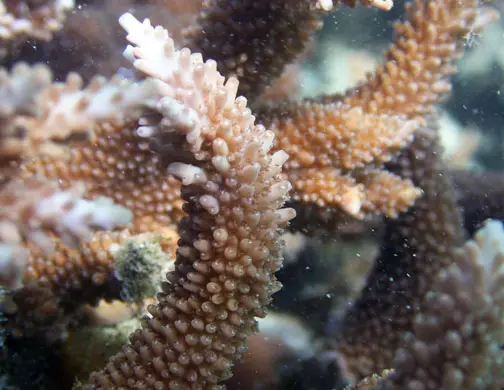
Colonies form perforated plates with short branches, cushions, or extensive bushy clumps. The branches are 7 to 9 mm thick, do not taper, and carry very short branchlets near the base. Colour is typically a uniform cream-brown, and the axial corallites, the tubes at the branch tips, are yellow, which is a handy clue.
Acropora bushyensis looks similar but has thinner branches and open radial corallites that face outward. Veron and Wallace described A. verweyi in 1984, and the original specimen came from the Magdelaine Cays in the Coral Sea.
Where it lives
The range is huge. The IUCN lists around 60 countries and territories, from Kenya, Tanzania, Mozambique, Madagascar, the Red Sea states and the Maldives, through India, Sri Lanka and Southeast Asia, to Japan, Australia and Pacific islands such as Fiji, Samoa and French Polynesia. The species is described as common, especially in the western Indian Ocean.
It grows on upper reef slopes, reef tops and reef edges that take wave action or strong currents. The IUCN gives a depth range of 1 to 29 m. Other references give 0 to 48 m or 2 to 15 m, so records vary.
Pins are Wikidata “endemic to” fields. Orange dots, when present, are GBIF occurrence tiles — survey bias included.
Why it is in trouble
Like other Acropora, it is hit hard by warming seas and bleaching. The IUCN assessment also lists storms, sediment from erosion, coastal development, tourism, shipping and small-scale harvesting, and records that the reef area the species occupies continues to shrink. Crown-of-thorns starfish and coral disease are reportedly further threats.
No population figure exists. The Endangered listing rests on projected decline: the assessment estimates a reduction of about 62 percent over three generations, with generation length put at 10 years.
What is being done
The species is in CITES Appendix II, which regulates international trade in coral. The IUCN lists site protection and management, habitat restoration, species recovery, captive propagation and a genome resource bank among relevant actions, but whether the species occurs in a protected area is recorded as unknown.
Sources
Written for this catalog in our own words from the sources below, checked against them on 12 November 2026. Population figures are estimates and carry the year they were made. Status and assessment year: IUCN. 2026. The IUCN Red List of Threatened Species. Version 2026-1. iucnredlist.org.