Endangered
Acropora secale
Acropora secale
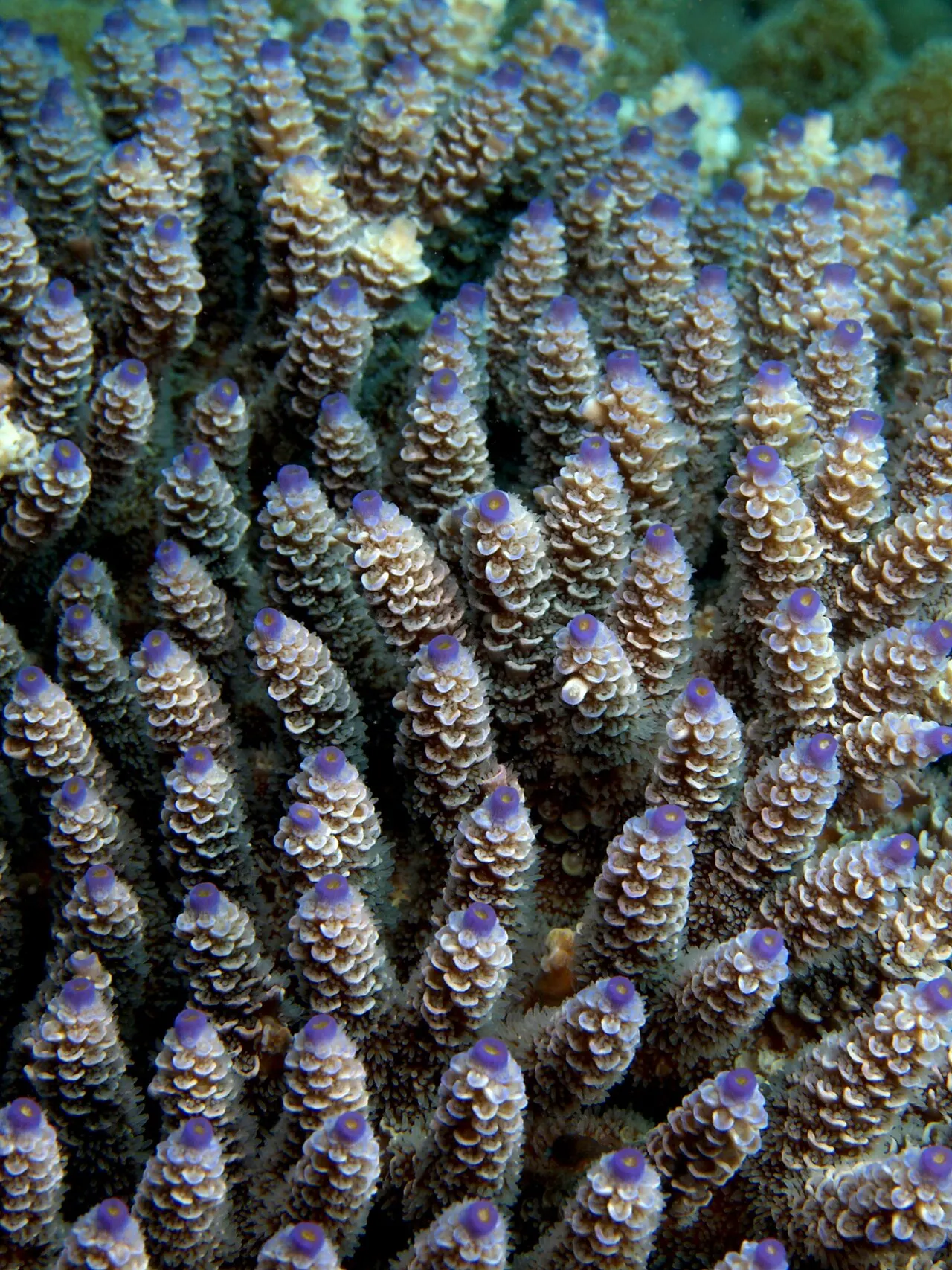
Acropora secale is a branching staghorn coral of shallow Indo-Pacific reefs, found from East Africa to the western Pacific. The IUCN Red List moved it to Endangered in 2024, up from Near Threatened in 2014. It comes in several colours, and some colonies have purple bodies with yellow tips.
How to recognise it
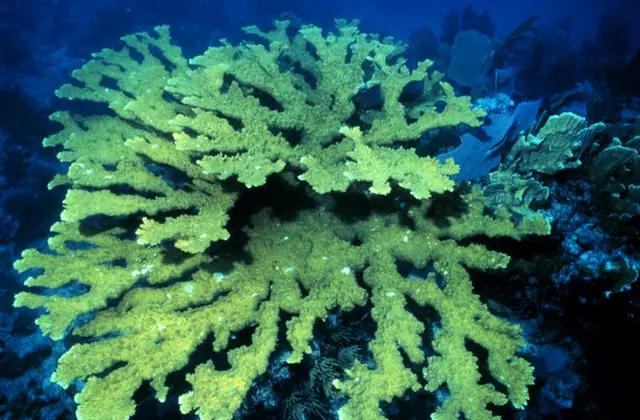
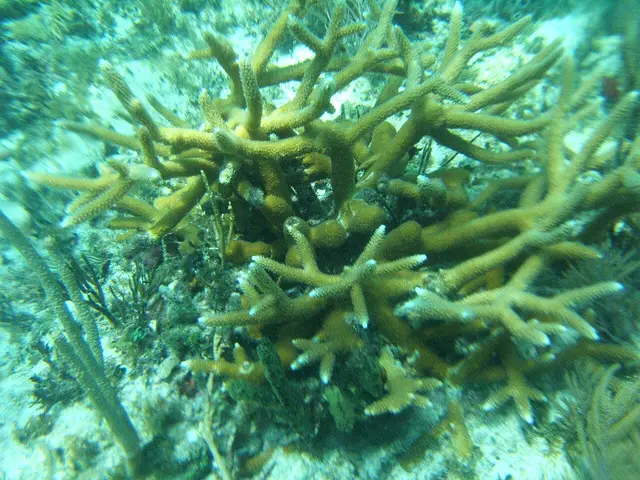
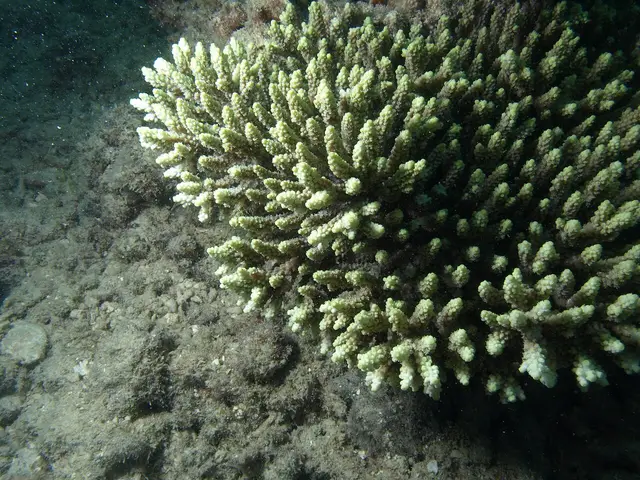
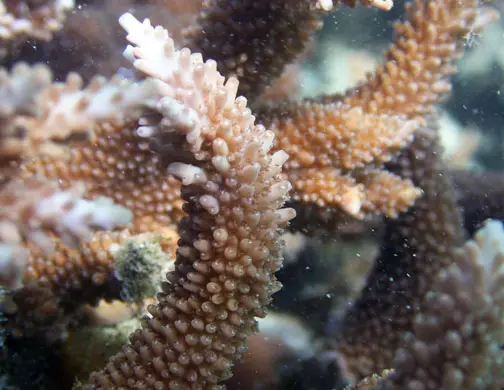
Colonies form low, rounded hummocks of cylindrical branches that taper toward the tips. Lower branches are longer than the upper ones, so the top of the colony looks flat. Tiny skeleton cups called corallites sit in vertical rows, often alternating large and small.
Colour varies a lot. Reef guides describe purple colonies with yellow tips, pale brown ones with blue tips, and plain green or plain brown forms. The colour reportedly comes from the algae living in the tissue and from the coral's own pigments, so it is a poor guide on its own.
Where it lives
The Red List records it from about 60 countries and territories, including Sri Lanka (the type locality), Kenya, Tanzania, Madagascar, the Maldives, Thailand, Indonesia, the Philippines, Japan, Australia, Fiji, French Polynesia and the Red Sea coasts of Egypt and Saudi Arabia. It is a reef-flat and reef-slope coral, sitting on outer flats, slopes, edges and walls.
Sources differ on depth. Older descriptions say it reaches about 5 m, while the Red List gives a range of 1 to 40 m. Hobby reef guides place it on the sunny upper slope of the reef.
Pins are Wikidata “endemic to” fields. Orange dots, when present, are GBIF occurrence tiles — survey bias included.
How it lives
Like other staghorn corals it is reportedly a hermaphrodite that spawns once a year, about six days after the full moon. Eggs and sperm are released together, fertilisation happens in open water, and the larvae drift as plankton before settling on the reef.
As a reef-building coral it lives with symbiotic algae in its tissue, which is why it needs shallow, sunlit water.
Why it is in trouble
The 2024 assessment (criterion A3ce) describes a decreasing population and continuing loss of reef area. The threats it lists are temperature extremes, storms and flooding, sediment washing off eroded land, shipping lanes, coastal housing and commercial development, tourism and recreation, and small-scale harvesting. Before 2024 the species was rated Near Threatened.
Hobby trade sources list it under CITES Appendix II, the level that applies to stony corals and regulates international trade.
What is being done
No species-specific recovery programme is documented. The Red List recommends protecting sites, restoring habitat and managing reef areas, plus propagation in captivity and a genome resource bank. Whether the species occurs inside a protected area is recorded as unknown.
Sources
Written for this catalog in our own words from the sources below, checked against them on 12 November 2026. Population figures are estimates and carry the year they were made. Status and assessment year: IUCN. 2026. The IUCN Red List of Threatened Species. Version 2026-1. iucnredlist.org.