Endangered
Acropora nasuta
Acropora nasuta
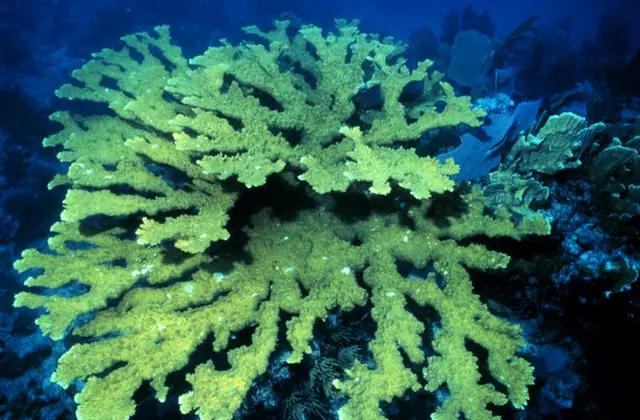
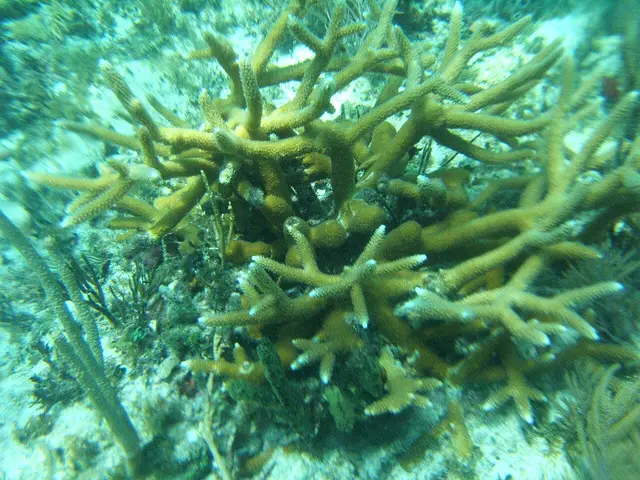
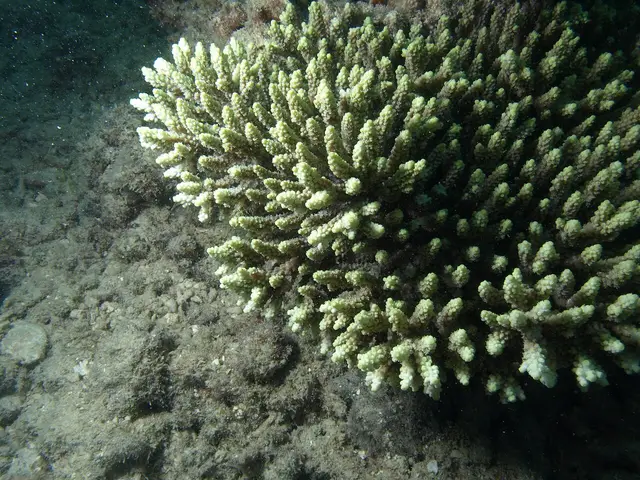
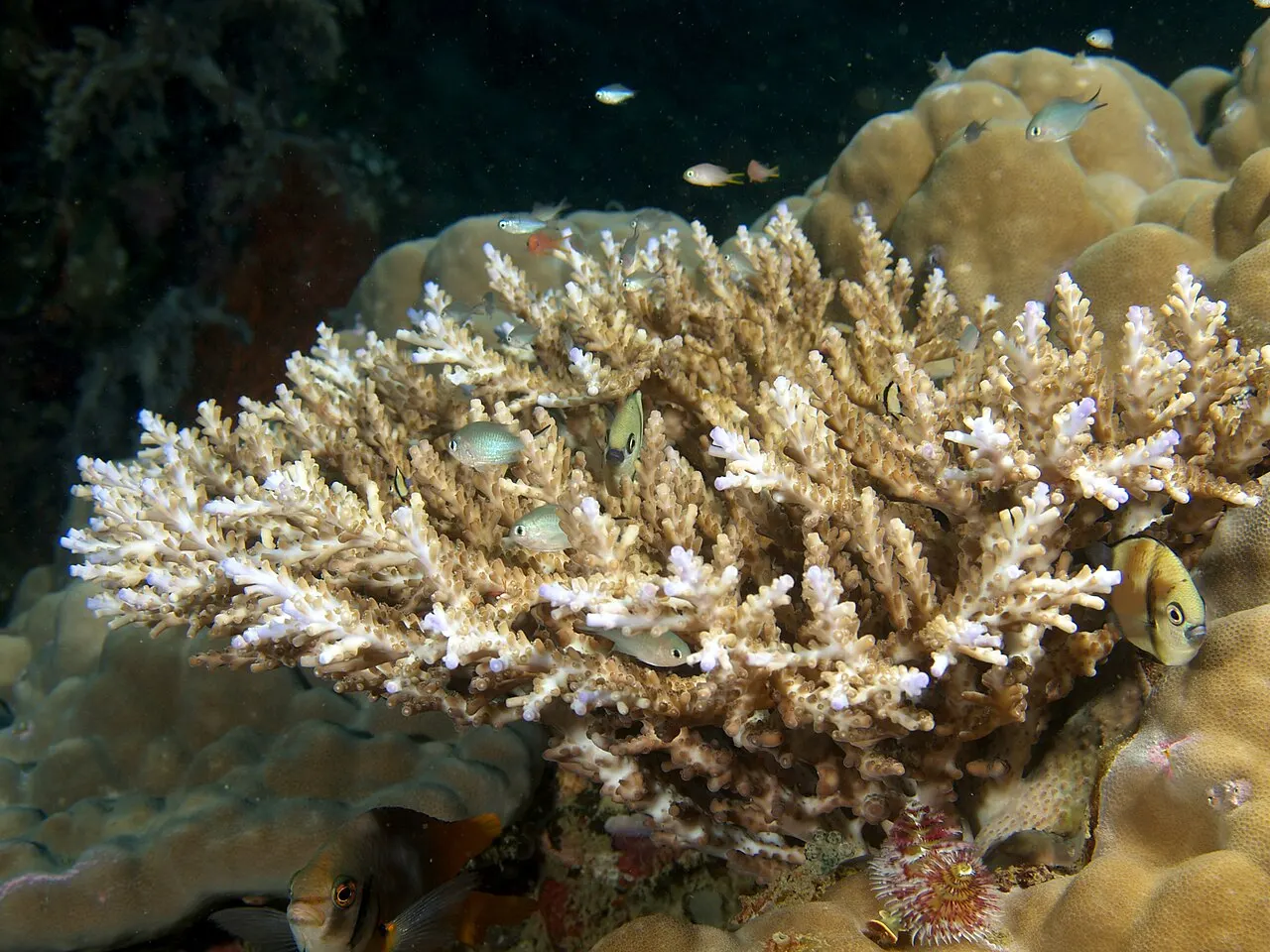
Acropora nasuta is a branching stony coral of shallow Indo-Pacific reefs, from the Red Sea and East Africa to Japan and Australia. The IUCN Red List lists it as Endangered (assessed 2024), up from Near Threatened in 2014. It is usually cream or pale brown, with bluish branch tips.
How to recognise it
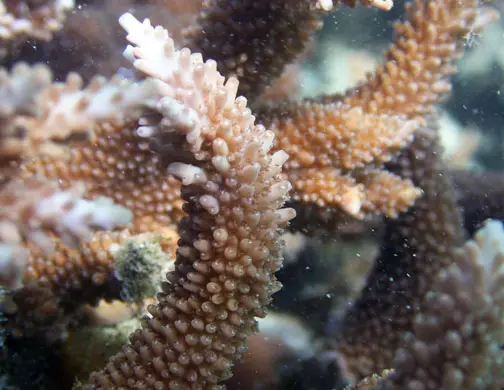
Colonies form irregular, flat-topped clumps of tapering branches up to about 12 mm wide. The usual colour is cream or pale brown, often with blue tips that can photograph pink. Other forms are cream with brown corallites, or greenish brown with purple or blue corallites. The small cups along the branches (radial corallites) tend to sit in neat rows and are shaped like nostrils.
Similar corals include A. cerealis, with interlocking branches and flaring-lipped cups, and A. valida, whose radial cups lie flat against the branch. A. latistella and A. subulata have smaller branchlets and cups.
Where it lives
The Red List maps a huge range across the western and central Indo-Pacific, with records from about 80 countries and territories, from the Red Sea, Gulf of Aden and East African coast through India, South-East Asia, Japan and Indonesia to Australia and Pacific islands including Fiji, Tonga, French Polynesia and Hawaii. Corals of the World reports confirmed or strongly predicted records in 104 marine ecoregions, all in the Indo-Pacific.
It is a reef-top species. The Red List gives a depth range of about 1 to 38 m, while a general summary puts it at 3 to 15 m, mostly on the upper reef slope and reef edge. It is described as common and turns up in all kinds of Acropora communities.
Pins are Wikidata “endemic to” fields. Orange dots, when present, are GBIF occurrence tiles — survey bias included.
How it lives
Like other reef-building corals, it carries symbiotic algae (zooxanthellae) in its tissue that make food from sunlight. At night the polyps put out tentacles to catch plankton. Barnacles often settle on the branches, and small fish, crabs and shrimps shelter among them. Crown-of-thorns starfish prefer to feed on Acropora corals. The Red List gives a generation length of about 10 years.
Why it is in trouble
The species is vulnerable to bleaching, coral disease and rising sea temperatures, and published summaries name reef destruction as the main threat. The Red List records a decreasing population under criterion A3ce, a projected reduction of about 61 percent, based on loss of habitat quality and the effects of pathogens, pollutants, competitors or parasites. Its threat list includes temperature extremes, storms and flooding, sediment from erosion, coastal development, shipping lanes, recreation and small-scale harvest.
It is also collected for the reef aquarium trade, and the Red List notes international use for display and horticulture.
A 2026 global reassessment of 892 reef-building coral species, published in Nature, found 44 percent of the 774 species with enough data to be threatened, with ocean warming the main driver.
What is being done
The Red List lists habitat and natural process restoration, site protection and management, species recovery, captive breeding and propagation, and a genome resource bank among the actions in place or needed. Whether the coral occurs in a protected area is recorded as unknown. Like all stony corals, it falls under CITES Appendix II, which allows trade only with permits.
Sources
Written for this catalog in our own words from the sources below, checked against them on 12 November 2026. Population figures are estimates and carry the year they were made. Status and assessment year: IUCN. 2026. The IUCN Red List of Threatened Species. Version 2026-1. iucnredlist.org.