Endangered
Acropora lutkeni
Acropora lutkeni
Acropora lutkeni is a plate-forming stony coral of shallow Indo-Pacific reefs, from the Red Sea and East Africa across the Indian and western Pacific oceans. The IUCN Red List moved it to Endangered in 2024, up from Near Threatened, because projected losses of reef habitat could cut its numbers sharply within a few decades.
How to recognise it
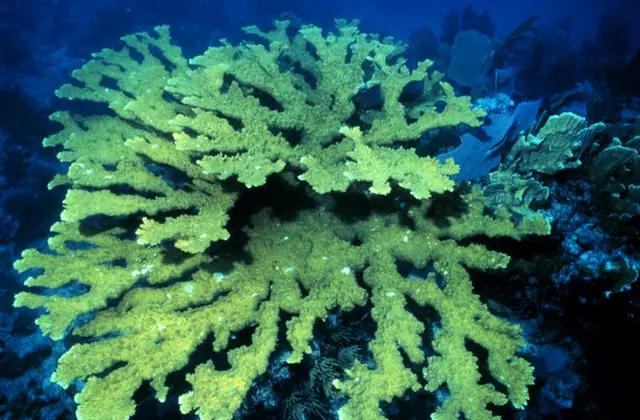
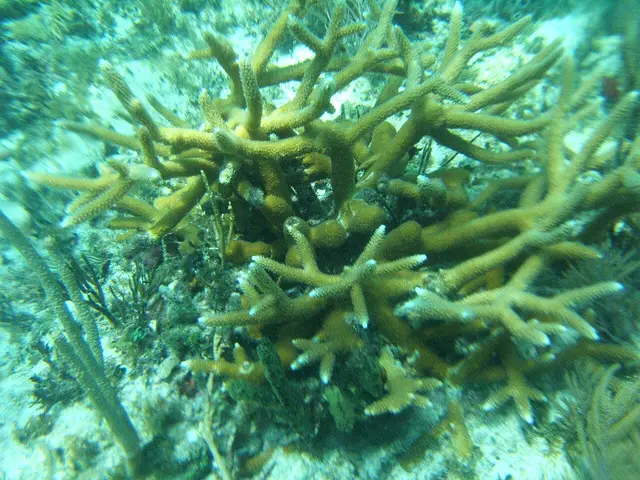
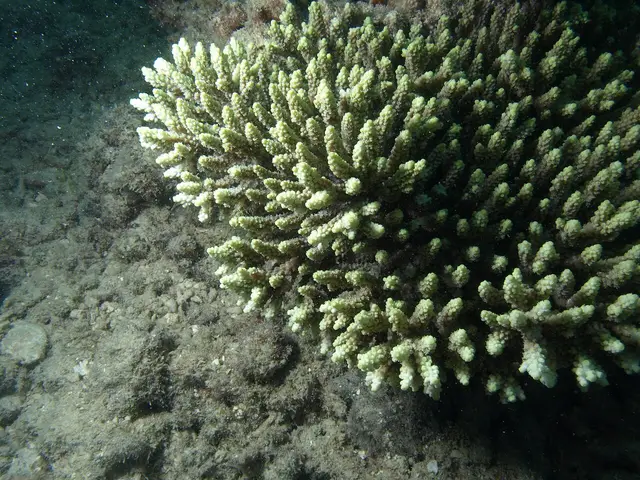
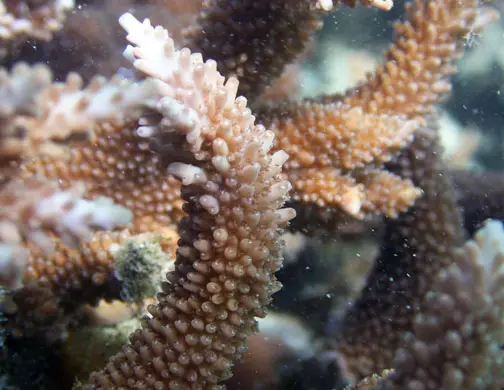
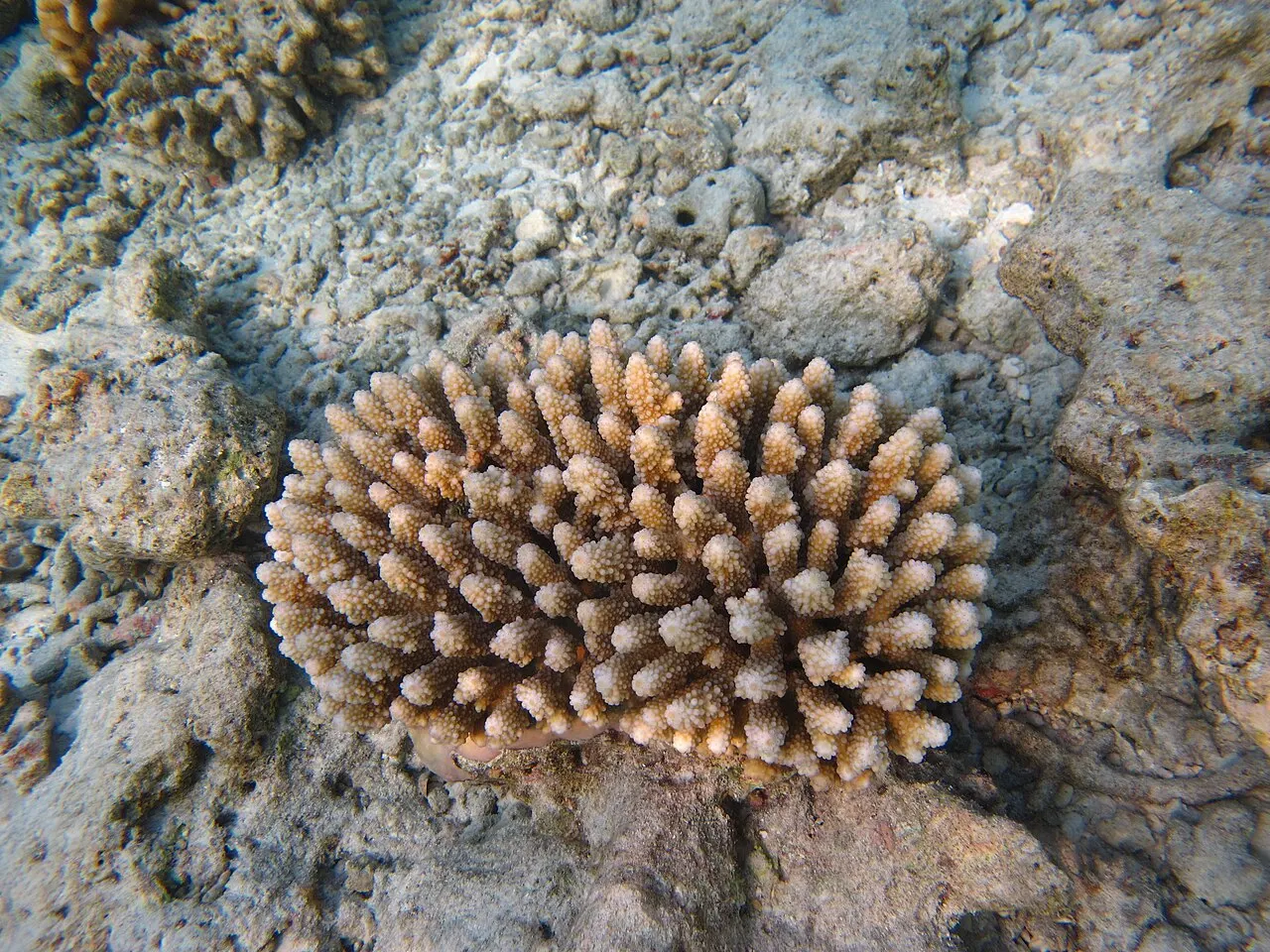
Colonies grow as corymbose plates, with tapered branches. They are grey, purple or cream-brown. The tips carry a rounded axial corallite, and the radial corallites along the branches are irregular, with mixed sizes and shapes. It looks much like another plate-forming Acropora, A. forskali, so telling the two apart takes a close look at the corallites.
It has no common name. The species was described in 1952 by the coral researcher Crossland.
Where it lives
The IUCN lists about sixty countries and territories, running from the Red Sea, Kenya, Madagascar and the Maldives through southeast Asia and Australia to Japan, Fiji, French Polynesia and Pitcairn. In the Cook Islands it has been recorded in the Southern Group and at Makatea.
It lives on tropical reefs, mostly on upper slopes and reef edges exposed to strong waves or currents, and on submerged reefs. Typical depths are given as 3 to 12 m, while the IUCN records a wider range of about 2 to 26 m.
Pins are Wikidata “endemic to” fields. Orange dots, when present, are GBIF occurrence tiles — survey bias included.
How it lives
Like other reef-building corals, it is a colony of small polyps that builds a limestone skeleton. It is a simultaneous hermaphrodite and probably spawns in October. Little else about its biology is documented. The IUCN uses a generation length of 10 years.
Why it is in trouble
No global population count exists, but the IUCN judges that the population is decreasing. Its Endangered listing (criterion A3ce) rests on a projected reduction of at least 63 percent by about 2050, which is three generations of 10 years each. The projection draws on declining reef habitat quality and on pressures such as disease and other effects on reef health.
The threats listed include temperature extremes, which cause bleaching, along with storms and flooding, sediment and erosion from the land, coastal development, shipping lanes, tourism and small-scale harvesting. Crown-of-thorns starfish and disease are also named as risks. Earlier assessments, in 2008 and 2014, rated the species Near Threatened.
What is being done
The species is listed in CITES Appendix II, which regulates international trade in stony corals. The IUCN lists site protection and management, habitat restoration, species recovery, captive breeding and a genome resource bank among relevant actions, and it records that it is unknown whether the coral occurs inside a protected area.
Sources
Written for this catalog in our own words from the sources below, checked against them on 12 November 2026. Population figures are estimates and carry the year they were made. Status and assessment year: IUCN. 2026. The IUCN Red List of Threatened Species. Version 2026-1. iucnredlist.org.