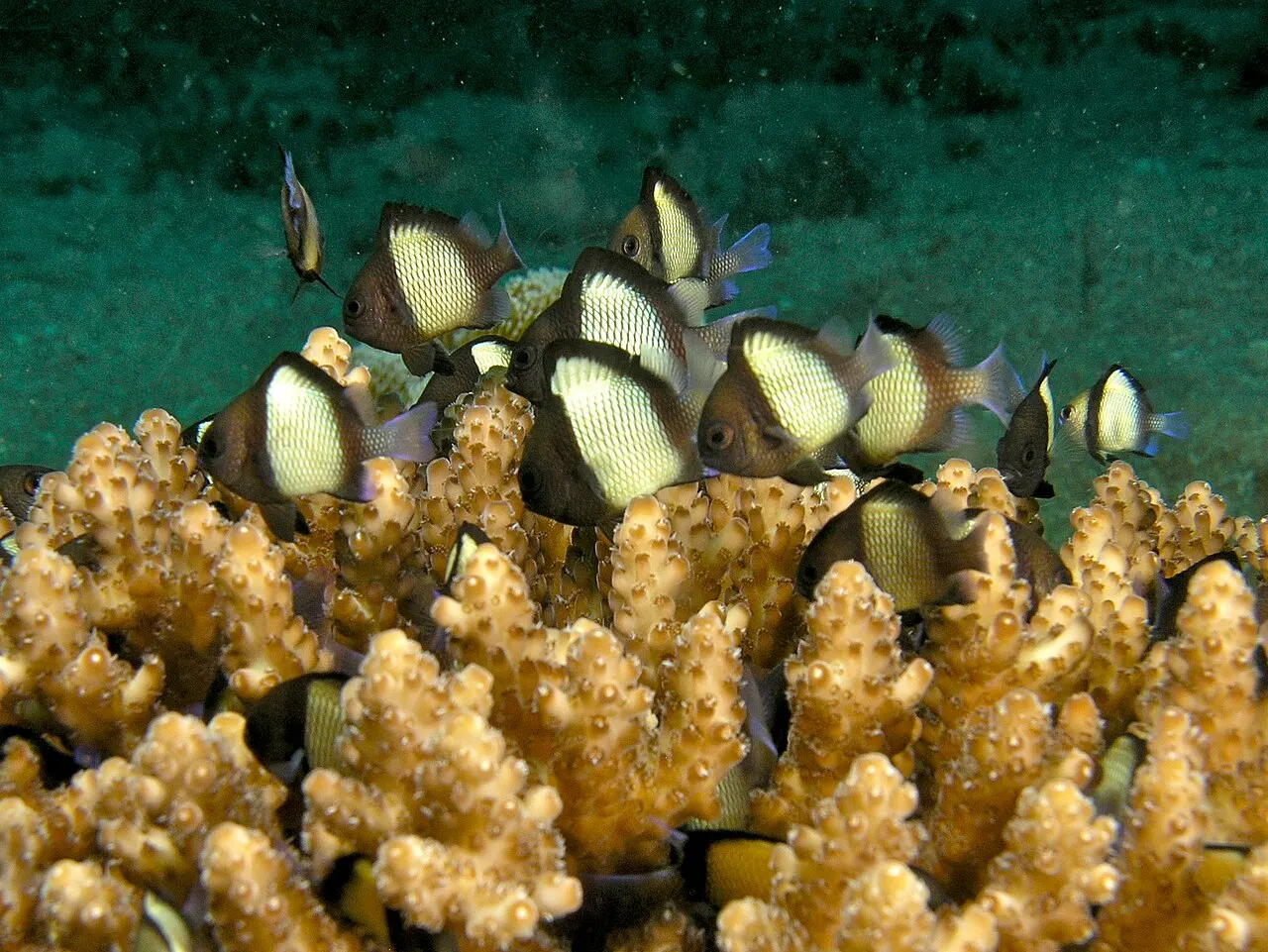
Endangered
Acropora loripes
Acropora loripes
Acropora loripes, sometimes called bluetip coral, is a branching reef-building coral found across the tropical Indo-Pacific, from the Red Sea to the western Pacific. The IUCN Red List listed it as Endangered in 2024, up from Near Threatened, because heat stress, disease and wider reef damage are expected to shrink its population sharply.
How to recognise it
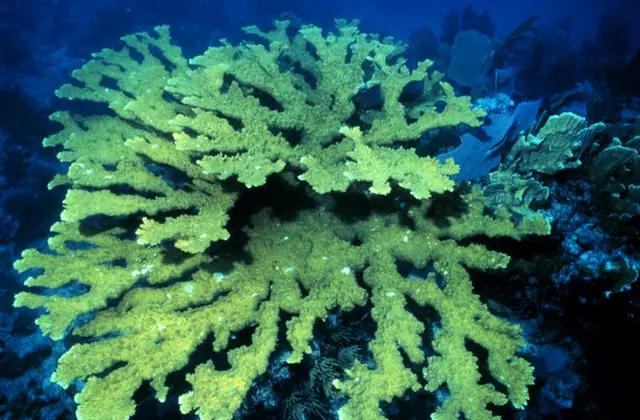
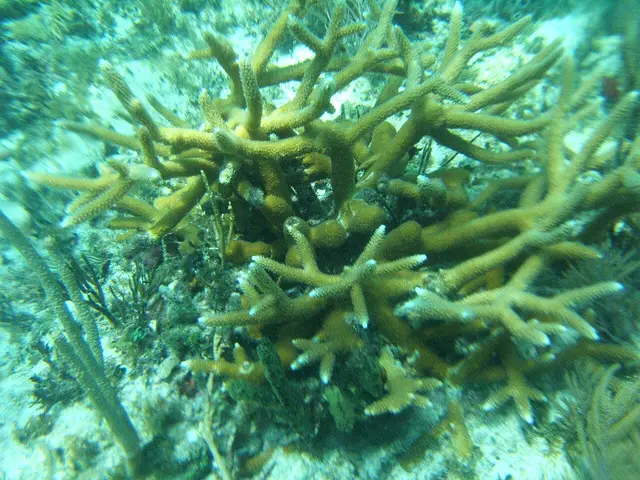
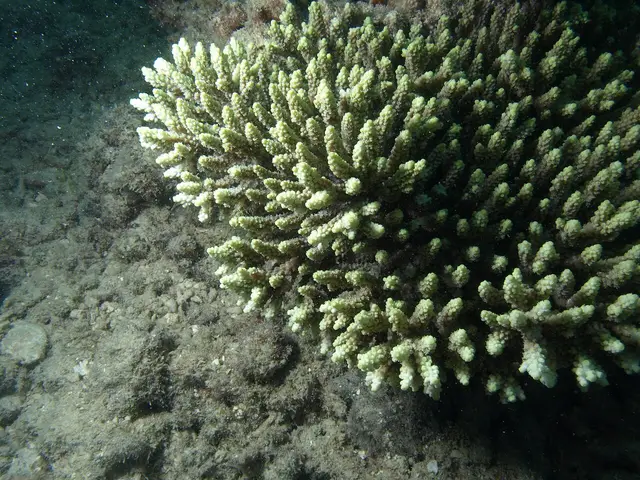
Colonies come in several shapes, from upright bushes to thick plates, and some grow short stalks or rounded heads. Branchlets are chunky, around 5 to 12 mm wide and up to 45 mm long, and some branch tips are bare of tissue. Stalked colonies can resemble a bottlebrush.
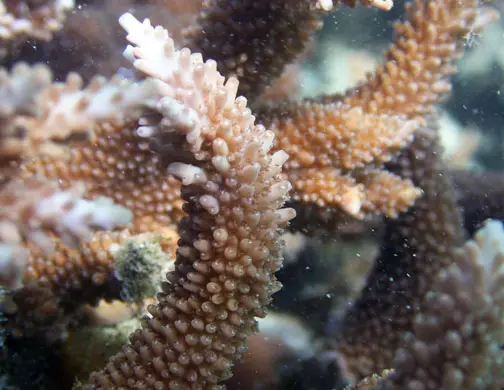
The corallites, the small cups that hold each polyp, are the best clue. They are smooth, rounded and thick-walled, and the tubular ones often sit tightly packed, sometimes touching. Colour is usually pale blue (it can photograph as pink) or brown, and the corallite at each branch tip is usually whitish.
Where it lives
It has a very wide range. The IUCN lists it from East Africa, the Red Sea and the Indian Ocean islands through Southeast Asia and Japan to Australia and dozens of Pacific island groups. The Great Barrier Reef is the type locality, where the species was first described in 1892.
It is common on upper reef slopes and reef flats, though it turns up in a wide range of reef settings. The IUCN gives a depth range of about 2 to 40 m, while one encyclopedia entry puts it at 5 to 25 m.
Pins are Wikidata “endemic to” fields. Orange dots, when present, are GBIF occurrence tiles — survey bias included.
How it lives
Like other reef-building corals, it carries tiny photosynthetic algae in its tissue that supply much of its energy and help give it its colour. The polyps extend from their cups to catch food.
Colonies are hermaphrodites. On the Great Barrier Reef, corals in an area reportedly spawn together, releasing eggs and sperm about five or six days after the full moon in November and December. Fertilisation happens in open water, and the larvae drift in the plankton before settling and starting new colonies.
Why it is in trouble
The main danger is loss of the reef itself. The IUCN lists rising sea temperatures, storms and flooding, runoff and sediment, coastal development, shipping, tourism, disease and small-scale harvest as pressures. Like most Acropora, it bleaches easily when seas run hot, and crown-of-thorns starfish favour it as food.
The Endangered listing rests on a projected population loss of about 63 percent, judged over three generations of roughly 10 years each (criterion A3ce). The IUCN records the population as decreasing, though not severely fragmented.
Great Barrier Reef surveys show why. The Australian Institute of Marine Science reported in August 2025 that Acropora were the most affected corals in its latest survey, after the largest mass bleaching on record there in 2024. Coral cover on the southern reef fell 30 percent in a year, the biggest annual drop recorded.
What is being done
The IUCN lists protection and management of reef sites, habitat restoration, species recovery, captive propagation and a genome resource bank as conservation actions. It records as unknown whether the species occurs in at least one protected area. It is also used in the display and aquarium trade.
Sources
Written for this catalog in our own words from the sources below, checked against them on 12 November 2026. Population figures are estimates and carry the year they were made. Status and assessment year: IUCN. 2026. The IUCN Red List of Threatened Species. Version 2026-1. iucnredlist.org.